



Planning coastal road trip routes in Ireland is one of the best decisions any traveller can make.
Ireland’s coastline stretches for over 2,500 kilometres, weaving past dramatic sea cliffs, hidden coves, golden beaches, and ancient ruins that have stood for thousands of years.
Whether you follow the Wild Atlantic Way, the Causeway Coastal Route, or loop around the rugged peninsulas of the southwest, every road tells a different story.
This guide covers the most scenic drives across the island, with practical stops, highlights, and everything you need to plan a proper road trip along Ireland’s coast.
Why Ireland is Made for Coastal Road Trips
Ireland is a small island, but the coastal beauty makes up for it in a big way. Every few miles, the scenery changes dramatically.
In County Clare, the Burren is made of limestone slabs, and in West Cork, Bantry Bay is framed by green mountains. Part of the experience is the roads themselves.
There are winding country lanes that hug the edges of rocks, wide mountain passes with wide views, and harbor roads lined with brightly colored fishing boats.
The way Ireland’s roads are marked is one thing that makes it stand out from other European road trip places. For example, the Wild Atlantic Way is marked by brown signs with a white spiral wave.
Simply follow the indications to go where you are going. It’s easy to rent a car in Ireland, and after just a few hours of driving on the left, it becomes second nature.
Ireland’s coastal drives are also ideal for travellers who enjoy combining scenic routes with charming small cities and cultural stops.
If you enjoy coastal road trips in Northern Europe, you might also be interested in our guide on Things to Do in Stavanger, a Norwegian harbour city known for its dramatic fjords and gateway access to iconic landscapes.
1. The Causeway Coastal Route, Northern Ireland
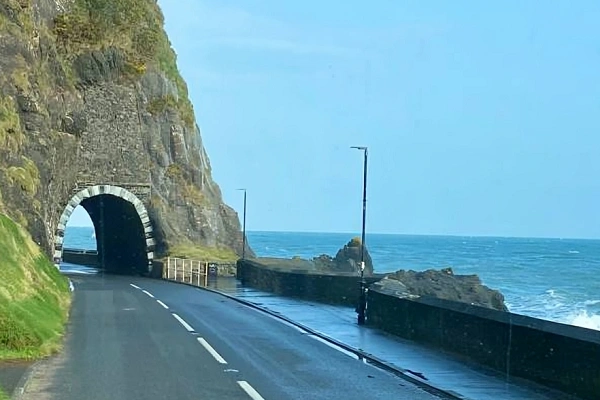
The Causeway seaside Route, which goes from Belfast to DerryLondonderry, is one of the most well-known seaside drives on the island. The route goes along the coast of north Antrim and takes in a huge range of landscapes and sites in a single trip.
Key highlights along the Causeway Coastal Route:
- Giant’s Causeway — a UNESCO World Heritage Site made up of about 40,000 basalt columns that fit together. The columns were formed by volcanoes active in the past. This is one of the most visited natural landmarks in all of Ireland and Northern Ireland.
- Carrick-a-Rede Rope Bridge — suspended high above the ocean, this rope bridge connects the mainland to a small island and offers spectacular views of the North Channel.
- Dunluce Castle — a dramatic medieval fortress perched on the edge of a County Antrim cliff. The ruins are among the most photographed in all of Ireland.
- Binevenagh Mountain and Downhill Beach — both served as filming locations for Game of Thrones, making this route popular with fans of the show.
- The Bushmills Inn — a historic inn near the world’s oldest licensed whiskey distillery, perfect for an overnight stop or a meal.
The Causeway Coastal Route is also famous for its pristine beaches, including Whiterocks and Ballycastle. For seafood, Harry’s Shack near Portstewart Strand is a local favourite.
The entire route from Belfast to Derry takes approximately two hours without stops, but most travellers spread it over two full days to do it justice.
2. The Wild Atlantic Way
The Wild Atlantic Way is the longest defined coastal driving route in the world, stretching over 2,500 kilometres from County Donegal in the north to Kinsale in County Cork in the south.
Along the way, there are 157 designated Discovery Points, organised by themes such as nature, adventure, heritage, and culture.
A full drive of the entire route takes around two to three weeks, but most visitors tackle a section of it based on their available time.
Starting Point: Kinsale, County Cork
Kinsale is where the southern end of the Wild Atlantic Way starts. It is often called the “Gourmet Capital of Ireland.” The town is at the start of the River Bandon and is famous for its colorful harbor, the old Charles Fort, and its great restaurants.
The Scilly Walk is a paved road that runs along the riverbank and has some of the best views of the harbor. It’s also a great place to go for your first walk when you get to town.
The Old Head of Kinsale is only a 15-minute drive from Kinsale and has views of the cliffs that are similar to those at the Cliffs of Moher, but with a lot fewer people.
Dingle Peninsula and Slea Head Drive, County Kerry
The Slea Head Drive on the Dingle Peninsula is often called the most beautiful road in Ireland by tourists who have driven along the west coast for a long time.
The tour starts in the cute town of Dingle, which is about an hour’s drive from Killarney. It goes past Inch Beach, Ventry Bay, and Coumeenoole Beach, with views of the Blasket Islands in the distance.
Along this drive, the Fahan Beehive Huts, which are made of stone and have corbels, are a striking reminder of how early Christians lived in Ireland. They were built between the 8th and 12th centuries.
One of the most photographed spots on the Wild Atlantic Way is Dunquin Pier, which has steep stone steps that lead down to the water.
There are even more dramatic views from the Conor Pass, a mountain road that goes through the peninsula. It is worth the extra trip.
Ring of Kerry, County Kerry
The Ring of Kerry is a 179-kilometre loop around the Iveragh Peninsula and is one of the most famous scenic drives in all of Ireland.
It is most commonly started from Killarney and driven in a counter-clockwise direction. Key stops include Rossbeigh Strand, the colourful market town of Cahersiveen, Valentia Island, and the Kerry Cliffs — which actually reach higher than the Cliffs of Moher.
The Skellig Drive adds an 18-kilometre loop with views out to the UNESCO-listed Skellig Michael, the remote island monastery that also served as a Star Wars filming location.
3. The Burren Loop, County Clare
The Burren in County Clare is one of the strangest settings in Western Europe. It is a huge area of karst pavement made of limestone that formed over hundreds of millions of years.
The Burren Loop goes along the rough Atlantic coast and then makes a loop through the national park.
This is one of the most beautiful drives in Ireland because of the stark contrast between the empty gray rocks and the bright blue water of the North Atlantic.
Through the village of Doolin, which is famous for its traditional Irish music, and the beach town of Lahinch, which is a popular spot for surfing, the road goes. The Cliffs of Moher are without a doubt the best part of the drive.
They are over 200 meters high at their tallest point and run along the Atlantic coast for about eight kilometers.
You should also visit Aillwee Cave, the Burren Smokehouse, and the Burren National Park, which has rare orchids, falcons, and badgers living in a rocky setting.
4. The Copper Coast Drive, County Waterford
The Copper Coast Drive in County Waterford is one of the lesser-known coastal routes in Ireland, but it deserves far more attention than it typically receives.
The coastline here has been designated a UNESCO Global Geopark due to its striking geological features — ancient cliff faces, rocky sea stacks, and copper-coloured shoreline stretches that give the area its name.
The harbour town of Dungarvan is a worthwhile stop for food and the starting point of the Waterford Greenway, a 46-kilometre off-road cycling and walking trail.
The seaside town of Tramore has a long sandy beach that is popular with families, while Dunhill Castle — which has stood for over 800 years — offers a quieter, off-the-beaten-track experience inland from the coast.
5. The Mourne Coastal Route, County Down
The Mourne Coastal Route goes from Newry to Belfast and shows off some of Northern Ireland’s most beautiful mountains and seas.
The route goes along the coasts of the Irish Sea and Carlingford Lough. To the west, the granite peaks of the Mourne Mountains rise dramatically.
Kilkeel, which is commonly called the seafood center of the Mournes, is a great place to stop for a dinner.
Royal County Down Golf Club in Newcastle is one of the most famous links courses in the world, and even people who don’t play golf should see it.
If you wish to stretch your legs, Kilbroney Park and Rostrevor Forest have great walking paths. You can go to the top of Slieve Donard, the tallest peak in the Mourne Mountains, from Newcastle.
The climb is worth it because you can see the Irish Sea and Scotland from the top.
Best Time of Year to Drive Ireland’s Coastal Routes
You can drive on Ireland’s coastal roads all year long, and each season is a real change from the last.
The Burren and Kerry countryside are verdant and full of wildflowers in the spring (March to May), and there are a lot fewer tourists than in the summer.
The longest days and best likelihood of clear skies are in the summer (June to August), however the most popular routes, such the Ring of Kerry and the Cliffs of Moher, will be busy, especially in July and August.
Many people think that autumn (September to November) is one of the greatest periods to drive along the coast in Ireland. After the peak season, the crowds go down, the prices for places to stay go down, and the low Atlantic light gives the cliffs and headlands a warm, golden glow.
Winter (December to February) can be rainy and windy, but those storms are what make the Irish shore so beautiful. In winter, it’s amazing to see Atlantic waves crash on the Cliffs of Moher or the Causeway shore.
There are a lot of pubs and restaurants that stay open all year, so driving in the winter is fine for anyone who doesn’t mind the weather.
Practical Tips for Driving Coastal Roads in Ireland
A few practical points that will make your coastal road trip run more smoothly:
- Drive on the left. The left side of the road is used by Irish drivers. Most visitors adapt within the first hour, but take extra care on narrow rural roads where passing another vehicle requires both drivers to slow down significantly.
- Rent a small car. Many of the most scenic coastal roads — particularly on the Dingle Peninsula and the Ring of Beara — are very narrow. A compact car makes a significant difference on these routes.
- Download offline maps. Mobile signals can be weak in remote coastal areas. Having an offline map saved on your phone — or a physical Wild Atlantic Way road atlas — will prevent unnecessary frustration.
- Book accommodation in advance. During summer months, popular towns like Dingle, Killarney, and Kinsale fill up quickly. Booking at least a few weeks ahead will give you better choices and better prices.
- Allow extra time. It is almost impossible to drive coastal roads in Ireland to a tight schedule — there are too many viewpoints, unexpected beaches, and friendly conversations at roadside stops to rush anything.
6. Ring of Beara, County Cork
The Ring of Beara is a 140-kilometer loop that goes around the remote Beara Peninsula in West Cork. Its more famous neighbor, the Ring of Kerry, often takes the spotlight.
That it’s not very well known is one of its best features—the roads are quieter, the towns aren’t as commercialized, and the views of the sea and mountains are just as beautiful.
The towns of Allihies and Eyeries, which are painted brightly, are two of the cutest on the Wild Atlantic Way.
A short boat ride takes you to Garnish Island in Glengarriff, which is a beautiful garden island full of Mediterranean and subtropical plants that do well in the warm Gulf Stream environment.
For those who want to go off the main loop, Here Island in Bantry Bay is a great place to walk and watch birds. A lot of people also walk and ride bikes on the Beara Way, which follows a lot of the coastal path.
Final Thoughts
With so many exceptional coastal routes to choose from, planning an Ireland road trip comes down to how much time you have and which parts of the island appeal to you most.
A week gives you enough time to cover either the southern Wild Atlantic Way — from Kinsale through Kerry and into Clare — or the northern routes combining the Causeway Coastal Route with the Mourne Coast.
Two weeks allows you to connect the two and get a genuine sense of the full Atlantic coastline from Cork all the way up to Donegal.Whichever route you choose, Ireland rewards slow travel.
The country’s coastal road network, combined with its scenic landscapes, heritage sites, and welcoming towns, makes it one of the most satisfying driving destinations in Europe.
Pack a good waterproof jacket, leave some days unplanned, and follow the road wherever it leads.

A travel content creator providing destination insights, practical advice, and travel inspiration for every journey.