




Taking day trips in Virginia never gets old — and that says a lot about a state that stretches from the Appalachian Mountains all the way to the Atlantic coast. Mountains, colonial towns, underground caverns, river plantations, and sandy beaches all fall within a few hours of each other. No matter where you are based in the state, there is always somewhere worth pointing the car toward for the day.
Shenandoah National Park and Skyline Drive
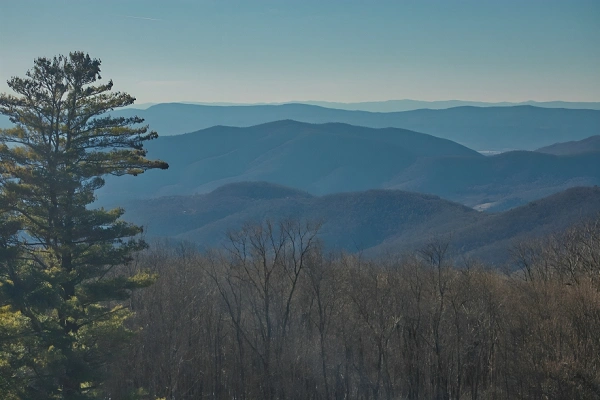
Drive far enough west from almost anywhere in central Virginia and the land starts to rise, the air cools off, and eventually the Blue Ridge Mountains fill the windshield.
That is when most people realize why Shenandoah National Park keeps pulling people back.
Spanning more than 200,000 acres of protected wilderness, the park offers hiking trails suited for every ability level — from short walks to longer backcountry treks through forested ridgelines.
The crown jewel of any visit is Skyline Drive, a 105-mile scenic road that runs along the crest of the mountains.
During fall foliage season, the views from overlooks like Stony Man and Hawksbill are genuinely hard to describe.
Spring brings wildflowers and waterfalls, while summer keeps the higher elevations pleasantly cool compared to the valley below.
Check the National Park Service website before heading out, as road conditions and trail access can change with the seasons.
Camping options are available for those who want to extend the trip, but the park works just as well as a full day out and back.
Luray Caverns
Most people have no idea what is hiding beneath the Shenandoah Valley until they walk down into it.
Luray Caverns, discovered in 1878, is one of the most famous and extensive commercial cave attractions in the eastern United States. — and the scale of what sits underground genuinely catches visitors off guard.
Inside, massive stalactites, stalagmites, glassy mirror pools, and a formation called the Great Stalacpipe Organ fill the chambers.
The organ is exactly what it sounds like — a real instrument built into the cave that produces musical tones by striking natural rock formations.
Guided tours last roughly an hour and cover about a mile of underground passage.
Above ground, the Luray property also includes a Garden Maze, a Toy Town Junction, and the Car and Carriage Caravan Museum, making it a well-rounded stop for families.
To escape long lines, it’s best to get there early on the weekends.
Colonial Williamsburg
History has a way of feeling distant until you walk through it — and Colonial Williamsburg is one of the few places in the country that actually closes that gap.
This reconstructed 18th-century town, part of Virginia’s Historic Triangle alongside Jamestown and Yorktown, puts visitors directly inside the world that existed before the American Revolution.
Costumed interpreters work alongside blacksmiths, candle-makers, and weavers in period-accurate settings.
Cobblestone streets run between original and reconstructed buildings that date back to the colonial era.
Even without purchasing full admission tickets, the outdoor grounds and streets are largely accessible and worth walking through.
Tours and programming change throughout the year, so checking the Colonial Williamsburg website ahead of time helps make the most of the visit.
Old Town Alexandria
History does not always announce itself with museum signs and ticket booths. Sometimes it just shows up quietly in the brickwork underfoot and the proportions of an 18th-century building.
Old Town Alexandria is that kind of place — a walkable city just minutes from Washington, D.C. where four centuries of American life are still visible in the streetscape.
King Street runs from the metro station all the way to the Potomac River waterfront, lined with independent bookstores, galleries, and restaurants.
History enthusiasts will find the Stabler-Leadbeater Apothecary Museum and the Torpedo Factory Art Center worth their time.
One quirky landmark worth seeking out is the Spite House on Queen Street — at exactly 7 feet 6 inches wide, it is widely recognized as one of the narrowest historic houses in the United States, built in 1830 by John Hollensbury to block horse-drawn wagons from cutting through his alley.
Sightseeing cruises along the Potomac River run during warmer months and offer a different perspective on the city from the water.
Blue Ridge Tunnel Trail — Nelson County
The Blue Ridge Tunnel does not look like much from the trailhead. Two stone portal walls rise from the hillside, a dark opening sits between them, and then the mountain swallows the path entirely.
What happens next — nearly a mile of walking through a 19th-century railroad tunnel bored through solid rock — is one of the more unusual outdoor experiences Virginia offers.
Constructed between 1850 and 1858 under the direction of French engineer Claudius Crozet, the tunnel stretches 4,279 feet through Rockfish Gap in the Blue Ridge Mountains.
It was the longest train tunnel in North America when it was finished. CSX Transportation donated the tunnel to Nelson County in 2007, and it has since been converted into a public trail.
The tunnel sits at the convergence of the Blue Ridge Parkway, Skyline Drive, and the Appalachian Trail, which makes it easy to combine with other stops in the area.
A headlamp or flashlight is essential — there is no lighting inside. Temperatures in the tunnel hold around 50–65°F year-round, so a light layer is worth packing regardless of the season.
The route is free to use and is accessible from sunrise till sunset.
Occoquan Historic District
A town of only a few blocks along a river bend in Prince William County should not be this charming — but Occoquan pulls it off.
The historic district centers on a compact stretch of cobblestone streets lined with boutique shops, local art galleries, antique stores, and cafés that have settled into buildings going back several generations.
The riverside walk through Mamie Davis Park offers a quiet break from browsing, with calm views over the Occoquan River.
The town suits couples and anyone looking for a relaxed half-day without admission fees or crowds. Fall and spring are particularly nice given the tree cover and mild temperatures along the water.
Natural Bridge State Park
Thomas Jefferson paid 20 shillings to King George III in 1774 for a limestone arch and 157 surrounding acres in what is now Rockbridge County.
He called it “the most sublime of Nature’s works.” Standing underneath it today, that reaction is easy to understand.
The arch at Natural Bridge State Park stands 215 feet tall and spans 90 feet across Cedar Creek — carved by water moving through limestone over hundreds of thousands of years.
Both Jefferson and George Washington visited and left written accounts of its scale.
Visitors today descend 137 steps from the visitor center to reach the Cedar Creek Trail, which passes directly underneath the arch and continues past the Monacan Indian Village, Saltpeter Cave, and Lace Falls.
Stargazing events are held at the park on select evenings, taking advantage of the low light pollution in this part of Virginia’s Shenandoah Valley.
Spring through fall is the best window for comfortable temperatures and the widest range of programming.
Historic Shirley Plantation
Somewhere along the James River between Richmond and Williamsburg, the landscape opens up and a Georgian brick house appears at the end of a row of trees.
Historic Shirley Plantation has been standing in some form on this ground since 1613, making it widely recognized as Virginia’s oldest active plantation.
The Hill Carter family has lived here for eleven generations.
The main house, completed in 1738, is a remarkable example of Georgian architecture — particularly its famous flying staircase, which rises from floor to floor without visible structural support and still puzzles visitors today.
Guided tours cover period furniture, family portraits, silver, and artifacts that span four centuries of unbroken family history.
The setting along the river is quieter and less commercial than larger historic sites in the state, which gives it an atmosphere that is difficult to find elsewhere.
Virginia Beach
The Atlantic Ocean ends and Virginia begins at a long stretch of sand backed by a 3-mile boardwalk — and Virginia Beach has built an entire city’s worth of things to do around that fact.
It is the most visited coastal destination in the state and handles the volume reasonably well, particularly outside of peak summer.
First Landing State Park offers hiking trails through maritime forest leading directly to the water, providing a natural contrast to the busier boardwalk area.
The Virginia Aquarium and Marine Science Center is one of the better family stops in coastal Virginia, with sea turtles, sharks, and hands-on exhibits.
The Cape Henry Lighthouse marks the exact point where English settlers first came ashore in 1607 before continuing inland to Jamestown — one of the oldest lighthouses in the country and accessible to visitors on most days.
May, early June, and September are the best windows for a visit — water temperatures are comfortable, and the crowds that pack the boardwalk in July and August have thinned out considerably.
Parking near the oceanfront fills up fast on summer weekends, so arriving early makes a real difference.
Leesburg
Wine country and American Revolution history do not often share the same afternoon, but Leesburg makes both feel natural. ,
The downtown stretches along a few walkable blocks of King Street in Loudoun County, with antique shops, independent bookstores, and local restaurants settled into buildings that date back to the 18th and 19th centuries.
A short drive outside town puts visitors in the middle of the Loudoun Valley wine trail, where working vineyards offer tastings against a backdrop of rolling farmland.
The area has developed into one of Virginia’s most recognized wine regions over the past two decades.
For history, Dodona Manor — the restored home of General George C. Marshall — and Morven Park, a large estate with mansion tours and a carriage museum, give the day real depth.
The combination of wine country, walkable downtown, and genuine historic sites makes Leesburg work well across every season.
How to Make Plans for a Virginia Day Trip
Virginia is larger than it looks on most maps, and drive times vary considerably depending on the starting point and destination.
Northern Virginia in particular can add significant time due to traffic near the D.C. corridor, especially on weekday mornings and Friday afternoons.
State parks, national parks, and scenic drives tend to be at their best in spring and fall when temperatures are moderate and visitor numbers are manageable.
Summer brings heat and humidity to lower elevations, though mountain areas stay noticeably cooler.
Winter rewards visitors at the right destinations — ski resorts like Wintergreen and historic towns that feel quieter and more atmospheric in the off-season.
Shenandoah National Park, Natural Bridge, and Colonial Williamsburg all benefit from advance ticket purchases, particularly between spring and summer.
Virginia’s afternoons between June and August can bring sudden thunderstorms, so having a backup indoor option in mind is always a practical move.
Virginia’s combination of coastal geography, mountain terrain, colonial heritage, and layered Civil War history makes it one of the most varied states for day trip exploration along the East Coast. The options here hold up well across different seasons and different kinds of travelers.

A travel writer sharing informative guides, tips, and itineraries to help travelers explore the world smarter.