




Costa Rica is known as the best place in the world for environmental tourism, where adventure and conservation go hand in hand.
This tiny Central American country covers only 0.03% of the Earth’s area, but it safeguards an amazing 6% of the world’s biodiversity.
What makes eco tourism in Costa Rica truly special isn’t just the incredible wildlife or pristine beaches—it’s the country’s genuine commitment to sustainable practices that benefit both nature and local communities.
Costa Rica has 26% of its land protected, so visitors may have real experiences in cloud forests, tropical rainforests, and marine habitats while also helping to protect them.
From the high tops of Monteverde to the wild beaches of the Osa Peninsula, every place has a narrative of how people took care of the environment.
Costa Rica Certificate of Sustainable Tourism
It can be hard for even seasoned tourists to tell which companies really care about the environment and which ones are just trying to look good. The Instituto Costarricense de Turismo (ICT) set up the Certificate of Sustainable Tourism (CST) program in the 1990s to fix this problem.
The World Tourism Organization and the Global Sustainable Tourism Council both acknowledge the CST system, which has strict rules that enterprises must meet:
Basic Level Requirements include following all of the statutory rules for sustainable management practices, lowering environmental impact, saving water, managing trash, and supporting community initiatives. This level is higher than most international eco-certification criteria on its own.
To get Elite Level Certification, you need to do everything at the Basic level and then add 30% to your improvement and continuity scores and 70% to your external impact scores.
Elite-certified properties are leaders in using renewable energy, protecting habitats, reaching out to schools, and creating jobs in the area.
This clear system lets tourists make smart decisions and pushes businesses to always do better for the environment.
Costa Rica Protected Natural Areas
The country’s National System of Conservation Areas protects diverse ecosystems across 30 national parks, 19 wildlife refuges, and 8 biological reserves. Each area offers unique experiences while serving critical conservation functions.
Cloud Forest Ecosystems
Cloud woods have a magical feel to them because mist hangs on old trees covered with orchids, epiphytes, and mosses.
The Monteverde Cloud Forest Biological Reserve, which was set up by Quaker settlers in the 1950s, is still the most well-known example. These early settlers chose Costa Rica because it got rid of its army, which fit with their pacifist beliefs.
There are various cloud forest reserves in the Cordillera Tilarán mountain range. The environment there is great for a wide range of plants and animals.
This is the greatest place for visitors to see the famous Resplendent Quetzal, as well as three-toed sloths, howler monkeys, and many other types of hummingbirds.
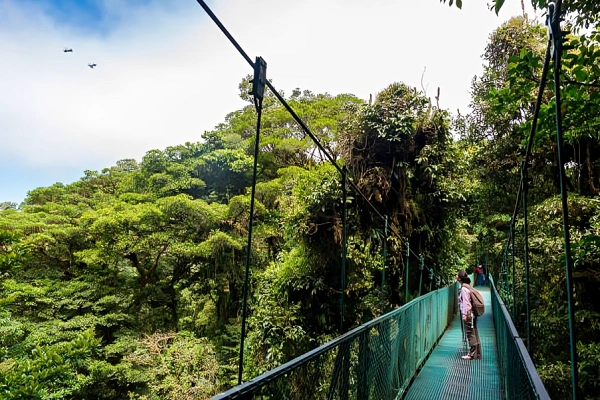
Trail systems go through a number of living zones, each of which has its own plant and animal groups. Canopy bridges and observation platforms provide you views that you can’t get from the ground, showing how complicated the forest is vertically.
Lowland Rainforest Adventures
Costa Rica’s largest intact piece of Pacific lowland rainforest is on the Osa Peninsula. National Geographic calls Corcovado National Park “the most biologically intense place on Earth.” It protects old-growth woods where jaguars, pumas, tapirs, and ocelots still live.
Four types of monkeys live in these forests: mantled howler monkeys, whose calls can be heard for miles; Central American spider monkeys, who swing through the trees; white-faced capuchins, which are noted for being smart; and the endangered Central American squirrel monkey, which can only be found in certain coastal areas.
Drake Bay and Cabo Matapalo are the main ways to get to the Osa. They give you access to both land and water habitats.
On boat cruises along the Sierpe River and the coast, you can see crocodiles, caimans, scarlet macaws, and humpback whales that come to visit during certain times of the year.
Aquatic Ecosystems and Wetlands
The Caño Negro Wildlife Refuge is a seasonal wetland near the Nicaraguan border that shows how important it is to maintain aquatic environments.
This RAMSAR-designated wetland is home to a huge number of birds, including roseate spoonbills, jabiru storks, anhingas, and thousands of migrating ducks.
The Caribbean Canals go from Moín to Tortuguero National Park and offer safe passage through palm swamps and mangrove forests. These waterways are home to West Indian manatees, green sea turtles, leatherback turtles, and a lot of fish, such as tarpon and snook.
Arenal Lake, which is really a reservoir for making hydroelectric power, is an example of how infrastructure and recreation can work together.
The lake’s high winds make it a great place to windsurf and kiteboard, and the water is home to healthy populations of rainbow bass (guapote).
Sustainable Accommodation in Costa Rica
Choosing certified eco-lodges ensures your tourism dollars support genuine conservation. If you are planning a trip to South America as well, you can check where to stay in Cusco for the best hotels and experiences. Several properties exemplify best practices in sustainable hospitality.
Rainforest Retreats
The best places to live are ones like Bosque del Cabo on the Osa Peninsula. This lodge turned 750 acres of former farmland back into a lush jungle, which made important animal corridors.
The property makes its own electricity with solar panels and micro-hydro systems, composts organic waste, and gets its food from nearby farms.
Staff naturalists lead daily wildlife observation walks, sharing knowledge about forest ecology and conservation challenges. The lodge helps local schools and hires mostly people from nearby towns, so the benefits of tourism go beyond the lodge’s land.
La Paloma Lodge is still certified as sustainable since it uses renewable energy, reuses water, and directly supports conservation programs conducted by the Corcovado Foundation.
The property’s efforts to plant trees have brought back 24 acres of land that used to be used for cow grazing.
Cloud Forest Sanctuaries
El Silencio Lodge & Spa in the Central Highlands exemplifies sustainable luxury within cloud forest environments. The property’s modern architecture incorporates passive cooling, rainwater harvesting, and greywater recycling systems.
Native plant landscaping provides habitat connectivity for birds and small mammals.
Spa treatments utilize organic ingredients sourced from local cooperatives, supporting regional agriculture while reducing transportation emissions.
Guests explore nearby Juan Castro Blanco National Park on guided hikes that emphasize ecosystem services and watershed protection.
Working Farm Experiences
There is a coffee plantation and inn called Finca Rosa Blanca that shows how tourists and farming can work well together.
This Elite-certified property grows coffee in the shade using organic agricultural methods that keep the land healthy and help migratory birds.
Farm tours talk about the whole process of making coffee, from growing it to roasting it, and they stress the importance of fair trade and taking care of the environment.
The farm-to-table restaurant sources ingredients from local organic producers, minimizing food miles while supporting regional farmers.
Caribbean Coast Gems
Selva Bananito Lodge & Preserve manages a private rainforest reserve on the Caribbean slope spanning 2,000 acres. The property challenges guests to offset their travel carbon footprint by purchasing certified emissions sequestration credits, then matches that investment with free additional activities.
Accommodations built from reclaimed lumber salvaged from old buildings blend into the forest. All of our energy comes from sources that can be used again and again, including solar water heating.
The lodge started Fundación Cuencas de Limón, a nonprofit that works to protect watersheds and teach kids about the environment in local schools..
Responsible Wildlife Watching in Costa Rica
Costa Rica’s megadiversity attracts wildlife enthusiasts from around the world. Following ethical viewing guidelines ensures minimal disturbance to animals and their habitats.
Bird watching reaches peak diversity during migration seasons when Northern species join resident tropical birds. The country hosts over 900 bird species including keel-billed toucans, blue-crowned motmots, great green macaws, and the rare harpy eagle.
Observing marine wildlife requires particular care. Sea turtle nesting sites at Tortuguero, Ostional, and other beaches need protected viewing distances and limited artificial light.
Whale watching tours follow strict approach protocols that prevent harassment of humpback whales and pilot whales.
Primate populations benefit when tourists maintain appropriate distances and avoid feeding wildlife. Flash photography disturbs nocturnal species like kinkajous and olingos, while loud noises stress poison dart frogs and other sensitive amphibians.
Community Tourism and Local Culture in Costa Rica
Native American communities and rural cooperatives provide real culture experiences while making a steady income. These programs keep ancient knowledge alive while also changing with the times to fit the needs of today’s economy.
The CASEM cooperative in Monteverde, which has been around for more than 34 years, is a good example of a craft business that works.
This women-led organization provides economic opportunities through handicraft production while maintaining cultural traditions. Their café offers traditional Costa Rican food made with ingredients from the area.
Through rural tourism programs, tourists can meet farming families who can teach them about traditional cooking, sustainable farming, and the past of the area.
These homestay programs generate income for families while reducing pressure to sell land for large-scale development.
Practical Considerations for Eco-Conscious Travelers
Successful eco tourism requires thoughtful planning and responsible behavior throughout your journey.
Transportation choices significantly impact your environmental footprint. Public buses cost roughly $6 between major destinations and use fuel-efficient Mercedes engines.
Shared shuttle services provide comfort at moderate cost while reducing individual vehicle use. When rental cars become necessary, choosing smaller vehicles and carpooling minimizes emissions.
Seasonal timing affects both environmental impact and wildlife viewing opportunities. The dry season (December through April) offers easiest access but concentrates visitors in popular areas.
Green season (May through November) brings afternoon rains that support lush vegetation and reduced crowds, though some remote areas become harder to reach.
Visitor capacity management protects fragile ecosystems. Popular parks like Monteverde and Manuel Antonio now limit daily visitors. Advance reservations through the SINAC online system secure entry while helping distribute visitor pressure across time and space.
Leave No Trace principles apply everywhere: pack out all trash, stay on designated trails, respect wildlife viewing distances, and avoid disturbing natural features. Even small actions like using reef-safe sunscreen protect sensitive coral ecosystems.
Challenges and Future Directions
Despite remarkable success, eco tourism in Costa Rica faces ongoing challenges requiring continued attention and innovation.
Overtourism stresses ecosystems and infrastructure at popular destinations. Manuel Antonio receives over 400,000 annual visitors, approaching ecological carrying capacity.
Solutions include visitor quotas, improved trail management, and promoting lesser-known alternatives that distribute economic benefits more broadly.
Climate change threatens ecosystems that eco tourism depends upon. Rising temperatures push cloud forest conditions to higher elevations, potentially eliminating habitat for specialized species.
Coral bleaching events damage reefs that attract snorkelers and divers. Addressing these threats requires global action alongside local adaptation strategies.
Economic inequality means rural communities don’t always share tourism benefits equitably. While some regions prosper, others lack infrastructure or market access to participate in tourism economies.
Expanding community-based tourism programs and improving transportation networks could address these disparities.
Resource management must balance tourism growth with conservation goals. Water supplies face pressure from hotels and attractions, especially during the dry season.
Waste management systems struggle with increased volume from tourism. Investing in infrastructure upgrades and enforcing higher operational standards will prove essential.
Final Thoughts
Every choice a tourist makes either helps or hurts conservation. Choosing ICT-approved places to stay, hiring trained naturalist guides, dining at locally owned restaurants, buying handicrafts directly from artisan cooperatives, and appreciating wildlife all help to make things better.
Knowing that eco-tourism is more than just going to beautiful places—it’s being part of a working conservation model—makes excursions more meaningful. Your entrance fees pay for the park’s upkeep, your lodge bookings help plant trees, and your purchases help the local economy.
Costa Rica showed that protecting the environment and growing the economy can work together. As travellers, we are all responsible for making sure this success story keeps going and inspires other places across the world to choose conservation over exploitation.

A travel writer sharing informative guides, tips, and itineraries to help travelers explore the world smarter.