


If you are planning a trip to the German capital and wondering where to go without spending a fortune, the good news is that free museums in Berlin, Germany are more than just a few scattered options.
Berlin is one of the rare major European cities where culture, history, and art are genuinely accessible to everyone — no entrance fee required.
From world war memorials to street art landmarks, Berlin offers dozens of museums and cultural institutions that are permanently free to visit.
Whether you are a history enthusiast, an art lover, or simply a curious traveler, there is something here for you.
Why Berlin Is a Dream for Budget Travelers
Berlin has a long tradition of making culture publicly accessible. The city’s complicated and layered history — from the Weimar Republic to Nazi Germany, the Cold War, and reunification — is preserved across dozens of memorials and museums that charge no admission at all.
Many of these free sites are not just historical footnotes. They are big, well-kept museums with constant displays, information in many languages, guided tours, and educational programs.
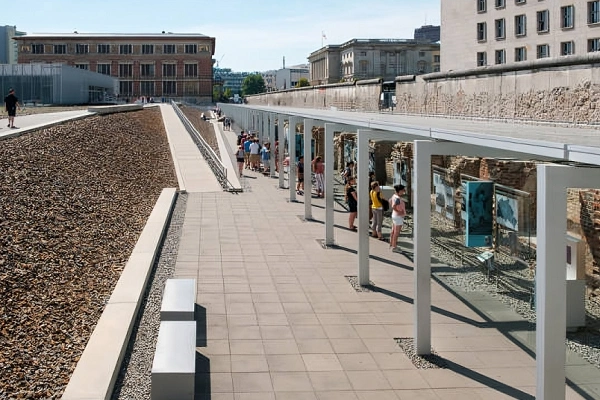
The Topography of Terror, for example, draws visitors from around the world and is considered one of Berlin’s most important historical documentation centers — all without charging a single euro at the door.
Beyond historical sites, Berlin’s free cultural landscape includes contemporary art spaces, science exhibitions, open-air galleries, and district museums that reflect the everyday life of Berliners across different eras.
Top Free Museums and Attractions in Berlin
Topography of Terror
This is consistently rated as one of the best free attractions in Berlin.
Located on the former site of the Gestapo headquarters, the Topography of Terror presents three permanent exhibitions documenting Nazi crimes and the mechanisms of terror that operated from this very location.
Information is available in both German and English, making it accessible to international visitors. It is a sobering but essential experience for anyone trying to understand twentieth-century European history.
East Side Gallery
The East Side Gallery is a 1.3-kilometer open-air gallery painted directly onto a surviving section of the Berlin Wall.
Over 100 murals by international artists cover this stretch near the city center, making it one of the longest open-air art exhibitions in the world.
Each painting tells a different story — of division, hope, and reunion. No ticket, no queue, just art in the open air.
Palace of Tears (Tränenpalast)
The Tränenpalast, or Palace of Tears, was the former border crossing where East and West Germans said their goodbyes. After the fall of the Berlin Wall, it was transformed into a free public museum.
The permanent exhibition captures the emotional reality of a divided Germany and the human cost of the Iron Curtain. It is widely regarded as one of the most moving free experiences in the city.
Haus der Wannsee-Konferenz
Set in a lakeside villa, this museum documents one of the darkest chapters of the Second World War. In 1942, Nazi officials met here to coordinate the systematic murder of European Jews — an event known as the Wannsee Conference.
The free permanent exhibition provides detailed historical context using original documents and photographs. Despite its difficult subject matter, it is considered essential for understanding the Holocaust.
German-Russian Museum Berlin-Karlshorst
Located at the actual site where Germany signed its unconditional surrender in 1945, this museum explores the complex relationship between Germany and Russia throughout the twentieth century.
It is widely appreciated for presenting a detailed and often overlooked perspective on World War II history, particularly from the Eastern Front.
Futurium – House of Futures
For something completely different, the Futurium offers a free interactive experience focused entirely on the future.
The exhibition presents various scenarios for how humanity might live, work, and coexist in the coming decades.
It includes a hands-on laboratory, a discussion forum, and vivid visual displays. It is particularly well-suited for families and younger visitors.
Allied Museum (Alliiertenmuseum)
The Allied Museum documents the role of the United States, Britain, and France in Berlin between 1945 and 1994.
It covers the Berlin Airlift, the politics of the Cold War, and the daily lives of Allied soldiers stationed in the city.
The museum is located in the southwest of Berlin and is entirely free to visit.
Museum in der Kulturbrauerei
Housed in a historic brewery complex in Prenzlauer Berg, this museum focuses on everyday life in the GDR (East Germany).
Using objects, documents, film footage, and audio recordings, it illustrates the gap between what the socialist state demanded from its citizens and what life actually looked like on the ground.
The exhibition is thoughtfully curated and free for all visitors.
Hidden Gems Worth Visiting
Gaslaternen Freilichtmuseum (Gas Lantern Open-Air Museum)
This unusual attraction near Tiergarten S-Bahn station is a permanent outdoor exhibition of historic gas lanterns gathered from across Europe.
It is the kind of place most tourists miss, yet it offers a genuinely peaceful and curious experience. Entry is free, and it pairs well with a walk through the Tiergarten park.
Museum der Unerhörten Dinge (Museum of Extraordinary Things)
One of Berlin’s most eccentric free spaces, this tiny private museum in just 20 square meters is packed with bizarre objects and strange stories collected by its founder.
Columbus’ alleged telescope, the fur of a bonsai deer — the collection defies easy description. It is quirky, personal, and entirely free.
After exploring Berlin’s free museums, you might also enjoy coastal road trips in Ireland, which are perfect for travelers who love history and beautiful scenery.
When Can You Visit Even More Museums for Free?
Museum Sunday (Museumssonntag)
On the first Sunday of every month, more than 80 Berlin museums open their doors free of charge.
This includes some of the city’s most famous institutions that normally charge admission.
If your travel dates are flexible, planning your museum day around this Sunday is a smart move.
Free Entry for Young Visitors
Children under the age of 6 are admitted free at nearly every museum in Berlin.
Visitors under 18 receive free entry at all Staatliche Museen (State Museums) and Landesmuseen (Regional Museums), making Berlin an excellent destination for family travel.
Neighborhoods With the Highest Concentration of Free Museums
Mitte is the historic heart of Berlin and home to the largest cluster of free attractions, including the Topography of Terror, Deutscher Dom, Neue Wache, and the Museum of Silence (Museum der Stille). Walking between these sites is entirely possible on foot.
Friedrichshain-Kreuzberg is where you will find the East Side Gallery, the Palace of Tears, and the Kunstraum Kreuzberg/Bethanien — a former hospital turned contemporary arts venue.
Steglitz-Zehlendorf in the southwest is home to the Allied Museum and the Haus der Wannsee-Konferenz, both of which require a slightly longer journey but are well worth the effort.
Final Thoughts
Berlin is one of the few cities in the world where a week of meaningful cultural experiences does not have to cost anything at all.
The free museums in Berlin, Germany span everything from the horrors of the Nazi era to visions of the future, from Cold War checkpoints to open-air street art.
The quality of these institutions matches and in many cases exceeds paid attractions in other European capitals.
Whether you have one day or one week, the free cultural offerings of Berlin are rich enough to fill your itinerary completely.
Plan ahead, check opening days, and take advantage of Museum Sunday if you can. The city’s history, art, and stories are waiting — and the door is wide open.

A travel content creator providing destination insights, practical advice, and travel inspiration for every journey.