


If you have ever been researching a trip to Switzerland and found yourself asking, is Lucerne worth visiting, the short answer is yes — absolutely.
Lucerne is one of those rare cities that genuinely lives up to its reputation. This small but incredibly beautiful city is right on Lake Lucerne and surrounded by the Swiss Alps.
It has a mix of ancient history, natural beauty, and cultural diversity that is hard to find anywhere else in Europe.
Whether you are planning your first trip to Switzerland or adding a stop to an existing itinerary, Lucerne deserves a proper place on your list. Here is everything you need to know.
What Makes Lucerne Special?
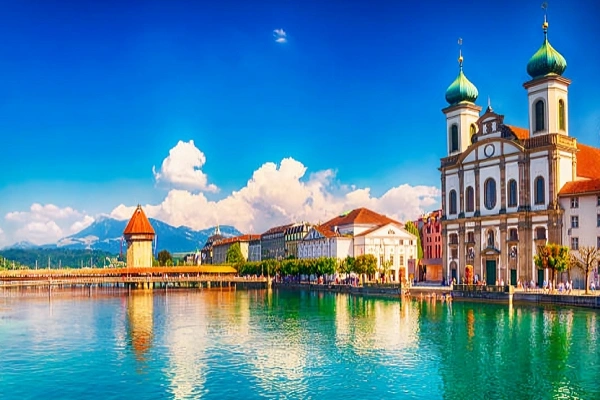
Lucerne sits at the northern end of Lake Lucerne in central Switzerland, with Mount Pilatus visible to the south and the Reuss River flowing right through the heart of the Old Town.
The city was founded as far back as 840 AD, and centuries of history are visible in its architecture, bridges, towers, and streets.
What makes Lucerne stand out from other Swiss cities like Zurich or Basel is the sheer density of beauty in a very small, walkable space. You do not need public transportation to get around.
Everything from the Chapel Bridge to the Lion Monument to the Musegg Wall is reachable on foot, making it one of the most accessible city experiences in all of Switzerland.
The city also sits at the crossroads of Swiss travel. Zurich is only 50 minutes away by train, and Bern, the capital, is just about an hour.
Lucerne is also a stop on the famous Golden Pass Line, one of the most scenic panoramic train routes in Europe, which runs all the way down to Montreux on Lake Geneva.
The Top Reasons to Visit Lucerne
1. Chapel Bridge — The Most Iconic Landmark in Switzerland
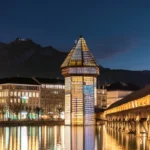
The Chapel Bridge, known in German as Kapellbrücke, is arguably the single most recognizable symbol of Lucerne.
Built in the 14th century, it is the oldest wooden covered bridge in Europe and stretches across the Reuss River in the heart of the city.
Inside the bridge, you will find a series of 17th-century paintings depicting scenes from Swiss and Lucerne history.
Although a fire in 1993 destroyed around two-thirds of the original paintings, some were salvaged and restored, and the bridge itself was carefully rebuilt.
Walking across it — both during the day and after dark when it is illuminated — is one of those experiences that stays with you.
The octagonal water tower standing beside the bridge is another landmark that adds to the visual drama of the scene.
Together, they create one of the most photographed spots in all of Switzerland.
2. The Natural Beauty Is Genuinely Unmatched
Even among Switzerland’s many stunning destinations, Lucerne holds a special place.
The lake itself is 114 square kilometres in size, fed by glacial runoff that gives the water a distinctive warm green colour.
White swans glide across the surface near the waterfront, and on clear days, Mount Pilatus dominates the skyline to the south with full dramatic effect.
The surrounding Alpine landscape is visible from nearly every corner of the city.
Whether you are walking along the lakeside promenade, climbing the Musegg Wall, or simply sitting at a café near the river, the scenery is constant and striking.
3. Mount Pilatus — A Must-Do Day Trip
No visit to Lucerne is complete without a trip up Mount Pilatus. At over 2,000 metres above sea level, Pilatus offers some of the most breathtaking views in the Swiss Alps and is easily accessible from the city.
The most famous way to reach the summit is via the world’s steepest cogwheel railway, which runs from the village of Alpnachstad during the warmer months.
Alternatively, you can take a cable car or gondola from Kriens, a short trip from Lucerne city centre.
At the top, there is snow well into spring, along with the longest toboggan run in Switzerland, a rope course, hiking trails, and restaurants with panoramic views.
It is an experience suited to all ages and all types of travellers. For those who want variety, Mount Rigi — known as the Queen of the Mountains — is another popular option.
It also offers stunning views and has a mountain-top mineral spa, making it a more relaxed alternative to Pilatus.
4. The Old Town Is Full of History and Character
Lucerne’s Altstadt, or Old Town, is a beautifully preserved area of cobbled lanes, colourful frescoed buildings, medieval fountains, small craft shops, and antique dealers.
Walking through it feels genuinely transporting — especially in the early morning before the crowds arrive.
The streets are quirky and not very wide. Iron gate fences, ornate façades, and flower-covered window boxes line the lanes.
Pop-up flea markets appear along the river on weekends, and there are independent shops selling everything from Swiss watches to handmade goods.
One of the best ways to appreciate the Old Town from above is to climb the Musegg Wall, a section of the city’s medieval fortifications that still stands largely intact.
Four of its towers are open to the public, and the views from the top — across the rooftops of the Old Town, the lake, and the mountains beyond — are exceptional.
One of the towers also houses Lucerne’s oldest clock, dating back to the 16th century.
5. The Lion Monument — One of the Most Moving Sculptures in the World
Located just a short walk from the Old Town, the Lion Monument (Löwendenkmal) is carved directly into a sandstone cliff face and depicts a dying lion with a spear in its side.
It was created in 1820 as a memorial to the Swiss mercenaries who died defending King Louis XVI of France during the French Revolution.
The writer Mark Twain famously described it as the most mournful and moving piece of stone in the world.
Whether or not you agree, it is a deeply affecting sight and a genuinely important piece of European history set in an unexpectedly quiet corner of the city.
6. Lake Lucerne by Boat
Taking a cruise on Lake Lucerne is one of the most enjoyable ways to spend a few hours in the city.
The lake has 32 boat piers along its shores, and several operators run routes ranging from short panoramic trips to longer lunch and dinner cruises.
Even a short one-hour ride gives you a completely different perspective on the city and the surrounding Alpine scenery.
The combination of the water, the mountains, and the clear sky on a sunny day is something that photographs simply cannot fully capture.
7. Swiss Food Culture — Chocolate, Cheese, and More
Lucerne is a wonderful place to experience Swiss culinary traditions.
The city has several branches of Läderach, one of Switzerland’s finest chocolate makers, where you can pick up handcrafted chocolates and confections.
The Old Town also has a number of excellent cheese shops, including long-established family-run establishments with deep roots in the local community.
For a more formal dining experience, the Old Swiss House is one of Lucerne’s most celebrated restaurants, known in particular for its Wiener Schnitzel, which is prepared tableside in the traditional manner.
Whether you are looking for a quick snack from a Saturday morning market or a full sit-down meal, Lucerne’s food scene reflects the quality and craftsmanship the country is known for.
Practical Travel Tips for Lucerne
Plan and Book in Advance
People love to visit Lucerne, and during the busiest times, like summer, hotels, tours, and restaurants get very full very quickly.
The best accommodation options, especially those in the budget and mid-range categories, sell out fast.
Booking in advance not only secures availability but also gives you time to research the stories behind the sights, which makes the visit significantly more rewarding.
Where to Stay
Staying near Lake Lucerne is highly recommended. Hotels along the lakeshore tend to offer more competitive rates than those in the very centre of the Old Town, while still providing easy walking access to all the major attractions.
Early mornings and evenings on the lakeside are particularly peaceful and atmospheric.
Notable options include the historic Grand Hotel National, which has been a landmark of the city since 1870 and sits between the Old Town and the lake.
For a more boutique experience, the Hotel Beau Séjour occupies a striking Belle Époque building facing the water. Both are great ways to get to Lucerne’s most popular attractions.
Getting Around
One of Lucerne’s great practical strengths is its walkability. ,
The city centre is compact, and most of the key sights — the Chapel Bridge, the Lion Monument, the Musegg Wall, the waterfront, and the Old Town — can all be reached on foot from a central hotel.
Public transport is available and efficient, but for most visitors, it is rarely necessary within the city itself.
How Long to Stay
Most travellers find that two full days is a comfortable amount of time to explore Lucerne’s city centre and take at least one mountain excursion.
If you plan to visit both Mount Pilatus and Mount Rigi, or want to take a longer boat cruise or explore the wider Canton of Lucerne, an additional day is worthwhile.
Is Lucerne Worth Visiting for Every Type of Traveller?
The answer is yes, for almost everyone. History enthusiasts will find centuries of Swiss and European history woven into the architecture and monuments.
Nature lovers have the lake, the mountains, and the Alpine landscape on their doorstep.
Photographers will find the city endlessly rewarding, from the photogenic symmetry of the Chapel Bridge to the sweeping panoramas from Mount Pilatus.
Food lovers can explore Swiss chocolate and cheese traditions in depth. Even those who simply enjoy wandering through beautiful streets and sitting by the water will find Lucerne deeply satisfying.
It is worth noting that Switzerland is generally an expensive destination, and Lucerne is no exception.
However, many of the city’s most memorable experiences — walking the Musegg Wall, crossing the Chapel Bridge, strolling along the lake at sunset — are entirely free.
With some advance planning and thoughtful booking, it is possible to experience Lucerne well without excessive spending.
Final Thoughts
So, is Lucerne worth visiting? After looking at everything the city has to offer — the medieval architecture, the Alpine setting, the cultural depth, and the easy access to some of Switzerland’s most spectacular mountain scenery — the answer is an unqualified yes.
It is a city that rewards every kind of traveller and leaves a lasting impression.
If you are planning a wider European itinerary, destinations like Lucerne pair beautifully with iconic Mediterranean towns.
For example, You Should Go Here in Positano offers a completely different travel experience with its dramatic cliffs, colourful houses, and stunning Amalfi Coast views.
Together, these destinations show just how diverse and unforgettable travel in Europe can be.
If you are planning a trip to Switzerland, Lucerne should not be an afterthought. Someplace on your list should be there first.

A travel writer sharing informative guides, tips, and itineraries to help travelers explore the world smarter.