
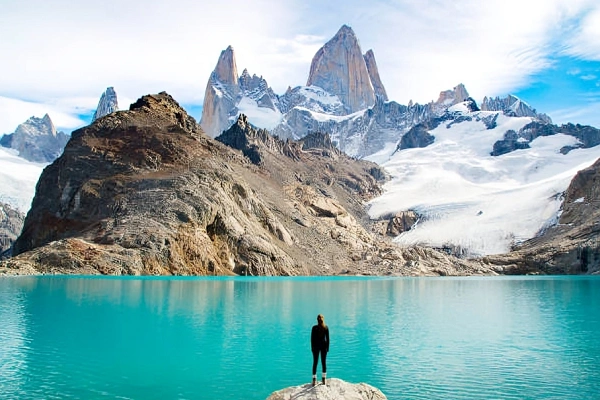
Chile runs along the western coast of South America for more than 4,300 kilometres and has some of the most varied landscapes on Earth.
Chile has an amazing diversity of things to do that few other nations can match. It has the driest desert in the world, ancient glaciers, the enigmatic Easter Island, and the spectacular peaks of Patagonia.
Santiago
Santiago is the lively capital of Chile and the major way for people from other countries to get there.
This sophisticated city with almost seven million people located in a valley encircled by the Andes Mountains. It has both urban culture and natural beauty.
Cerro San Cristóbal
Cerro San Cristóbal is 300 metres high and gives you a 360-degree view of Santiago and the snow-capped Andes.
The hill is part of Metropolitan Park, which is one of the biggest urban parks in Latin America. Visitors can get to the top by taking a funicular, a cable car, or hiking trails.
The historic center
The historic center showcases Chile’s colonial heritage. Plaza de Armas remains the city’s heart, surrounded by the Metropolitan Cathedral and historic buildings.
The La Moneda Palace serves as the presidential residence and offers guided tours providing insight into Chile’s political history.
Central Market
Central Market (Mercado Central) attracts visitors with fresh seafood and traditional Chilean ingredients.
The Bellavista neighborhood features a bohemian atmosphere, colorful streets, and Pablo Neruda’s former residence, La Chascona, now a museum dedicated to the Nobel Prize-winning poet.
Santiago makes it easy to get to nearby sites. Less than an hour away are the wine valleys of Maipo and Casablanca.
In the winter, ski resorts in the Andes like Valle Nevado offer some of the best skiing in the world. 1.5 hours by car will get you to Valparaíso and Viña del Mar, both on the coast.
Valparaíso
One of Chile’s most beautiful towns to look at is Valparaíso. The brightly painted homes, street art, and winding stairs in this UNESCO World Heritage port city make its way up steep hillsides.
Because of its artsy vibe, the city is one of a kind in Chile.
Ascensores
Ascensores, the city’s ancient funiculars, take people up 42 hills, each with its own personality.
Tourists love Cerro Concepción and Cerro Alegre because they have cute cafés, small hotels, art galleries, and paintings that are really impressive.
Everywhere you look in the neighbourhoods, you can see creative things. They’re like outdoor art galleries.
La Sebastiana
La Sebastiana, another of Pablo Neruda’s residences, now welcomes visitors. The house provides glimpses into the poet’s life while offering commanding ocean views across the bay.
The working port at sea level demonstrates that Valparaíso remains a functioning maritime city.
Fresh seafood restaurants line the waterfront, serving daily catches while ships navigate the harbor.
Viña del Mar
Viña del Mar, which is close by, has a different vibe. It has wide beaches, a famous flower clock, and the Museo Fonck, which has a collection of Easter Island artefacts. It is known as the “Garden City.”
Atacama Desert
It is said that the Atacama Desert in northern Chile is the driest desert in the world. In this area, some weather stations have never reported rain.
The landscapes are so strange because of how dry they are that NASA tests Mars rovers here. The small valley town of San Pedro de Atacama is where most tourists stay.
Valle de la Luna
Valle de la Luna, or Moon Valley, has scenery that looks like they belong on the moon. Sand dunes, salt caves, and other unique rock forms were shaped by wind and water.
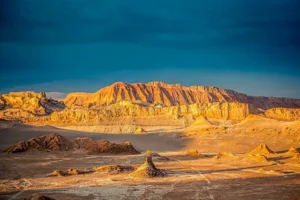
The colours of the valley change throughout the day. At sunset, when the rocks are a mix of red, gold, and purple, they look their most beautiful.
El Tatio Geysers
El Tatio Geysers sit at 4,320 meters elevation, making this one of the world’s highest geyser fields.
Over 80 geysers become active at dawn when temperature differences create optimal conditions. Steam and water shoot into the air as the sun rises over the surrounding mountains.
The Atacama Salt Flat
The Atacama Salt Flat (Salar de Atacama) covers 3,000 square kilometers. Within this harsh environment, beautiful lagoons provide habitat where three species of flamingos feed on algae in the salty waters. Laguna Chaxa offers the best flamingo viewing opportunities.
The Atacama has some of the best weather on Earth for seeing the stars. High elevation, almost no light pollution, and clear skies most nights make it possible to see very well.
The Milky Way looks incredibly bright, and public trips are available at professional observatories.
You can sandboard down huge dunes, ride a mountain bike through interesting scenery, and soak in hot springs while the stars shine.
Patagonia and Torres del Paine
Patagonia in Chile is one of the last truly wild places on Earth. In the south, there are huge glaciers, clear lakes, and rough granite hills.
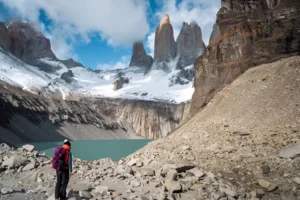
Torres del Paine National Park is the jewel of the area and one of the most beautiful natural places in the world.
The name of the park comes from the three unique rock towers, or torres, that rise almost straight out of the ground.
Together with the Paine Massif, these peaks make dramatic skylines that can be seen all over the park. Icebergs are pushed into Grey Lake by Grey Glacier. Blue-white ice formations can be seen up close on boat trips.
The W Trek
The W Trek attracts hikers worldwide. This multi-day trek covers approximately 80 kilometers through the park’s highlights, including the base of the Torres, the French Valley, and Grey Glacier.
The Circuit Trek extends around the massif’s backside, requiring 8-10 days to complete. Day hikes allow visitors to experience the park’s beauty without multi-day commitments.
Wildlife viewing opportunities
Wildlife viewing opportunities abound.
Uanacos (wild relatives of llamas) graze throughout the park in large herds. The puma population here ranks among the world’s densest. Andean condors soar overhead with massive wingspans.
The park has a wide range of ecosystems, from steppe grasslands in Patagonian Argentina to southern beech woods. When you look at rocky peaks, turquoise lakes fed by glacial melt make a striking colour difference. The well-known winds in Patagonian can hit 100 km/h.
Beyond Torres del Paine, Chilean Patagonia has a lot of fjords and canals that make waterways that are best seen by boat. You can start your journey in towns like Puerto Natales and Punta Arenas.
Lake District
With its clear lakes and snow-covered volcanoes, central Chile’s Lake District looks a lot like the Alpine areas of Europe. People come to this area to enjoy the natural beauty and outdoor activities. The area goes from Puerto Montt in the south to Temuco in the north.
Puerto Varas
Puerto Varas is the main hub for the area. The second-largest lake in Chile is right next to this town.
From there, you can see Osorno Volcano and Calbuco Volcano. The German immigrants who came to the town in the 1800s left their mark on the architecture, food, and society.
Pucón
Pucón attracts adventure enthusiasts. This town on Lago Villarrica serves as a base for climbing the active Villarrica Volcano, soaking in natural hot springs, white-water rafting on local rivers, and exploring Huerquehue National Park. Winter brings skiers to nearby resorts.
Vicente Pérez Rosales National Park
Vicente Pérez Rosales National Park, Chile’s oldest national park, protects Petrohué Falls where the Petrohué River cascades over volcanic rock.
The emerald green water contrasts strikingly with dark volcanic stone. Boat tours across Lago Todos los Santos showcase another spectacular lake surrounded by temperate rainforest.
There are thermal pools all over the Lake District that are great for relaxing. Many of them are in beautiful natural settings where people can soak in warm mineral waters while being surrounded by native trees.
The area’s national parks protect ecosystems where araucaria (monkey puzzle) trees stand tall over the forest floors.
Easter Island
Easter Island (Rapa Nui) is one of the most remote habitable islands in the world. It is 3,700 kilometres from the coast of Chile.
The nearly 900 Moai statues on the island are proof of a very advanced ancient society. They are huge stone figures that were carved by Polynesian ancestors.
The island with volcanoes is 164 square kilometres big. Around the island’s edge, the tallest Moai stand on platforms called ahu.
With its 15 standing moai, Ahu Tongariki is the most photographed spot on the island, especially at sunrise.
Rano Raraku
Rano Raraku, the volcanic crater quarry where Moai were carved, contains over 300 statues in various completion stages.
The site provides insight into how the Rapa Nui people created these massive figures, some weighing up to 80 tons.
Anakena Beach
Anakena Beach offers the island’s best swimming with white sand and turquoise water. A small group of Moai stand near the beach, restored to their platforms complete with topknots (pukao).
Easter Island has more to offer than just archaeological sites. It also has traditional dance shows, Polynesian culture, and a unique mix of South American and Pacific Islander elements.
The three volcanic sites on the island are great places to go hiking with great views of the whole island and the Pacific Ocean.
Chilean Wine Valleys
Chile’s geography creates exceptional wine-growing conditions. The Central Valley and surrounding regions produce world-class wines, particularly Cabernet Sauvignon, Carménère, and Sauvignon Blanc.
The Colchagua Valley
One of the best areas in Chile to sip wine is the Colchagua Valley. It is two hours south of Santiago.
The valley grows bright reds that are known all over the world. Wineries (viñas) offer tours of farms, wine tastings, and traditional Chilean food.
Casablanca Valley
Casablanca Valley makes white wines and Pinot Noir. It is closer to Santiago and the coast. The cooler weather along the coast is perfect for these types of grapes.
A lot of wineries let people come in and taste the wine and take walks.
The Maipo Valley
The Maipo Valley combines accessibility with high-quality production. Historic wineries like Concha y Toro offer extensive tours showing the winemaking process, while smaller boutique producers focus on limited production, premium wines.
Chiloé Island
Chiloé Island in southern Chile maintains traditions and lifestyle distinct from mainland Chile. Wooden churches, stilt houses (palafitos), and rich mythology characterize this island.
The island’s 150 wooden churches, built by Jesuit missionaries in the 17th and 18th centuries, represent a unique fusion of European and indigenous architecture.
Sixteen UNESCO-listed churches stand testament to the island’s religious heritage.
Castro
Castro, the island’s main town, features famous palafitos—colorful houses built on stilts over water. These traditional structures serve as the island’s most recognizable architectural feature.
Chiloé’s cuisine centers on seafood, with curanto being the signature dish. This feast involves cooking seafood, meat, and potatoes in an underground pit heated by stones.
The island’s folklore includes stories of witches, ghost ships, and mythical creatures. This atmosphere, combined with the natural beauty of rolling hills, quiet coves, and temperate rainforest, creates a unique destination.
Carretera Austral
The Southern Highway, or Carretera Austral, goes through Northern Patagonia for 1,240 kilometres. This mostly gravel road joins towns and goes through beautiful wilderness.
Along the path, you can see hanging glaciers, turquoise rivers, thick forests, and faraway fjords.
Marble Caves at General Carrera Lake have blue and white designs carved into the cliffs of marble by water. A unique hanging glacier is protected by Queulat National Park.
Hidden Gems: Undiscovered Chilean Treasures
Chile has places that aren’t as well known but are still worth visiting because they offer real experiences without the crowds.
These “hidden gems” show off the variety of the country without being overrun by tourists.
Elqui Valley
The Elqui Valley in northern Chile produces the country’s famous Pisco while offering world-class stargazing opportunities.
This peaceful valley features clear skies, making it home to several astronomical observatories that conduct public tours. Small villages like Pisco Elqui maintain a relaxed atmosphere with colorful buildings and distillery tours.
The valley also celebrates Gabriela Mistral, Chile’s Nobel Prize-winning poet who was born in the town of Vicuña.
Cochamo Valley
With its huge rock walls and waterfalls, Cochamo Valley in the Lake District looks a lot like Yosemite National Park in California. Rock climbers and hikers looking for pure wilderness come to this remote valley.
To get to La Junta, you have to hike through a temperate jungle and stay in simple mountain refuges for several days.
The valley hasn’t been built on much, so it’s still a great place to get away from the crowds and enjoy the countryside.
Futaleufú
The small town of Futaleufú near the Argentine border sits along one of the world’s best whitewater rivers. The turquoise Futaleufú River attracts adventure seekers for rafting and kayaking through Class IV and V rapids.
The surrounding landscape features dramatic mountains, pristine rivers, and opportunities for fly fishing, horseback riding, and hiking.
The town maintains an authentic Patagonian character with limited development.
Pumalín Park
Along the Austral Highway, Pumalín Park protects 400,000 hectares of temperate jungle. Douglas Tompkins, a conservationist, gave this private park its well-kept trails, campgrounds, and hanging glacier views.
The alerce trees in the park can live for more than 3,000 years. They are linked to California redwoods.
There are calm spots to visit with volcanic hot springs, clear lakes, and not many people.
Huasco Valley
The Huasco Valley north of La Serena produces table grapes and olive oil in an unexpected desert setting.
This agricultural oasis receives water from Andean snowmelt, creating lush vineyards and orchards against barren hillsides.
The coastal town of Huasco features quiet beaches and fresh seafood restaurants. The valley offers authentic glimpses of rural Chilean life without tourist crowds.
Navarino Island
A trail called the Dientes de Navarino Circuit starts on Navarino Island, which is south of Tierra del Fuego. It is one of the southernmost hiking routes in the world.
This tough 53-kilometer loop goes through beautiful mountain scenery, clear lakes, and sub-Antarctic desert.
The city of the island, Puerto Williams, says it is the southernmost town in the world. The number of visitors is still low because the area is so remote and difficult to get to.
Isla Damas
Isla Damas, part of the Humboldt Penguin National Reserve near La Serena, hosts colonies of Humboldt penguins and other seabirds.
Boat tours from Punta de Choros allow visitors to observe penguins, sea lions, and dolphins in their natural habitat.
The reserve’s three islands protect marine ecosystems along Chile’s northern coast. Clear waters and abundant marine life make this an excellent alternative to more famous wildlife destinations.
Travel Planning Information
Because Chile is so long, most tourists only visit certain areas. People who are visiting Santiago for the first time often combine it with one or two other big cities. Santiago, the Atacama Desert, and Patagonia are all popular places to visit.
Different places have different best times to visit. From December to February, summer is the best time to go to Patagonia and the Lake District.
The Atacama is open to tourists all year. The weather on Easter Island is warm for most of the year. In the spring (September–November) and fall (March–May), Santiago and central Chile are nice places to be.
To get around Chile, most people take domestic flights between the country’s big regions.
Santiago has flights to Calama (for Atacama), Punta Arenas (for Patagonia), Puerto Montt (for the Lake District), and Easter Island. Within regions, you can get around with rental cars or organised trips.
There are hostels and cheap buses for backpackers in Chile, as well as high-end lodges and private guides for more expensive travellers.
The country has good bus networks and well-established tourist services that make it easy for people to move on their own.
Just like the famous Road to Hana in Hawaii, some routes in Chile—such as the Lake District drives and the Carretera Austral—are more about enjoying the journey than just reaching the destination.
Final Thoughts
From the Atacama Desert to the Patagonian mountains, Chile has a lot of different landscapes.
In Torres del Paine, you can explore nature, on Easter Island you can see amazing historical sites, in the Central Valley you can taste wine, and all over the country you can go on exciting adventures.
Chile is a great place to visit for travellers who want to have a variety of experiences in the same country because it has beautiful nature, a rich culture, and a lot of different landscapes.

A travel content creator providing destination insights, practical advice, and travel inspiration for every journey.