


Argentina is not the kind of country that fits neatly into a single travel category.
The things to do in Argentina range from standing at the edge of one of the world’s most powerful waterfalls to kayaking in front of a 240-foot wall of ice.
It is a country of genuine extremes, and that is exactly what makes it worth visiting.
Stretching nearly 3,700 kilometers from north to south, Argentina covers an extraordinary range of landscapes:
subtropical jungles, vast grasslands, high-altitude valleys, raw Patagonian wilderness, and a coastline rich with wildlife.
The cities carry their own weight too, with Buenos Aires alone capable of filling an entire itinerary. Whether the goal is adventure, wildlife, history, or food Argentina delivers.
1) Visit Iguazu Falls
No list of things to do in Argentina is complete without Iguazu Falls. Located on the border between Argentina and Brazil, these falls are 1.5 times taller than Niagara Falls and nearly three times as wide.
The Argentina side is widely considered the better option, offering well-maintained hiking trails, a 1,100-meter catwalk that takes you right to the top of the falls, and jaw-dropping views of Devil’s Throat, the most powerful section of the falls.
The Gran Aventura boat tour on the Argentina side takes you directly beneath some of the smaller falls. It is thrilling, completely drenching, and absolutely unforgettable.
The only hotel inside the Argentine national park Hotel Gran Meliá Iguazú — sits right above the falls and is considered one of the most spectacular hotel locations in all of South America.
Guests have been known to wake up to capuchin monkeys on their balconies and spot toucans on the jungle trails in the early morning.
Best time to visit: April to September for lower crowds and comfortable temperatures.
2) Explore Buenos Aires
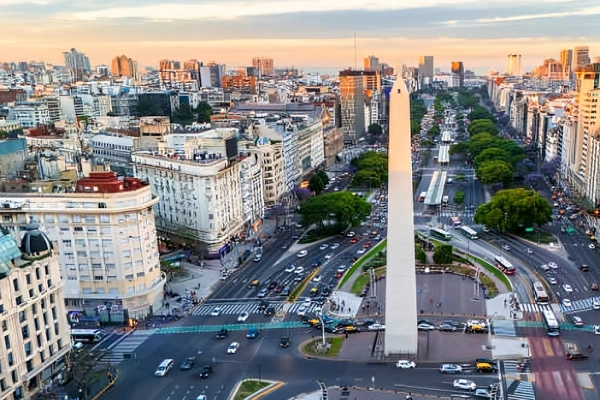
Buenos Aires, the capital city, is nicknamed the “Paris of the South” and is the most visited city in South America. It blends European architecture with South American energy in a way that feels entirely unique.
Every area in the city has its own style. La Boca is colorful and artistic. San Telmo is historic, with a famous Sunday antique market and tango bars on every corner.
For travelers who love vibrant cities and waterfront culture alike, things to do in Seattle offer a similar mix of urban charm and scenic views.
Recoleta is elegant and leafy, home to the world-famous La Recoleta Cemetery — the resting place of Eva Perón and a fascinating walk through Argentine history. Palermo is modern, full of restaurants, parks, and street art.
Buenos Aires also holds the title of having the second most bookstores per capita in the world.
The most iconic of these is El Ateneo Grand Splendid, a stunning 100-year-old theater that was converted into a bookstore — the reading areas are built into what were once theater boxes.
Two experiences in Buenos Aires that should not be skipped:
- A tango show Argentina is the birthplace of tango, and Buenos Aires is where it is performed at its highest level
- A traditional asado dinner Argentina’s grilling culture is legendary, and the asador (grill master) takes their craft very seriously
La Casa Rosada (the presidential palace) and Plaza de Mayo are also key historical landmarks worth visiting.
3) Trek in El Chaltén
El Chaltén is recognized as the hiking capital of Argentina for a good reason.
The village is in Los Glaciares National Park in Patagonia and is at the foot of some of the most beautiful mountains in the world, like Cerro Torre and Mount Fitz Roy.
The famous Laguna de Los Tres trek is a 12- to 13-mile round journey that gets you to the base of the Fitz Roy peaks.
The last kilometer is a difficult, rocky climb, but the vista from the top, which looks out over a glacial lake with jagged peaks behind it, is one of the most beautiful things in all of South America.
The Fitz Roy silhouette is so well-known that it is now the emblem for the outdoor clothing manufacturer Patagonia.
There are no permits needed to hike on most of the trails near El Chaltén. The town is modest, friendly, and full of other trekkers from all over the world.
4) See the Perito Moreno Glacier
The Perito Moreno Glacier in El Calafate is one of the few glaciers in the world that is still advancing rather than retreating — which makes it a rare and remarkable natural phenomenon.
It forms part of the Southern Patagonian Ice Field, the third largest freshwater reserve on the planet.
Standing at 240 feet tall, the glacier wall is accessible via several miles of viewing walkways.
Visitors can also go ice trekking with crampons, exploring crevasses, ice caves, and moulins on guided walks directly on top of the glacier.
For a different perspective, kayaking on the glacial lake in front of the ice wall is an unforgettable experience.
The lake is filled with massive floating ice chunks and the filtered glacier water is clean enough to drink.
The loud, thunderous crack of ice breaking off and crashing into the water below is something that stays with you long after you leave.
5) Discover Ushuaia and Tierra del Fuego
Ushuaia is the southernmost city in the world — often called the “End of the World” — and it lives up to the name.
Sitting along the Beagle Channel, surrounded by mountains and raw Patagonian wilderness, Ushuaia is the gateway to some of the world’s most extreme outdoor adventures.
Tierra del Fuego National Park offers hiking trails through ancient forests and along the coastline. The channel itself is a habitat for sea lions, penguins, and various seabirds.
Ushuaia is also the main departure point for Antarctica expeditions — if visiting the seventh continent is on your list, this is where that journey begins.
6) Explore the Iberá Wetlands
The Iberá Wetlands in northeastern Argentina are one of the country’s most amazing but little-known natural wonders.
This huge freshwater environment is one of the biggest wetland systems in the world, covering more than 13,000 square kilometers.
In this protected area, caimans, capybaras, marsh deer, giant anteaters, howler monkeys, and hundreds of other birds can all live freely.
Guided boat tours around the canals get you very near to animals in their natural habitat.
A rewilding initiative that has successfully brought jaguars back to the area after being gone for 70 years is what makes Iberá so thrilling.
This is a conservation tale that is unlike any other in South America.
7) Visit Peninsula Valdés
Peninsula Valdés on Argentina’s Atlantic coast is a UNESCO World Heritage Site and one of the best places in the world for marine wildlife watching.
Between June and December, southern right whales come here to breed and raise their young in the calm waters of the peninsula’s two gulfs.
The peninsula is also home to large colonies of Magellanic penguins, southern elephant seals, and Patagonian sea lions.
Orca (killer whale) sightings are also possible during seal pupping season between February and April.
This is a destination that wildlife photographers and nature lovers regularly describe as one of the highlights of their entire travels in South America.
8) Experience Mendoza Wine Country
Mendoza is Argentina’s premier wine region and the heart of Malbec production.
The city sits at the foot of the Andes mountains, and its vineyards benefit from high altitude, dry climate, and intense sunshine — conditions that produce some of the finest red wines in the world.
Renting a bike and cycling through the Maipú wine district is a classic and relaxed way to visit multiple bodegas in a single afternoon.
For a more curated experience, guided tours through the prestigious Uco Valley offer access to some of Argentina’s most celebrated wineries.
Harvest season (March) is an especially lively time to visit, coinciding with the Vendimia Festival — Argentina’s national grape harvest celebration.
9) Travel to Salta and the Northwest
Salta in northern Argentina is the gateway to a dramatically different landscape — the Valles Calchaquíes, a stunning series of high-altitude valleys filled with red rock formations, salt flats, and colonial architecture.
Day trips from Salta take you through the Quebrada de Humahuaca — a UNESCO World Heritage valley known for its vivid, multicolored hillsides — and through Cafayate, a smaller wine region specializing in the white grape Torrontés.
The food in Salta is also distinctly different from Buenos Aires — empanadas salteñas and locro stew are regional specialties worth seeking out.
10) Relax in Bariloche and the Lake District
San Carlos de Bariloche sits on the edge of Nahuel Huapi Lake in the Argentine Lake District, surrounded by forests and snow-capped peaks.
The scenery here is often compared to the Swiss Alps — and the town is famous for its Swiss-style chocolate shops.
Activities range from skiing in winter (Bariloche is one of South America’s top ski destinations) to mountain biking, hiking, and kayaking in summer.
The Circuito Chico is a popular scenic road route that takes in the lake, forests, and mountain views in a half-day loop.
Just south of Bariloche, the small bohemian town of El Bolsón adds a relaxed, alternative character to the region — known for its organic farms, craft beer microbreweries, and artisan markets on Tuesdays, Thursdays, and weekends.
Argentina is a country that rewards curious travelers.
Whether you are standing at the edge of a Patagonian glacier, watching tango dancers in a century-old Buenos Aires theater, or drifting silently through the Iberá Wetlands in a canoe, the experiences here are genuinely world-class.
The sheer variety of landscapes, wildlife, food, and culture packed into one country makes Argentina one of the most complete travel destinations on earth.

A travel content creator providing destination insights, practical advice, and travel inspiration for every journey.