
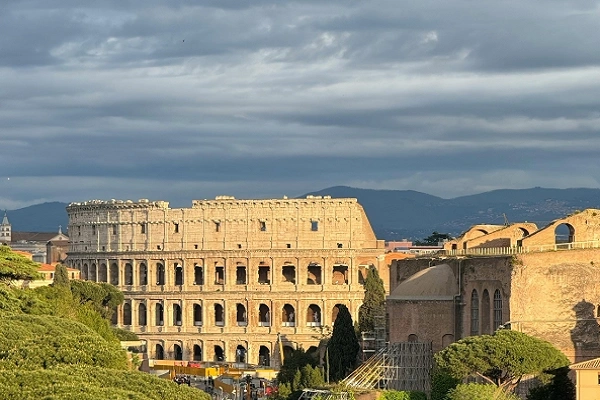
No country in the world has more UNESCO Sites than Italy. As of 2025, the total number of inscribed properties stands at 61 — a figure that spans ancient Roman roads, prehistoric burial grounds, Renaissance city centers, volcanic islands, and alpine mountain ranges.
These sites are distributed across every major region of the country, from the northern Alps to the southern tip of Sicily.
This guide covers each UNESCO World Heritage Site in Italy by region, with verified details on designation year, site type, and historical background.
What Are UNESCO World Heritage Sites?
The United Nations Educational, Scientific and Cultural Organization — better known as UNESCO — maintains a list of places considered to have outstanding universal value to humanity.
A site earns this status through a formal nomination and evaluation process, after which it is inscribed under one of three categories: Cultural, Natural, or Mixed.
Italy’s 61 inscribed properties fall across all three categories, though the overwhelming majority are Cultural.
UNESCO Sites in Northern Italy
Northern Italy is home to UNESCO sites shaped by alpine geography, medieval trade history, Renaissance urban planning, and centuries-old agricultural systems.
Venice and Its Lagoon — Veneto (1987) | Cultural
Few cities in the world have a physical form as unusual as Venice.
Built across a group of islands in a shallow lagoon on the northeastern Adriatic coast, the city developed an infrastructure entirely dependent on water — canals instead of roads, boats instead of vehicles, and an elaborate system of tidal defenses instead of city walls.
The UNESCO designation covers not just the historic city but the lagoon itself and the surrounding islands, recognizing that Venice and its water environment are inseparable.
For centuries, this arrangement supported one of the most powerful maritime trading empires in the Mediterranean world.
The Dolomites — Veneto, Trentino-Alto Adige, Friuli-Venezia Giulia (2009) | Natural
The Dolomites are a mountain group in northeastern Italy recognized for their exceptional geological and scenic value.
The site covers approximately 141,903 hectares and includes some of the most dramatic limestone formations in the world, among them Tre Cime di Lavaredo and Marmolada.
The area contains a significant fossil record and represents an outstanding example of glacial landform development.
City of Vicenza and Palladian Villas of the Veneto — Veneto (1994) | Cultural
Vicenza is closely associated with the architect Andrea Palladio, whose 16th-century designs had a lasting influence on Western architecture.
The UNESCO site includes the city of Vicenza and a series of villas in the surrounding Veneto region that demonstrate Palladio’s interpretation of classical Roman architecture.
Botanical Garden of Padua — Veneto (1997) | Cultural
Established in 1545, the Botanical Garden of Padua is the oldest academic botanical garden in the world.
It was founded by the University of Padua as a center for scientific research in medicine and natural history.
The garden contains thousands of plant species and maintains its original circular layout, which has remained largely unchanged for nearly 500 years.
City of Verona — Veneto (2000) | Cultural
Verona preserves an exceptional accumulation of urban layers from Roman, medieval, and Renaissance periods.
Key monuments include the Roman Arena, the city walls, the Arche Scaligere funerary monuments, and the Romanesque Basilica of San Zeno Maggiore.
The city’s historic center reflects its long role as a strategic and commercial hub in northern Italy.
Vineyard Landscape of Langhe-Roero and Monferrato — Piedmont (2014) | Cultural
This UNESCO site covers a historic wine-producing landscape in Piedmont, characterized by terraced hillsides, fortified medieval villages, and agricultural systems connected to traditional grape varieties including Nebbiolo and Barbera.
The designation recognizes the long-standing relationship between the local population and vine cultivation in this region.
Residences of the Royal House of Savoy — Piedmont (1997) | Cultural
The House of Savoy constructed a network of imperial palaces and hunting lodges in and around Turin between the 16th and 18th centuries, which are now part of this site.
The architectural aspirations of one of Europe’s most influential royal dynasties are evident in the properties.
Porto Venere, Cinque Terre, and the Islands — Liguria (1997) | Cultural
UNESCO designation includes five historic villages along the Ligurian coast: Monterosso al Mare, Vernazza, Corniglia, Manarola, and Riomaggiore.
It also includes the nearby town of Porto Venere and the islands of Palmaria, Tino, and Tinetto.
The site is recognized as a cultural landscape shaped by centuries of human adaptation to a steep, rocky coastal terrain.
Genoa: Le Strade Nuove and the Palazzi dei Rolli System – Liguria (2006) | Cultural
Laid out in the mid-16th century, the Strada Nuova was built as one of Europe’s first planned urban streets.
It is part of this site, along with the Palazzi dei Rolli, a group of noble residences that were officially registered to host visiting dignitaries of the Genoese Republic.
These properties represent an early example of public and private cooperation in European urban governance.
Rock Drawings in Valcamonica — Lombardy (1979) | Cultural
This site has one of the largest groups of prehistoric rock carvings in the world. It is in the Camonica Valley.
The drawings span several thousand years and depict a wide range of subjects including human figures, animals, and symbolic patterns.
It was the first location in Italy to be listed as a World Heritage Site by UNESCO.
Church and Dominican Convent of Santa Maria delle Grazie — Lombardy (1980) | Cultural
The Church of Santa Maria delle Grazie in Milan dates from the late 15th century and represents an important phase in Lombard Renaissance architecture.
The building itself would be significant on its own terms, but its global reputation rests on a single work painted on the wall of the adjacent convent’s refectory: Leonardo da Vinci’s The Last Supper.
Completed between 1495 and 1498, the mural depicts the moment described in the Gospel of John when Christ announces that one of his disciples will betray him.
Despite centuries of deterioration and a troubled restoration history, it remains one of the most studied and reproduced works in the history of Western art.
Mantua and Sabbioneta — Lombardy (2008) | Cultural
Mantua and Sabbioneta are two Renaissance cities in Lombardy that demonstrate different but complementary approaches to Renaissance urban planning.
Mantua developed over centuries under the Gonzaga dynasty, while Sabbioneta was built from scratch in the 16th century as an ideal Renaissance city.
Early Christian Monuments of Ravenna — Emilia-Romagna (1996) | Cultural
This site includes eight buildings in Ravenna that contain exceptional examples of 5th- and 6th-century Christian and Byzantine mosaics.
The Mausoleum of Galla Placidia, the Basilica of San Vitale, and the Basilica of Sant’Apollinare Nuovo are among the monuments that illustrate the artistic and cultural transition from the late Roman era to the early medieval period.
Cathedral, Torre Civica and Piazza Grande, Modena — Emilia-Romagna (1997) | Cultural
The Cathedral of Modena, its adjacent bell tower known as the Ghirlandina, and the surrounding Piazza Grande together form one of the finest examples of Romanesque architecture and urban design in Italy.
The cathedral was built beginning in 1099 and is associated with the architect Lanfranco and the sculptor Wiligelmo.
Ferrara, City of the Renaissance, and its Po Delta — Emilia-Romagna (1995) | Cultural
Ferrara was an important center of Renaissance culture under the Este dynasty.
The UNESCO site covers the city’s historic center, which includes the Estense Castle, the Cathedral, and a planned Renaissance expansion from the late 15th century.
The designation was extended to include the Po Delta, a significant wetland and river landscape closely connected to the city’s history.
Archaeological Area and Patriarchal Basilica of Aquileia — Friuli-Venezia Giulia (1998) | Cultural
At its height during the Roman Empire, Aquileia was one of the largest and most prosperous cities in the Western world — a major port, trading hub, and eventually one of the earliest centers of Christian organization in Europe.
The city was largely destroyed in the 5th century AD and never rebuilt to its former scale, which has left its ancient remains unusually well preserved beneath the surrounding fields.
The UNESCO site includes the archaeological zones of the Roman city and the Patriarchal Basilica, whose 4th-century mosaic floor — covering more than 700 square meters — is among the most extensive early Christian floor mosaics in existence.
UNESCO Sites in Central Italy
Central Italy contains a high concentration of sites related to ancient Rome, Renaissance art and urban planning, and early Christian heritage.
Historic Centre of Florence — Tuscany (1982) | Cultural
Florence’s historic center is one of the most significant concentrations of Renaissance art and architecture in the world.
The UNESCO site includes Brunelleschi’s Cathedral dome, the Palazzo Vecchio, the Uffizi Gallery, the Basilica of Santa Croce, and numerous other civic and religious buildings that shaped the course of European art history.
Piazza del Duomo, Pisa — Tuscany (1987) | Cultural
The Cathedral (Duomo di Santa Maria Assunta), Baptistery, Leaning Tower (Campanile), and Monumental Cemetery are the four principal monuments of Pisa’s Piazza dei Miracoli.
The ensemble is considered an outstanding example of medieval Italian architecture and reflects the artistic and commercial power of the Pisan Republic during the 11th and 12th centuries.
Historic Centre of San Gimignano — Tuscany (1990) | Cultural
San Gimignano is a small walled town in Tuscany known for its medieval towers, of which 14 still stand today.
The town’s historic center preserves an exceptionally complete example of medieval urban form and is closely associated with the Via Francigena pilgrimage route.
Historic Centre of Siena — Tuscany (1995) | Cultural
Siena developed as one of the major political and artistic centers of medieval Italy.
Its historic center retains much of its original 13th- and 14th-century urban layout, including the Piazza del Campo, the Cathedral, and the Palazzo Pubblico.
The city’s art and architecture influenced the development of Gothic painting and sculpture across Europe.
Historic Centre of the City of Pienza — Tuscany (1996) | Cultural
Pienza was redesigned in the 15th century by Pope Pius II as a model Renaissance city.
The redesign, carried out by architect Bernardo Rossellino, transformed the existing town into a planned urban environment organized around a central piazza, representing humanist ideals of civic space.
Val d’Orcia — Tuscany (2004) | Cultural
The Val d’Orcia is a rural landscape in southern Tuscany that was largely shaped during the Renaissance period.
The area is recognized for its scenery of rolling hills, cypress trees, and fortified hilltowns, which was depicted in Sienese paintings and has remained largely unchanged for centuries.
Tuscany’s Medici Villas and Gardens — Tuscany (2013) | Cultural
This serial site includes 14 villas and two gardens associated with the Medici family, built between the 15th and 17th centuries across Tuscany.
The properties represent an influential approach to Renaissance architecture and landscape design that had a significant impact on the development of European gardens.
Etruscan Necropolises of Cerveteri and Tarquinia — Tuscany/Lazio (2004) | Cultural
These two burial sites provide the most important surviving evidence of the Etruscan civilization, which flourished in central Italy before the rise of Rome.
The necropolis of Cerveteri covers nearly 400 hectares and contains thousands of tomb mounds.
The necropolis of Monterozzi in Tarquinia is known for its painted tomb chambers depicting Etruscan daily life, religious rituals, and mythology.
Historic Centre of Urbino — Marche (1998) | Cultural
Urbino was transformed into a model Renaissance city during the 15th century under the patronage of Duke Federico da Montefeltro.
The Ducal Palace, designed by Luciano Laurana, and the surrounding street layout reflect the humanist ideals of the period and attracted leading artists and intellectuals of the Renaissance.
Assisi, the Basilica of San Francesco and Other Franciscan Sites — Umbria (2000) | Cultural
The town of Assisi is closely associated with Saint Francis, whose teachings gave rise to the Franciscan religious movement in the 13th century.
The UNESCO site includes the Basilica of San Francesco, which contains fresco cycles attributed to Cimabue, Giotto, and Simone Martini, as well as other sites connected to the Franciscan tradition.
Historic Centre of Rome, the Properties of the Holy See and San Paolo Fuori le Mura — Lazio (1980) | Cultural
Rome’s historic center encompasses a layering of monuments and urban fabric that has few parallels anywhere in the world.
Ancient structures — the Colosseum, the Roman Forum, the Pantheon, Trajan’s Column, and the remains of imperial palaces on the Palatine Hill — stand within a city that continued to rebuild itself through the medieval, Renaissance, and Baroque periods.
The Vatican, included in the designation through its status as a separate state, adds the Sistine Chapel, St. Peter’s Basilica, and the Vatican Museums to an already extraordinary concentration of art and architecture.
Early Christian basilicas, including San Paolo Fuori le Mura, complete a site that spans roughly two and a half thousand years of continuous urban history.
Via Appia connects Lazio, Campania, Basilicata, and Puglia (2024)
The Via Appia, known as the Regina Viarum or Queen of Roads, is the oldest and most important road constructed by the ancient Romans.
Built from 312 BC onwards under the authority of the censor Appius Claudius Caecus, the road was originally designed as a military route connecting Rome to Capua and was later extended to Brindisi on the Adriatic coast, covering a total distance of more than 800 kilometers.
The road passes through four Italian regions — Lazio, Campania, Basilicata, and Puglia — and is lined with engineering works, funerary monuments, settlements, ports, and places of worship that document the full range of Roman civilization.
Beyond its military and commercial function, the Via Appia served as a major route for the spread of Christianity and later provided passage for Crusaders and pilgrims traveling to the Holy Land.
It was inscribed on the UNESCO World Heritage List in July 2024 at the 46th session of the World Heritage Committee in New Delhi.
Villa Adriana (Hadrian’s Villa), Tivoli — Lazio (1999) | Cultural
Hadrian’s Villa is a large complex of buildings constructed by the Roman Emperor Hadrian near Tivoli in the 2nd century AD.
The complex covers more than 120 hectares and includes reproductions of architectural elements from across the Roman Empire, reflecting Hadrian’s interest in Greek and Egyptian culture.
Villa d’Este, Tivoli — Lazio (2001) | Cultural
Villa d’Este is a 16th-century villa and garden in Tivoli, originally built for Cardinal Ippolito II d’Este.
The garden is renowned for its elaborate system of fountains, water channels, and ornamental basins, designed using innovative hydraulic engineering.
The layout influenced the development of European garden design for centuries.
UNESCO Sites in Southern Italy and the Islands
Southern Italy’s UNESCO sites reflect ancient pre-Roman civilizations, volcanic geology, Baroque architecture, and distinctive regional building traditions.
Historic Centre of Naples — Campania (1995) | Cultural
Naples has one of the oldest continuously inhabited urban centers in Europe.
The UNESCO site covers the historic center of the city, which contains a layered record of Greek, Roman, medieval, Renaissance, and Baroque architecture.
Naples also preserves an extensive network of subterranean structures dating back to the Greek and Roman periods.
Amalfi Coast — Campania (1997) | Cultural
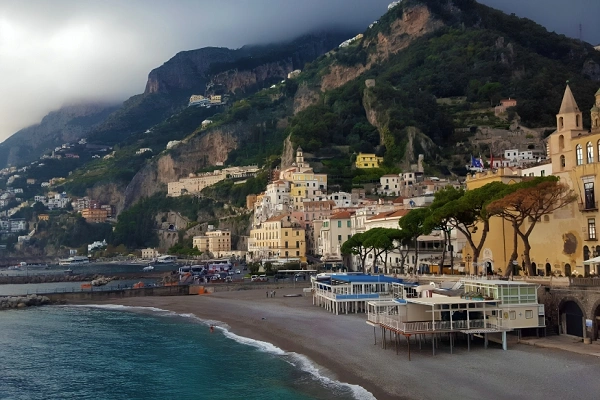
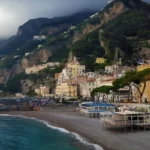
The Amalfi Coast is a 50-kilometer stretch of coastline in the Campania region, recognized as a cultural landscape shaped by centuries of maritime commerce, terraced agriculture, and coastal settlement.
Towns such as Amalfi, Positano, Ravello, and Praiano are built directly into steep cliffs above the Tyrrhenian Sea.
Royal Palace of Caserta with the Park, the Aqueduct of Vanvitelli and the San Leucio Complex — Campania (1997) | Cultural
The Royal Palace of Caserta is an 18th-century Baroque palace built for the Bourbon kings of Naples.
Designed by Luigi Vanvitelli, the palace contains more than 1,200 rooms and is surrounded by an extensive formal garden with a series of monumental fountains.
The adjacent Aqueduct of Vanvitelli is a significant feat of hydraulic engineering that supplied water to the palace complex.
Archaeological Areas of Pompeii, Herculaneum and Torre Annunziata — Campania (1997) | Cultural
The Roman cities of Pompeii and Herculaneum were buried by the eruption of Mount Vesuvius in 79 AD and remained largely sealed until modern excavations began.
The sites preserve detailed evidence of Roman urban planning, domestic architecture, public buildings, art, and daily life that is unparalleled in the archaeological record.
Cilento and Vallo di Diano National Park with the Archaeological Sites of Paestum and Velia, and the Certosa di Padula — Campania (1998) | Cultural
This site combines a natural park landscape with major archaeological remains. Paestum contains three exceptionally well-preserved Greek Doric temples dating from the 6th and 5th centuries BC.
Velia was a Greek colonial city known as a center of philosophy. The Certosa di Padula is one of the largest and most architecturally significant Baroque monasteries in southern Italy.
Sassi and the Park of the Rupestrian Churches of Matera — Basilicata (1993) | Cultural
The Sassi di Matera are two ancient cave districts — the Sasso Caveoso and the Sasso Barisano — carved into the ravine of the Gravina river.
The settlement represents one of the earliest examples of human habitation in Italy, with cave dwellings that were continuously occupied from prehistoric times into the 20th century.
The site also includes a series of rupestrian churches decorated with Byzantine frescoes.
Castel del Monte — Puglia (1996) | Cultural
Castel del Monte is a 13th-century fortified structure in Puglia, built by Holy Roman Emperor Frederick II.
The castle is notable for its precise octagonal plan and the mathematical relationships between its proportions.
It has no moat, drawbridge, or military infrastructure, suggesting it may have served a ceremonial or astronomical function rather than a purely defensive one.
The Trulli of Alberobello — Puglia (1996) | Cultural
The trulli are a form of traditional dry-stone dwelling found in the Itria Valley of Puglia.
The town of Alberobello contains the largest concentration of these structures, which are characterized by their conical limestone roofs.
The building technique, which uses no mortar, reflects a construction tradition specific to this area of southern Italy.
Sardinia’s Su Nuraxi di Barumini (1997) | Cultural
In Sardinia, near the town of Barumini, there is a Bronze Age nuragic structure called Su Nuraxi.
The site dates from around 1500 BC and is the most complete example of a nuraghe — a type of megalithic tower construction unique to Sardinia — along with the surrounding village that developed around it.
Domus de Janas: Prehistoric Sardinian Funerary Customs — Sardinia (2025) | Cultural
The Domus de Janas are a series of prehistoric rock-cut tombs carved into natural rock across multiple sites in Sardinia. “Houses of the fairies” is what the name means in Sardinian.
These grave mounds from the Neolithic and Copper Ages show a unique way of burying people that is only found on this island.
They were added to the UNESCO World Heritage List in July 2025, making them Italy’s newest World Heritage site.
Sicily’s Archaeological Area of Agrigento (1997) | Culture
The Valle dei Templi in Agrigento is one of the best-preserved ancient Greek temple complexes outside Greece.
The site contains seven Doric temples constructed between the 6th and 5th centuries BC, including the Temple of Concordia, which remains almost entirely intact.
Villa Romana del Casale — Sicily (1997) | Cultural
A big late Roman house called house Romana del Casale can be found near the town of Piazza Armerina in the middle of Sicily.
The site is best known for its exceptionally well-preserved mosaic floors, which cover approximately 3,500 square meters and depict scenes from mythology, hunting, athletics, and daily life.
Aeolian Islands — Sicily (2000) | Natural
The Aeolian Islands are a volcanic archipelago north of Sicily in the Tyrrhenian Sea. The group includes seven islands: Lipari, Vulcano, Stromboli, Salina, Filicudi, Alicudi, and Panarea.
The islands are recognized for their ongoing volcanic processes and have contributed significantly to the scientific understanding of volcanism.
Sicily’s Val di Noto Late Baroque Towns (2002) | Cultural
This serial site includes eight towns in southeastern Sicily — Caltagirone, Militello in Val di Catania, Catania, Modica, Noto, Palazzolo Acreide, Ragusa, and Scicli — that were rebuilt following a catastrophic earthquake in 1693.
The towns represent an outstanding example of late Baroque urban planning and architecture and reflect the collective effort to reconstruct the region after the disaster.
Sicily’s Syracuse and the Rocky Necropolis of Pantalica (2005) | Culture
In Greek times, Syracuse was one of the most important towns in the world.
The UNESCO site includes the historic center of the city, which retains major Greek, Roman, and Byzantine monuments, and the nearby necropolis of Pantalica, a prehistoric burial site cut into the walls of a river gorge containing more than 5,000 rock-cut tombs.
Mount Etna — Sicily (2013) | Natural
Mount Etna is the tallest active volcano in Europe and one of the most continuously active volcanoes in the world.
The UNESCO designation recognizes the site for its outstanding geological processes, including frequent lava flows, explosive eruptions, and the formation of volcanic cones.
Despite its volcanic activity, the slopes of Etna support a range of plant and animal species adapted to the environment.
Cultural vs. Natural UNESCO Sites in Italy
Of Italy’s 61 inscribed properties, the large majority are Cultural sites, reflecting the country’s extraordinary depth of human history, art, and urban heritage.
A smaller number are Natural sites, recognized for geological, ecological, or scenic significance.
Cultural Sites include ancient Roman cities, Renaissance urban centers, Baroque architectural ensembles, prehistoric burial grounds, medieval towns, historic roads, and historic agricultural landscapes.
Natural Sites include the Dolomites, the Aeolian Islands, and Mount Etna — each representing a distinct type of natural process or geological formation.

A travel content creator providing destination insights, practical advice, and travel inspiration for every journey.