


Depending on where you choose to stay in Taipei, your Taiwan adventure can change dramatically. Taipei is an exciting capital with a rich variety of neighborhoods to explore.
There are modern neighborhoods with skyscrapers and innovative architecture, and there are older neighborhoods with classic buildings and traditional markets.
Choosing the right neighborhood for your travel preferences can help you get the most out of your stay in Taipei.
The capital of Taiwan is Taipei, and first-time visitors will find it to be challenging. Taipei is not like most cities, where you find all the major tourist attractions in a single area.
Each district is a tourist area that has something to offer. Each district has its unique character and, though connected by a great metro system, decide, in advance, where to stay in Taipei, as it will greatly influence your travel experience.
In this article, we will analyze Taipei’s 6 Best Neighborhoods for Tourists, taking into account factors such as the availability of public transportation, walkability, and the variety of places to eat and stay.
Each neighborhood offers something different, be it a hostel or a luxury hotel, budget travelers and those looking to spend a little more, will find something in each of the districts.
Understanding Taipei’s Geographic Layout
Taipei sprawls across a basin surrounded by mountains, with the Tamsui River forming its western boundary.
The city is divided into twelve administrative districts, but tourists typically focus on six core areas that balance accessibility, attractions, and accommodation options.
The Blue Line and Red Line of the MRT form the backbone of tourist movement, intersecting at Taipei Main Station—the city’s primary transport hub.
Understanding this layout helps visualize how neighborhoods connect and which areas offer the most strategic positioning for sightseeing.
Most international flights arrive at Taiwan Taoyuan International Airport, located approximately 40 kilometers west of the city center.
The Airport MRT provides direct service to several key districts, making airport transfer considerations relevant when selecting your neighborhood.
1. Da’an District: The Perfect Balance
Da’an is Taipei’s most positive residential and tourist area. It is centrally located and has both great parks and food variety. It is the most contemporary example of Taiwanese urban living, still easily reachable to all the main attractions.
Why Da’an Stands Out
The massive Da’an Forest Park serves as the district’s centerpiece, providing 25.9 hectares of green space—Taipei’s answer to Central Park.
This urban oasis features walking paths, playgrounds, outdoor fitness equipment, and seasonal cherry blossom displays that attract both locals and visitors.
Yongkang Street represents one of Taipei’s most celebrated food streets, packed with restaurants serving everything from beef noodle soup to mango shaved ice.
The area’s café culture thrives here, with countless independent coffee shops and bubble tea establishments lining the streets.
The district’s tree-lined boulevards create a pleasant walking environment, while the MRT Red Line and MRT Brown Line provide excellent connectivity to other parts of the city. Dongmen Station and Daan Station serve as primary access points.
Accommodation Options in Da’an
Da’an has the most price options of all the districts in Taipei. Budget travellers can find good hostels for NT$600–800 a night.
Mid-range hotels usually cost NT$2,500–4,500. Luxury homes in this neighbourhood cost a lot, but they are worth it because they have big rooms and great service.
The district’s residential aspect means lodgings generally occupy converted apartments or boutique buildings rather than huge hotel towers.
This makes the ambiance more personal and generally offers better deals than regions with a lot of tourists.
Dining and Shopping
Beyond Yongkang Street, Da’an contains numerous neighborhood eateries serving authentic Taiwanese cuisine.
The area surrounding National Taiwan University offers student-friendly pricing without compromising quality, making it excellent for budget-conscious foodies.
Eslite Bookstore’s Dunnan location operates 24 hours, combining bookstore browsing, souvenir shopping, and late-night dining under one roof.
This cultural landmark exemplifies Da’an’s sophisticated yet accessible character.
2. Zhongzheng District: Ultimate Convenience
Being centrally located at Taipei Main Station, Zhongzheng is the most convenient district for travelers short on time or itinerary planners doing day trips around Taiwan. The district prioritizes functionality over charm, but offers unrivaled accessibility.
Transportation Hub Benefits
The MRT Blue Line, MRT Red Line, Airport MRT, Taiwan Railway, High-Speed Rail and intercity buses all meet at Taipei Main Station.
This is the only place in Taipei where you can get to so many different types of transportation.
People who want to visit Jiufen, Shifen, Taroko Gorge, or Sun Moon Lake will find it helpful to start from this convenient location.
The underground mall links different platforms, making it possible to move between them without getting wet during the rainy season.
Cultural Attractions
One of Taiwan’s most famous sites is the Chiang Kai-shek Memorial Hall, which has dramatic architecture, ceremonial guards, and large public squares.
Around Liberty Square, there are festivals, shows, and political rallies.The National Taiwan Museum is in a beautiful building from the colonial era, close to 228 Peace Memorial Park.
It tells stories about Taiwan’s natural past and native cultures. In the nearby Land Bank Exhibition Hall, you can see amazing fossils of dinosaurs.
Accommodation Strategy
Zhongzheng’s hotel scene focuses heavily on practical business hotels and budget chains rather than luxury properties.
Rates remain competitive due to high supply, with many properties offering 24-hour reception for travelers with unusual flight times.
The area immediately south of the station contains the highest concentration of affordable hotels, while properties near Chiang Kai-shek Memorial Hall offer quieter settings with slightly elevated prices.
3. Xinyi District: Modern Luxury
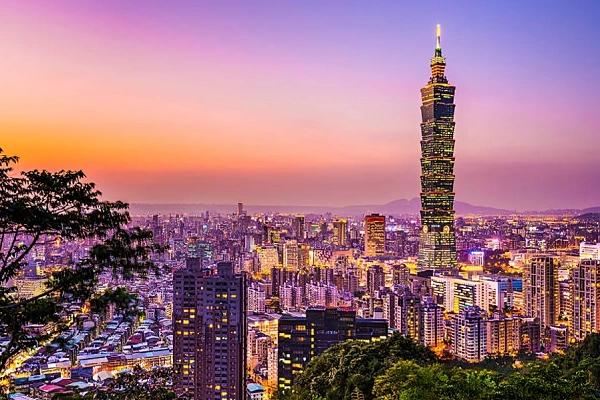
Xinyi is home to Taipei 101, a renowned landmark of Taipei’s financial district which also serves as a premium shopping destination. It attracts tourists interested in modern luxury, high-end shopping, and urban vistas.
The Taipei 101 Experience
Taipei 101 dominates the skyline at 508 meters, offering observation decks on the 89th and 91st floors.
The building houses luxury boutiques, fine dining establishments, and an impressive food court in the basement levels.
The surrounding pedestrian plazas feature outdoor seating, street performers, and seasonal decorations that create a vibrant atmosphere, especially during evening hours when the tower’s LED lighting activates.
Shopping and Entertainment
Along with ATT 4 FUN, Breeze Center, and Shin Kong Mitsukoshi, Taipei 101 Mall forms a shopping corridor with both foreign names and Taiwanese designers. There are more high-end shops here than anywhere else in the city.
Xinyi has a lot of rooftop bars, nightclubs, and live music venues that are popular with young workers and tourists from other countries. The area stays busy well past midnight, especially on weekends.
Nature Access
Even in the middle of the urban sprawl, Xinyi is still able to offer access to Elephant Mountain (Xiangshan) which has the best of Taipei’s hiking trails for Taipei 101 pictures.
The 30 minute hike is rewarding, with excellent views, particularly at sunset and during fireworks.
Xiangshan Park, which is at the base of the trail, is popular with families and fitness enthusiasts, as it has well-kept playgrounds and exercise equipment.
Accommodation Characteristics
Xinyi contains Taipei’s highest concentration of international hotel chains including Grand Hyatt, W Hotel, and Le Meridien.
These properties deliver world-class service, extensive facilities, and premium positioning but command accordingly high rates.
Mid-range options exist but remain limited compared to other districts. The area generally skews toward business travelers and luxury tourists rather than backpackers or budget-conscious visitors.
4. Zhongshan District: Trendy and Central
Zhongshan seamlessly combines residential and commercial areas to form a truly local experience, all while developing solid infrastructure for tourists.
The city offers an impressive café culture and an abundance of independent boutiques and craft beer bars.
Dining Excellence
Zhongshan has a lot of restaurants, just like Da’an, although they are more international.
The district draws in expats, which is why there are so many great Japanese, Korean, Italian, and modern fusion restaurants next to traditional Taiwanese ones.
There are a lot of specialty roasters, third-wave cafés and cosy places to work from home or relax in the morning. A lot of places provide all-day breakfast menus that are popular in the West.
Cultural Sites
Lin An Tai Historical House preserves traditional Hokkien architecture within a peaceful classical garden, offering respite from urban intensity.
The well-preserved buildings demonstrate 18th-century design principles and craftsmanship.
Taipei Fine Arts Museum showcases contemporary art from Taiwanese and international artists, with rotating exhibitions and an impressive permanent collection.
The surrounding sculpture park provides additional cultural enrichment.
Shopping Character
Unlike Xinyi’s luxury mall concentration, Zhongshan features independent boutiques, vintage stores, and artisan shops selling locally designed clothing, accessories, and home goods.
The creative retail scene attracts fashion-forward locals and souvenir hunters seeking unique items.
Zhongshan Underground Mall extends for nearly a kilometer, offering weather-protected shopping for affordable fashion, cosmetics, and snack foods. This subterranean marketplace connects multiple MRT stations.
Proximity Advantages
Zhongshan’s location in the north makes it simple to get to the Shilin Night Market, Beitou Hot Springs, Yangmingshan National Park, and the Tamsui shoreline.
These sights are easier to get to than they are from southern districts.
The district is also close to Taipei Songshan Airport, which only has a few foreign flights and local flights. This closeness is good for travellers who are going to different parts of Taiwan.
5. Ximending: Youthful Energy
Full of youthful energy, Ximending can be compared to other creative hotspots, such as Tokyo’s Harajuku and Seoul’s Hongdae. This fully pedestrian area is alive with street fashion, popular culture, and night-time entertainment.
Shopping and Entertainment
There are a lot of clothing stores, shoe stores, cosmetics stores, and trendy accessory shops in the major pedestrian zone.
Japanese names are still very popular, which shows how connected people are to their culture and what they like.
In the afternoons and evenings, street artists set up shop on busy corners and put on musical acts, dance shows, and art shows. On the weekends, the mood is like a constant street festival.
The Red House Theatre is a place where creative markets, independent shows, and LGBTQ+ community events all come together. The old building looks great next to the newer buildings that are being built nearby.
Food Scene
Ximending excels at street food and casual dining rather than upscale restaurants. Stalls sell stinky tofu, bubble tea, fried chicken, and countless other Taiwanese snacks at very affordable prices.
The area contains numerous all-you-can-eat restaurants, themed cafés, and fast-casual chains catering to young crowds with limited budgets.
Quality varies significantly, requiring some research or willingness to experiment.
Accommodation Value
Ximending offers Taipei’s most budget-friendly hotels, with many clean, modern properties available at surprisingly low rates.
The high supply of accommodation options creates competitive pricing, particularly on weekdays.
Hostel culture thrives here, with several well-reviewed properties offering dormitory beds and private rooms at backpacker-friendly prices.
These establishments often provide social spaces encouraging traveler interaction.
Considerations
The area’s youthful energy translates to noise levels that may disturb light sleepers. Weekend crowds can feel overwhelming, and the commercial atmosphere lacks the authentic neighborhood feel of other districts.
Luxury options remain virtually nonexistent, making Ximending unsuitable for travelers seeking high-end accommodations or quiet sophistication.
6. Datong District: Historical Character
Datong preserves Taipei’s oldest neighborhoods, offering traditional architecture, heritage sites, and cultural authenticity that contrasts sharply with the city’s modern districts.
Dihua Street Heritage
Dihua Street represents Taipei’s best-preserved historic commercial street, lined with 19th-century shophouses selling traditional Chinese medicine, dried goods, fabrics, and tea.
The street becomes particularly vibrant during Lunar New Year preparations.
Several buildings now house artisan workshops, craft shops, and heritage cafés that blend historical preservation with contemporary commerce.
This adaptive reuse maintains street vitality while honoring history.
Temple Architecture
Dalongdong Baoan Temple showcases spectacular traditional craftsmanship, with intricate wood carvings, stone sculptures, and ceramic decorations covering every surface.
UNESCO recognized the restoration project for its cultural significance.
Xiahai City God Temple attracts locals seeking blessings for romance and business success, creating authentic religious atmosphere rarely experienced in touristy areas.
Market Culture
Ningxia Night Market maintains a more local character than famous tourist markets, offering excellent street food at fair prices without excessive crowds. The compact layout makes navigation easy for first-timers.
Yongle Market operates during daytime, specializing in fabric sales on upper floors while the ground floor serves fresh produce, meat, and prepared foods to neighborhood residents.
Accommodation Character
Datong’s hotel scene focuses on heritage properties and boutique guesthouses occupying renovated buildings.
These accommodations emphasize character and atmosphere over modern amenities, appealing to culture enthusiasts.
Rates generally fall in the budget-to-mid-range category, with luxury options notably absent.
The authentic neighborhood setting attracts travelers seeking cultural immersion rather than tourist convenience.
Practical Considerations for Every Traveler
Budget Planning
Dormitory type beds at hostels cost roughly NT$500-700 per night. Budget hotels cost between NT$1,500 and NT$2,500, mid-range hotels cost between NT$2,500 and NT$5,000, and high-end hotels start at NT$6,000 and go over NT$15,000 for the best ones.
Every category experiences a 20–30% price increase on weekends, and the Christmas season brings considerably higher costs.
Booking popular hotels several months in advance will help in getting better prices.
Transportation Access
All suggested districts link up with the MRT system. It is easy to get around the city. Depending on the distance, one way tickets are NT$20-65, while stored-value cards like the EasyCard offer discounts.
Taxis are still reasonably priced. It is NT$70 for the first 1.25 kilometers. Uber also operates in Taipei, with competitive prices and an English interface.
Walkability Factors
Taipei’s tropical climate brings heavy rainfall and high humidity, particularly during summer months (June-September).
Covered walkways and underground passages help mitigate weather impacts, but comfortable walking shoes and portable umbrellas remain essential.
Sidewalk conditions vary significantly between districts. Da’an and Xinyi maintain well-kept pedestrian infrastructure, while some older neighborhoods feature narrow sidewalks crowded with parked scooters and street vendors.
Safety and Comfort
Taipei ranks among Asia’s safest major cities, with low crime rates across all districts. Late-night walking poses minimal risk, though basic situational awareness remains advisable.
English proficiency varies by neighborhood, with Xinyi and Da’an offering the most bilingual signage and English-speaking staff. Other districts may require translation apps or gesture communication.
Final Decision
In the end, what areas you choose to stay in Taipei will depend on the individual traveler’s personal travel preferences, budget, and travel priorities.
First time visitors looking for a balance in terms of a good atmosphere should consider Da’an District.
Da’an is a good choice across most of the travel criteria and has a very good authentic Taiwanese district.
For travelers looking to maximize their transportation options for day and inter city trips, Zhongzheng is right next to Taipei Main Station, making it extremely valuable.
Meanwhile, Xinyi offers a concentration of theming high end hotels and retail trade outlets, making it a valuable choice for travelers looking for a high end experience paired with modern shopping.
Young travelers and budget oriented backpackers looking for a vibrant nightlife will find good value in Ximending. Meanwhile, culture and history enthusiasts will find preserved neighborhoods in Datong a worthy travel experience.
Once you finalize where to stay, you can plan your daily itinerary using our detailed Things to Do in Taipei guide.

A travel content creator providing destination insights, practical advice, and travel inspiration for every journey.