

Few countries make trip planning as difficult as Thailand. This is not because options are limited. It is because the country has so much variety. Choosing the right places to visit in Thailand can be surprisingly difficult for first-time travelers, with ancient temples, tropical islands, mountain towns, and busy cities all offering completely different experiences.
The north and south feel like two different worlds, and even short distances can bring a noticeable change in atmosphere. This guide focuses on the destinations that are genuinely worth your time, depending on how you want to travel.
Bangkok – Thailand’s Essential First Stop
Most Thailand trips start here, and Bangkok deserves far more than a rushed overnight stay. The capital pulls you in different directions all at once — gleaming skyscrapers a few blocks from centuries-old temples, floating markets at dawn, and street food that genuinely rivals anything you will find in a restaurant.
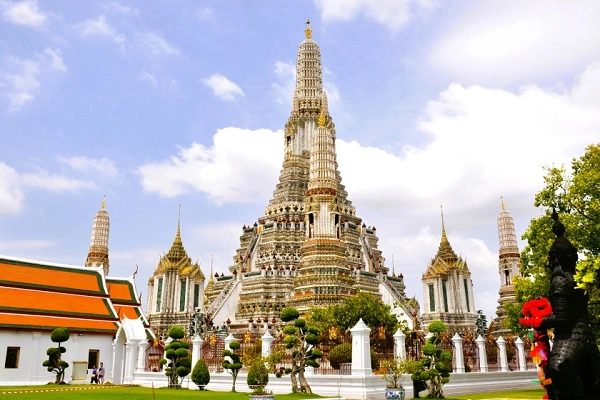
No visit is complete without seeing the Grand Palace and Wat Phra Kaew (Temple of the Emerald Buddha), the most visited landmarks in the country for good reason. Wat Pho, home to the enormous reclining Buddha, and Wat Arun directly across the river round out the temple trail.
Come evening, wandering through Chinatown (Yaowarat) or hopping on a water taxi along the Chao Phraya river gives you a much more local side of the city.
Getting around is straightforward thanks to the BTS Skytrain — always book accommodation near one of its stations. Two to three days here is enough before heading north or south.
Chiang Mai
Sitting in a valley surrounded by mist-covered mountains, Chiang Mai has a completely different energy to Bangkok. It is the cultural hub of northern Thailand — known for its ancient walled old city, night markets, and a relaxed pace of life that draws long-term travelers and digital nomads alike.
Inside the old city walls, temples like Wat Chedi Luang and Wat Phra Singh stand as striking reminders of the Lanna Kingdom. Just outside the city, the hilltop temple of Wat Phra That Doi Suthep offers sweeping views over the valley and a genuine sense of spiritual significance.
Taking a cooking class here is one of the most enjoyable things to do — learning to prepare khao soi, pad thai, and green curry in a traditional setting stays with you long after the trip.
Street-side at the Chiang Mai Night Bazaar, you can pick up handmade textiles and local crafts at honest prices. Nature lovers will find plenty too — the waterfalls nearby, including Mae Sa and Mok Fa, make for excellent half-day escapes from the city.
Chiang Rai
About three hours north of Chiang Mai, Chiang Rai tends to get skipped by travelers in a hurry — which is a shame. The city is best known for the extraordinary Wat Rong Khun, widely called the White Temple — a contemporary art installation turned spiritual site unlike anything else in Thailand.
Both the Black Temple (Baan Dam Museum) and the Blue Temple (Wat Rong Seur Ten) are equally striking and far less visited.
Sitting close to the Golden Triangle, where Thailand, Laos, and Myanmar converge, the area carries a historically significant and visually dramatic atmosphere along the Mekong River.
Pai
Tucked into the hills of northern Thailand, Pai is a small town that punches well above its weight in terms of atmosphere. Lush green hills, rice paddies, and misty valleys surround it on all sides, and the place has a distinctly laid-back, bohemian character that has made it a favorite among backpackers and slow travelers for years.
Highlights include Pai Canyon — a narrow ridge with dramatic views — the Kho Ku So Bamboo Bridge crossing muddy rice fields toward a Buddhist temple, and the Tha Pai Hot Springs.
Waterfalls like Pam Bok and Mae Yen are short treks from town. After dark, the walking street comes alive with food, music, and local crafts.
Sukhothai and Ayutthaya
History lovers will find these two UNESCO World Heritage Sites genuinely unmissable. Sukhothai became Thailand’s first capital in the 13th century. You can explore the historical park best by bicycle. The flat terrain, few vendors, and Khmer-influenced ruins surrounded by lotus ponds make it one of Southeast Asia’s most peaceful heritage sites.
Closer to Bangkok, Ayutthaya works well as a day trip. Its famous headless Buddha statues and the tree-rooted Buddha face at Wat Mahathat tell a vivid story of the kingdom’s rise and eventual fall.
Both sites are rich in architectural heritage, religious iconography, and historical context that bring Thai history to life in a way no museum quite can.
Khao Yai National Park
One of Thailand’s greatest natural treasures, Khao Yai National Park is a UNESCO World Heritage Site located just two to three hours from Bangkok. Covering over 2,000 square kilometers of protected tropical forest, it is one of the best places in the country — and arguably in all of Asia — to see wild elephants roaming freely in their natural habitat.
The wildlife does not stop there. Gibbons, hornbills, monitor lizards, barking deer, and a remarkable variety of rare birds make it a worthy destination for serious wildlife watchers and birdwatchers.
A full-day guided jungle trek gives you the highest chance of sightings and is the most rewarding way to explore. The park stays open year-round, with the wet season delivering greener, more dramatic scenery.
Practical Tips for Traveling in Thailand
- Currency: Thai Baht (THB). ATMs are everywhere but charge withdrawal fees — a fee-free travel bank account saves a meaningful amount over a longer trip.
- Transport: The BTS Skytrain in Bangkok is efficient and affordable. Grab (the regional rideshare app) is the most reliable option for getting around locally. Sleeper trains between Bangkok and Chiang Mai are comfortable, scenic, and worth trying at least once.
- Temple Dress Code: Shoulders and knees should be covered, especially at major temple sites. Rental clothing is available at major sites if needed.
- eSIM Cards: A Thailand-specific eSIM purchased before arrival keeps you connected from the moment you land, without the hassle of finding a local SIM.
- Safety: Solo travelers, including women, find Thailand very safe.
Unique Things That Most Travelers Miss
The Kayan Long-Neck Villages of Mae Hong Son
Right on the border with Myanmar, Mae Hong Son province is one of the least visited corners of northern Thailand. Refugees from the Kayan community — known for the brass neck rings traditionally worn by women — have settled here in small villages that offer a genuinely rare cultural encounter.
These communities sustain themselves through traditional crafts, jewelry, and textiles. Visiting with respect, buying directly from artisans, and donating where possible makes a real difference.
The Floating World of Khao Sok National Park
Hidden away in southern Thailand, Khao Sok National Park is one of the most underrated destinations in the entire country.
At its heart is Cheow Lan Lake — a vast reservoir ringed by towering limestone karsts draped in ancient evergreen rainforest that is among the oldest on Earth, dating back over 160 million years.
Spending a night in one of the floating raft houses on the lake is the kind of experience genuinely hard to find anywhere else in the world. Jungle treks, cave tours, and kayaking through the still waters make it worth at least two nights.
Best Places to Visit in Southern Thailand
Krabi and Railay Beach
Widely regarded as the most traveler-friendly base in southern Thailand, Krabi has a lot going for it — dramatic limestone cliffs, turquoise water, excellent food, and accommodation at every price point.
Ao Nang serves as the main beach hub, with regular boats running across to Railay Beach — a stunning, car-free stretch of sand reachable only by longtail boat.
Railay draws visitors for its rock climbing, sea cave kayaking, and the rare sight of bioluminescent waters after dark.
The Phi Phi Islands
Reachable by ferry from both Phuket and Krabi, the Phi Phi Islands remain one of Thailand’s most iconic destinations. Ko Phi-Phi Leh — the uninhabited sister island — is home to Maya Bay, the dramatic beach made famous by the film The Beach.
Today the bay operates under strict conservation rules: swimming is prohibited to protect the recovering coral reef and blacktip reef sharks that have returned to breed in the shallow waters, boats are no longer permitted inside the bay, and the area closes each year in August and September for environmental recovery.
Despite all of this, it remains a spectacular place to visit.
Koh Kradan and Koh Mook – Hidden Island Gems
Down in Trang province, Koh Kradan is one of the most celebrated beaches in the world — recently gained international attention after being ranked among the world’s top beaches by an independent international ranking, a title that brought sudden global attention to what had always been a quiet, unhurried island.
There are no roads here, very few resorts, and the coral reefs just offshore are pristine for snorkeling. A short boat ride away, Koh Mook offers its own extraordinary feature: the Emerald Cave, a hidden lagoon accessible only by swimming through a narrow, dark tunnel at low tide.
The Gulf Coast Islands
On the eastern side of the peninsula, Ko Tao has built a reputation as the leading destination for PADI dive certification in Thailand — and one of the most affordable places to learn diving anywhere in the world. Ko Samui caters to a more upmarket crowd, with cleaner beaches and reliable international flight connections.
Ko Pha-Ngan is synonymous with the legendary Full Moon Party, though the quieter northern part of the island is a completely different story.
Phuket
Thailand’s largest island, Phuket is also its most commercially developed. Strong international transport links and a wide range of resorts make it easy to reach, but many seasoned travelers find it has lost much of its Thai character.
That said, Phuket Town — with its beautiful Sino-Portuguese architecture and independent food scene — is worth an afternoon. It also works well as a departure point for island-hopping toward the Similan Islands and Surin Islands.
Best Time to Visit Thailand
Traveling between November and February gives you the most comfortable conditions — cooler temperatures and very little rain. March to May is brutally hot across the whole country and best avoided if possible.
The rainy season runs from June through October, bringing occasional heavy downpours but also lush scenery and noticeably fewer tourists.
One important note: the area around Chiang Mai sees serious air pollution from agricultural burning between February and April, so if northern Thailand is on your list, plan accordingly.

A travel content creator providing destination insights, practical advice, and travel inspiration for every journey.