

Sydney is one of those rare places where its top attractions from the iconic Opera House and Harbour Bridge to hidden beaches and historic laneways actually deliver on that promise. The mix of stunning harbour views, golden sands, and charming historic streets surprises even people who think they already know what to expect. This guide walks through the major Sydney attractions, what makes each one genuinely worth your time, and the practical details that most travel articles skip over.
1. Sydney Opera House
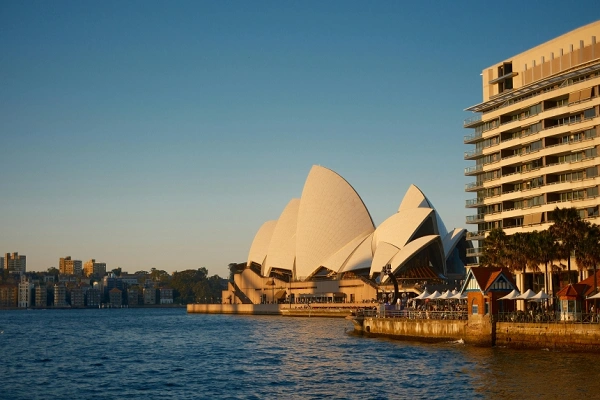
Few buildings in the world carry as much weight as the Sydney Opera House and fewer still actually live up to the expectation.
The Opera House sits on Bennelong Point on the southern edge of Sydney Harbour. Danish architect Jørn Utzon won the international design competition in 1957, beating 232 other entries from architects across nearly 30 countries.
What followed was one of the most complicated construction projects of the 20th century. The building finally opened on 20 October 1973 a full decade later than originally planned when Queen Elizabeth II officially inaugurated it.
Inside, the complex runs over more than 1,500 performances every year across multiple venues. The Concert Hall, the largest, seats 2,679 people.
The building’s air-conditioning system pulls cold seawater directly from the harbour to regulate temperature, a system still running today, exactly as it was designed. In 2007, UNESCO added it to the World Heritage list.
Practical tip: Book a guided interior tour in advance, especially during peak season. The tour takes roughly an hour and covers the architectural history in detail. If you only see it from the outside, you miss most of the story.
2. Sydney Harbour Bridge
Want to know what 52,800 tonnes of steel actually looks like up close? Walk to the base of the Sydney Harbour Bridge and look up.
The bridge connects the city’s central business district to the North Shore, spanning the full width of Sydney Harbour. Construction started in 1923 under chief engineer Dr John Bradfield, and the bridge opened on 19 March 1932 at a cost of £6.25 million.
At 1,149 metres in total length, it holds the title of the one of the world’s largest steel arch bridges. Sixteen workers died during its construction, a fact the bridge’s own museum does not shy away from.
Locals call it “the Coathanger” . One look at the arch and you understand why. The granite pylons at each corner are purely decorative, added for visual balance rather than structural support. They were quarried from Moruya, New South Wales.
Walking across is free; there is a pedestrian path on the eastern side. For something more memorable, BridgeClimb has been taking visitors up the arch itself since 1998, offering a 360-degree view from the top.
The Pylon Lookout inside the South-East Pylon is a more affordable alternative with solid harbour views and a museum about the bridge’s history.
Practical tip: Early morning is the best time to walk across. Fewer people, softer light, and the harbour below looks completely different before the city fully wakes up.
3. Bondi Beach
“Just another beach” that is what some people say before they actually go to Bondi. They rarely say it after.
Bondi Beach sits about 8 kilometres east of the Sydney city centre. The beach stretches roughly one kilometre of open sand facing the Pacific Ocean. It draws surfers, swimmers, families, and people who simply want to sit near the water.
The name Bondi comes from an Aboriginal word meaning “water breaking over rocks” appropriate, given the way the swell comes in from the open ocean.
Swimming and surfing are the obvious activities, but the Bondi to Coogee Coastal Walk is what many visitors remember longest. The route runs approximately 6 kilometres south along clifftop paths, passing Tamarama, Bronte, and Clovelly beaches before reaching Coogee. The entire walk is on public paths and costs nothing.
At the southern end of the beach, the Bondi Icebergs Swimming Club has been operating since 1929. It was founded by local lifeguards who wanted to stay fit through the winter months.
The ocean pool sits right at the edge of the rocks with Pacific waves crashing alongside it, one of the more unusual and photographed swimming spots in any major city.
Practical tip: On summer weekends, Bondi gets incredibly busy. If you want the beach without the crowds, visit on a weekday morning or go in the shoulder seasons March to May or September to November.
4. Manly Beach
It’s 17 kilometers from the city center, but the ferry voyage there is half the fun.
Manly is on the north side of Sydney Harbour. The 30-minute ferry from Circular Quay passes directly in front of the Opera House and the Harbour Bridge; it is one of the better harbour views available and costs only a standard public transport fare.
Manly itself has a long ocean-facing beach, a sheltered harbour cove on the other side, and The Corso, a pedestrian strip connecting the two lined with cafes and surf shops.
The area has a legitimate place in surfing history. On 24 December 1914, Hawaiian swimmer and Olympic gold medallist Duke Kahanamoku gave the first public surfing demonstration in Australia at nearby Freshwater Beach. He had fashioned his own board from sugar pine during his stay.
That demonstration, followed by a second one on 10 January 1915 watched by large crowds, is credited with introducing surfboard riding to Australia and planting the roots of what became one of the country’s defining sporting cultures.
Practical tip: Buy an Opal card before you go. The ferry from Circular Quay is covered by the standard transport network with no special ticket needed. Off-peak fares are cheaper, and the ride itself is scenic enough to be worth taking slowly.
5. Royal Botanic Garden
Not every Sydney attraction needs a ticket price or a two-hour time commitment. Sometimes the best thing to do is walk somewhere green and quiet.
The Royal Botanic Garden was established in 1816, making it Australia’s oldest scientific institution. It covers 30 hectares along the waterfront directly east of the Opera House, with views across Farm Cove toward the Harbour Bridge.
The garden holds both native and non-native plant collections and functions as a genuine public green space Sydney residents use daily for walking, running, and sitting near the water.
Entry is free. The garden links Circular Quay to the Domain and the Art Gallery of New South Wales. You can walk through it for free between those two places and see some of the best views of the harbor in the city.
Practical tip: Go in the early morning if you want to see the resident flying foxes hanging from the trees near the garden’s centre. By midday the garden gets busy with lunchtime crowds from the nearby CBD.
6. Blue Mountains
Two hours from Sydney by train, and it feels like a completely different world.
The Blue Mountains sit roughly 100 kilometres west of Sydney. Katoomba is the main town most visitors use as a base, and it is directly accessible from Central Station without changing trains.
The Greater Blue Mountains area was inscribed as a UNESCO World Heritage site in 2000, recognised for its ancient biodiversity and ecological significance.
The blue haze the mountains are named for is real; it comes from microscopic droplets of eucalyptus oil released by the dense bush covering the valleys. At Echo Point in Katoomba, the Three Sisters rock formation is the most visited lookout. Scenic World nearby operates a steep railway descent into the Jamison Valley.
You can hike the valley paths, ride the train down, or just stand at the edge of the cliff at sunset and watch the light shift on the sandstone.
Practical tip: The train from Central Station to Katoomba takes about two hours and runs regularly. A day trip is fine, but if you want to do a lot of walking in the valley, staying one night provides you a lot more options.
7. Taronga Zoo
Most zoos are fine. Taronga Zoo happens to have one of the best harbour views of any zoo in the world which already makes it different.
Taronga officially opened on 7 October 1916 in the suburb of Mosman. It sits on 21 hectares of sloping land overlooking Sydney Harbour, and from several points within the grounds you can see the Opera House, the Harbour Bridge, and the water below.
The zoo houses over 4,000 animals from more than 350 species, with a strong focus on Australian native wildlife alongside international species.
Getting there is part of the experience. A 12-minute ferry from Circular Quay drops you at the lower entrance, and the Sky Safari cable car carries visitors from the wharf up to the top entrance. From there you work your way downhill through the zoo back to the ferry.
Practical tip: Check the zoo’s website for daily keeper talk schedules before you go. The talks happen at specific times throughout the day and are included in the entry price worth planning your visit around.
8. Darling Harbour
If you are travelling with kids, or simply want several attractions within walking distance of each other, Darling Harbour solves that problem efficiently.
Darling Harbour is a waterfront area that has been rebuilt on the western fringe of the CBD. Through the 1980s it was transformed from an industrial port into a public entertainment and cultural area. SEA LIFE Sydney Aquarium, WILDLIFE Sydney Zoo, and the Australian National Maritime Museum all sit within the precinct.
The Chinese Garden of Friendship, also here, was gifted to Sydney by the city of Guangzhou in 1988 it is a traditional Suzhou-style garden covering about one hectare, and one of the larger classical Chinese gardens outside China itself.
Practical tip: The aquarium and WILDLIFE Sydney Zoo both offer combination tickets that work out cheaper than buying separately. Book online beforehand entry queues on weekends can be long.
9. The Rocks
Sydney’s oldest neighbourhood does not look like it belongs to a modern city which is exactly the point.
The Rocks sits on the southern shore of Sydney Cove, directly under the southern approach to the Harbour Bridge. It was the site of Australia’s first European settlement in 1788.
Much of the 19th-century architecture has survived sandstone warehouses, narrow laneways, former merchant buildings and the area has been preserved as a heritage precinct rather than redeveloped.
Walk the cobblestone streets, visit the weekend markets, or stop at the Lord Nelson Brewery Hotel which holds the oldest continuous hotel licence in Sydney.
The Rocks Discovery Museum, tucked into a restored warehouse, covers the area’s history from its Indigenous past through the convict era to the present day and is free to enter.
Practical tip: The weekend markets in The Rocks are busiest on Saturdays and Sundays from around 10am. If you prefer the architecture and laneways without the market crowds, a weekday morning visit gives you more space to walk and look.
10. Art Gallery of New South Wales
Not every great Sydney attraction is outdoors and this one is free.
The Art Gallery of New South Wales opened in 1874 and sits at the northern edge of the Domain parklands, right next to the Royal Botanic Garden.
The permanent collection includes Australian art, European art from the Middle Ages to the present, Asian art, and one of the biggest collections of Aboriginal and Torres Strait Islander art in the country. There is no cost to get into the permanent collection.
In December 2022, the gallery opened the Sydney Modern Project, a major expansion designed by Japanese architecture firm SANAA. The new building is partially built into the hillside and significantly increased the gallery’s total exhibition space.
Practical tip: Combine the gallery with a walk through the Royal Botanic Garden. The two sit directly next to each other, and the walk between them along the waterfront is one of the more pleasant stretches of path in central Sydney.
Hidden Gems in Sydney
While the Opera House, Harbour Bridge, and Bondi Beach steal the spotlight, Sydney has several hidden gems that many travelers miss:
Wendy’s Secret Garden
Tucked away in Lavender Bay, this lush, hand-crafted garden offers peaceful harbour views and is perfect for a quiet afternoon stroll.
Cockatoo Island
A UNESCO World Heritage site in the middle of the harbour, featuring industrial history, art installations, and even camping options.
Paddington Reservoir Gardens
A restored 19th-century reservoir turned into a modern sunken garden with unique architecture and waterfalls.
Bare Island
A small island in La Perouse with historic fortifications and excellent snorkeling spots around it.
The Grounds of Alexandria
Not far from the city centre, this café and garden space feels like a hidden village with flowers, animals, and amazing brunch options.
What to Take Away From All This
Sydney rewards people who slow down. The Opera House is worth more than a photograph from the outside. The Bondi to Coogee walk takes two hours and costs nothing.
The ferry to Manly is genuinely scenic. The Blue Mountains look completely different depending on the time of day you are standing at the cliff edge.
The city is large and understanding the ferry network before you arrive will save you significant time and make the whole visit feel less like work. Plan around transport, leave room for things you did not plan, and you will get more out of Sydney than most visitors do.

A travel content creator providing destination insights, practical advice, and travel inspiration for every journey.