

Peru is a country of three distinct worlds: coastal deserts, towering Andean peaks, and the vast Amazon rainforest. First-time travelers often underestimate how much there is to see and do, from sandboarding in Huacachina to exploring ancient Inca ruins. Whether you have a week or a month, this guide highlights the experiences that truly make Peru unforgettable.
1. Machu Picchu
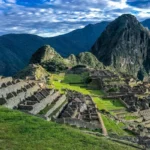
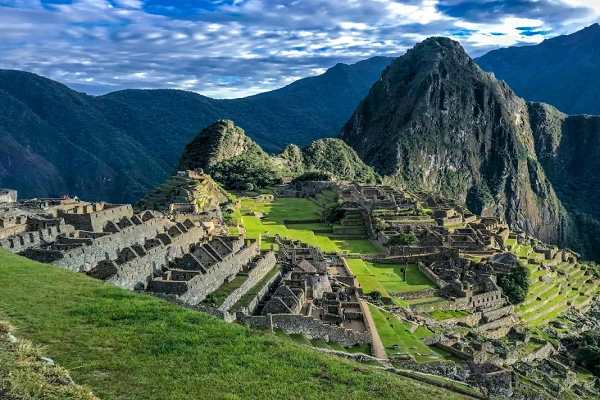
Few places in the world live up to their reputation the way Machu Picchu does. This 15th-century Inca citadel sits at 7,970 feet in the Andes, built with massive stone blocks fitted together without mortar, terraces carved into cliff sides, and buildings aligned with the sun.
The Spanish never found it during the conquest, which is a big reason it survived so intact. Getting there requires a train to Aguas Calientes and then a bus up the mountain, where visitors explore the terraces and stone structures at their own pace.
Entry permits are limited and must be booked well in advance particularly between June and August.
2. The Inca Trail
For those who want to earn the view, the Inca Trail is the answer. Stretching 26 miles through the Andes, it passes cloud forests, ancient ruins, and high mountain passes before arriving at Machu Picchu through the Sun Gate ideally at dawn.
The hike usually lasts four to five days. Only 500 people are allowed on the trail per day, including guides and porters, so permits sell out months ahead. If you miss the permit window, you can still go on the Salkantay Trek or Lares Trek.
3. Cusco
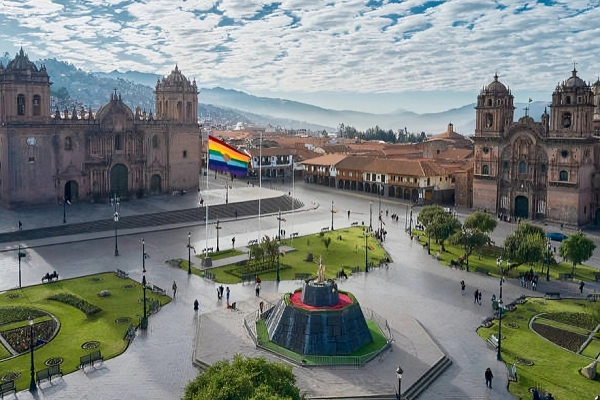
Built directly on top of Inca foundations still visible at street level, Cusco is one of the most layered cities in the world. Once the capital of the Inca Empire, it sits at 11,150 feet in the Andes and carries UNESCO World Heritage status, a place where Inca stonework and Spanish colonial architecture share the same walls.
The Qorikancha temple, the fortress of Sacsayhuaman, and the cobblestone streets of San Blas are all worth exploring slowly.
Give yourself at least two days before doing anything strenuous to let the body adjust to the altitude.
4. Sacred Valley
Stretching roughly 60 kilometers along the Urubamba River between the towns of Pisac and Ollantaytambo, the Sacred Valley was the agricultural and economic heart of the Inca Empire.
Pisac’s Sunday market draws Quechua-speaking communities who sell handmade textiles and ceramics in the same tradition as their ancestors.
At the far end of the valley, Ollantaytambo is one of the best-preserved Inca towns still standing and also serves as the main train departure point for Machu Picchu.
5. Moray The Inca Agricultural Laboratory
Most visitors to the Sacred Valley skip this one entirely, which is exactly why it rewards those who go. Located about 50 kilometers northwest of Cusco on a high plateau at roughly 11,500 feet, Moray is a site of enormous concentric circular terraces carved into natural depressions in the earth.
What makes it genuinely remarkable is the engineering behind it: the design creates a temperature difference of up to 15°C between the top rim and the bottom of the largest depression, producing distinct microclimatic zones throughout the site.
Historians and archaeologists widely consider it an agricultural research center where the Incas tested crops native to different altitudes and climates. The largest circular complex descends about 30 meters deep.
The site’s sophisticated underground drainage system built to handle the Andean rainy season without flooding or eroding the walls still functions today.
Moray is most easily visited alongside the nearby Maras salt pans, making both sites doable in a single half-day from Cusco.
6. The Nazca Lines
Etched into the desert floor of southern Peru between 500 BC and 500 AD, the Nazca Lines are one of the most genuinely puzzling things on Earth.
The surface pebbles were scraped away to reveal lighter-colored soil beneath, forming figures that include a hummingbird, a spider, a condor, a monkey, and various geometric shapes some stretching up to 300 meters across.
None of them make full sense from ground level. Their purpose remains unknown, though one leading theory links them to water rituals.
UNESCO recognized the site as a World Heritage landmark in 1994. Small aircraft flights from Nazca airport, lasting around 30 to 45 minutes, give the clearest view of the figures.
7. Lima
Most travelers treat Lima as a layover, and that is a mistake worth correcting. Centro Historico, the city’s historic core, is a UNESCO World Heritage Site home to some of the finest museums in the country.
The San Francisco Monastery dates to the 17th century and contains famous underground catacombs where the remains of around 70,000 people are housed.
Visiting the Larco Museum, set inside an 18th-century mansion, is one of the best ways to understand 4,000 years of Peruvian history through gold, ceramics, and textiles from Inca and pre-Inca cultures.
Beyond history, Lima’s food scene is world-class. Peruvian cuisine draws from indigenous Andean roots, Japanese immigration, Chinese influence, and Spanish colonial cooking, making it one of the most distinctive culinary traditions anywhere.
8. Huacachina South America’s Only Natural Desert Oasis
About 300 kilometers south of Lima in the Ica region sits something that looks like it belongs in a dream: a small natural lagoon surrounded by palm trees and enormous sand dunes that reach heights of up to 200 meters.
Huacachina is one of South America’s most famous natural desert oases, built around a lagoon with a permanent local population of roughly 100 people.
Visitors come for dune buggy rides and sandboarding down the steep faces — a combination that draws tens of thousands of tourists each year.
The oasis holds enough cultural significance in Peru that it appears on the back of the country’s 50 sol banknote, a feature introduced in 1991. It is easiest to visit as a day trip from Lima or as a stop on the way south toward Nazca.
9. Colca Canyon
Located about 160 kilometers northwest of Arequipa, Colca Canyon is one of the deepest canyons in the world, often described as deeper than many sections of the Grand Canyon, carved through volcanic rock by the Colca River over millions of years.
The canyon walls are home to Andean condors, one of the largest flying birds on Earth with a wingspan of up to 3.3 meters.
The Cruz del Condor lookout in the early morning hours is the best place to watch them rise from their nests on the thermal currents.
Below the rim, the valley floor is lined with pre-Inca agricultural terraces that communities of the Collagua and Cabana cultures still farm today.
Most visitors come on a two-day tour from Arequipa, though trekking down into the canyon floor itself offers a completely different experience.
10. Kuelap The Cloud Forest Fortress
Far to the north of Cusco, hidden in the cloud forests of the Amazonas region, stands a fortress that most Peru travelers never reach.
Kuelap was built by the Chachapoyas culture known historically as the Cloud People with construction beginning in the 6th century AD and the majority of its structures built between 900 and 1100 AD.
The site sits at 3,000 meters on a limestone ridge above the Utcubamba Valley, enclosed within stone walls that reach up to 19 meters high. Inside are hundreds of circular stone structures including homes, ceremonial buildings, and tombs.
The Incas eventually occupied the site but the Chachapoyas resisted them for longer than almost any other culture in the region.
A cable car has improved access, though operational status should always be checked before travel, and the site remains far less visited than it deserves.
11. Amazon Rainforest
Covering the majority of Peru’s total land area, the Amazon is the part of the country most tourists skip and precisely why it rewards those who make the effort.
Puerto Maldonado in the south is the easiest entry point, offering access to Tambopata National Reserve where wildlife sightings include macaws, giant river otters, and caimans.
In the north, Iquitos is a city of around half a million people reachable only by air or river boat; no road connects it to the rest of Peru.
Manu National Park, spanning both Andean and Amazonian ecosystems, is recognized by UNESCO as one of the most biodiverse protected areas on the planet.
12. Lake Titicaca
High on the Andean plateau near the Bolivian border, Lake Titicaca is the largest lake in South America by surface area and the highest navigable lake in the world, sitting at 12,507 feet above sea level.
Boat trips from the city of Puno take visitors to the Uros floating islands, platforms constructed entirely from totora reeds where communities have lived for centuries, maintaining fishing and weaving traditions that have changed very little over time.
The natural island of Taquile, further into the lake, offers a quieter and less visited glimpse into Andean island life.
13. Rainbow Mountain
Known locally as Vinicunca, this mountain southeast of Cusco stands at roughly 17,060 feet in the Andes. Until 2015, reaching it required a multi-day trek; today it is accessible as a guided day trip from Cusco.
The distinct bands of color crossing the mountain come from different mineral deposits. Iron oxide creates the reds, chlorite produces the greens, and limonite gives the yellows.
Colors appear most vivid after rainfall when the minerals are more saturated. The hike up is physically demanding entirely because of the altitude, so properly acclimatizing in Cusco beforehand is essential, not optional.
Last Words on Your Journey
Peru is one of those countries where history, landscape, and culture constantly overlap. The challenge is rarely finding something worth seeing; it is deciding how much time each place deserves.

A travel writer sharing informative guides, tips, and itineraries to help travelers explore the world smarter.