


So you’ve got 10 days in Thailand and you’re staring at a map, not sure where to even start.
Good news: a 10 Days Itinerary for Thailand built around three regions is genuinely enough time to do this trip right, without losing half of it to buses or feeling rushed at every stop.
This guide walks through exactly how to split the time between Bangkok, Chiang Mai, and the southern coast, what it realistically costs, and the small details that catch first-time visitors off guard.
No fifteen-stops-in-ten-days fantasy, just a route that actually works.
Quick Summary: 10-Day Thailand Itinerary at a Glance
| Day | Region | Highlights |
| 1 | Bangkok | Grand Palace, Wat Phra Kaew, Wat Pho |
| 2 | Bangkok | Chao Phraya River boat ride, Wat Arun, night market |
| 3 | Bangkok | Chatuchak Market or a day trip to Ayutthaya |
| 4 | Chiang Mai | Fly north, explore the Old City and temples |
| 5 | Chiang Mai | Doi Suthep, ethical elephant sanctuary |
| 6 | Chiang Mai | Hill-tribe villages or a countryside trek |
| 7 | Phuket or Krabi | Fly south to the coast |
| 8 | Phuket or Krabi | Island hopping, Phang Nga Bay or Railay Beach |
| 9 | Phuket or Krabi | Thai cooking class, beach time |
| 10 | Phuket or Krabi | One last beach morning or departure |
When to Visit Thailand
Thailand has three main seasons rather than four. The cool and dry season runs from November to February, and most travelers consider it the most comfortable time to visit, since temperatures stay in a manageable range and rainfall is light across the country.
The hot season follows from March through May, when daytime temperatures in cities like Bangkok and Chiang Mai can climb into the high 30s Celsius.
The rainy season then arrives from June to October, bringing short, heavy afternoon downpours rather than constant rain, along with lower prices and fewer crowds.
For a 10-day trip that mixes cities, mountains, and beaches, the cool season offers the most predictable weather everywhere.
Entry Requirements Before You Travel
Thailand’s entry rules apply to citizens of many countries without a visa for a set number of days, and they have changed more than once in recent years.
In 2024, Thailand extended visa-free stays to 60 days for dozens of nationalities. The Thai Cabinet approved a proposal in May 2026 to revert to a 30-day exemption for the majority of those countries and a 15-day exemption for a smaller group.
However, the change has not yet taken legal effect as of the time of this writing.
It only became law 15 days after publication in Thailand’s Royal Gazette, and no publication date had been confirmed at the time of writing, so the 60-day exemption still applies at the border for now.
Since a 10-day trip is well within these time limits, this change’s outcome doesn’t matter as much for a short visit as it would for a longer one.
However, all travelers should check Thailand’s official immigration website right before they leave, since the rule could go into effect without much notice.
Budget for a 10-Day Trip to Thailand
Thailand remains one of the better-value destinations in Southeast Asia, but costs vary widely depending on travel style.
Daily Costs by Travel Style
A budget traveler who sticks to hostels or basic guesthouses, eats mostly street food, and uses public transport can expect to spend roughly $25 to $45 a day on the ground, which adds up to around $300 to $450 over ten days.
A mid-range traveler who prefers private hotel rooms, a mix of restaurants, and a few paid tours typically spends $60 to $110 a day, or about $700 to $1,150 for the trip.
Luxury travelers booking resort-style hotels and private tours can easily spend $200 or more per day. The number of trips that go abroad varies a lot depending on where they start.
Extra Costs Worth Planning For
Domestic flights between Bangkok, Chiang Mai, and the southern coast usually run $30 to $60 one way, and a 10-day itinerary covering all three regions typically needs two of these flights.
Thailand has also been moving toward a 300 baht (about $9) entry fee for tourists arriving by air, a charge that has been proposed and delayed more than once since it was first discussed years ago.
As of mid-2026, it still had no confirmed collection start date, so it is worth treating as a small possible add-on rather than a certainty when budgeting, and checking for an update closer to departure.
Street food remains the best value in the country, with a full meal often costing $1 to $3, while sit-down restaurants in tourist areas charge noticeably more for similar dishes.
Building in a buffer of an extra $50 to $100 for entrance fees, tours, and unplanned expenses keeps the trip comfortable without requiring a strict daily count.
10-Day Thailand Itinerary, Day by Day
Day 1: When you get to Bangkok, go to the Grand Palace
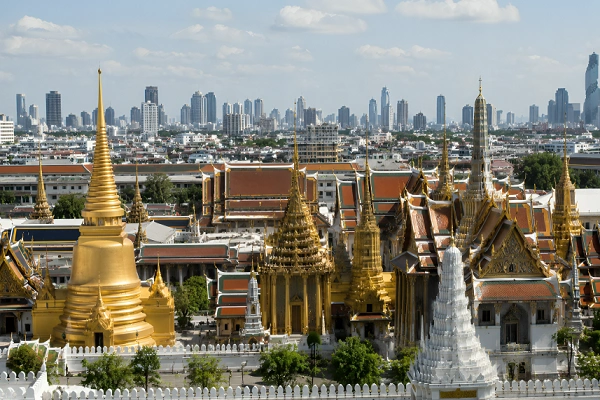
Most international flights land at Suvarnabhumi or Don Mueang airport, making Bangkok the natural starting point. Once settled in, the Grand Palace and the adjacent Wat Phra Kaew make a strong first stop, followed by a short walk to Wat Pho to see the giant reclining Buddha.
Day 2: The Chao Phraya River and Bangkok’s Markets
A boat ride along the Chao Phraya River is a relaxed way to see another side of the city, with a stop at Wat Arun on the opposite bank for its distinctive spires. The evening suits a wander through one of Bangkok’s night markets, where street stalls and small family-run shops often serve some of the best meals in the country.
Day 3: Chatuchak Market or a Day Trip to Ayutthaya
The third day allows time for Chatuchak Weekend Market if the timing lines up with a weekend, or a day trip to the historic ruins at Ayutthaya, the former Siamese capital located about an hour and a half outside the city.
Day 4: Take a plane to Chiang Mai and check out the Old City
A short domestic flight connects Bangkok to Chiang Mai in about an hour, compared with roughly ten to twelve hours by road, making flying the practical choice for a 10-day trip.
Chiang Mai has a noticeably different character from Bangkok, with a walkable old city, hundreds of temples, and cooler evenings, especially during the cool season.
Day 5: Doi Suthep and an Elephant Sanctuary
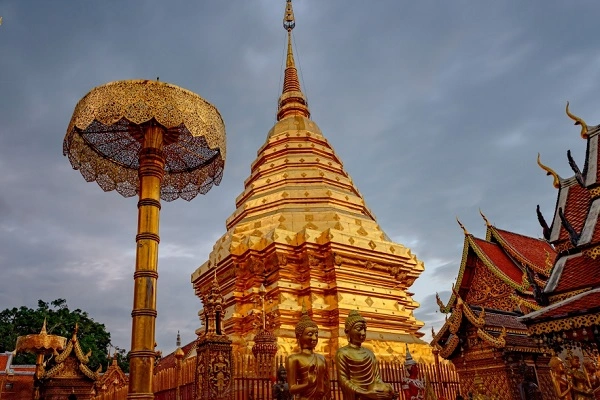
Doi Suthep, the temple on the mountain overlooking the city, is worth the trip up for both the architecture and the view. On this day, a lot of tourists go to an elephant refuge, which is one of the main reasons people stay in Chiang Mai.
Day 6: Hill-Tribe Villages or a Countryside Trek
Half-day hikes and trips to nearby hill-tribe towns are possible because of the mountains nearby. The night market in the old city is a good place to spend the evening browsing local crafts and trying northern Thai dishes that differ from what is common in Bangkok.
Day 7: Take a flight in the south to reach Phuket or Krabi
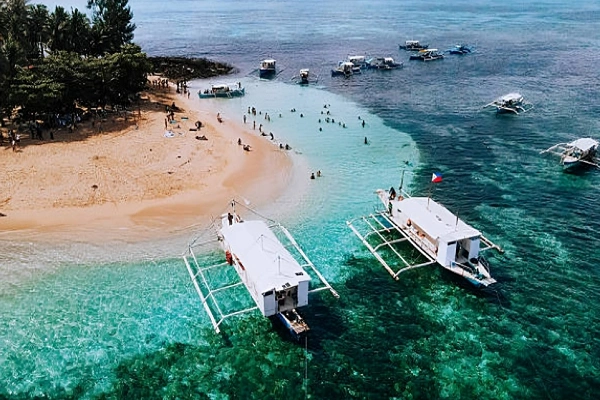
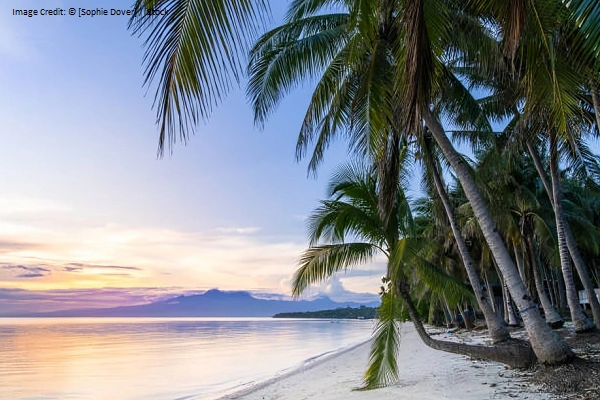
The final stretch of the trip usually heads south to the coast, where Phuket and Krabi serve as the two most common gateways to Thailand’s islands and beaches.
Travelers who prefer calmer water and fewer crowds sometimes choose Koh Samui or Koh Lanta instead, both reachable by a short flight or a combination of flight and ferry.
Day 8: Island Hopping and Snorkeling
Phuket offers easy access to boat tours of Phang Nga Bay, including the limestone formations made famous by the James Bond film, as well as day trips to the Phi Phi Islands. From Krabi, Railay Beach is a highlight, a stretch of sand reachable only by boat because of the cliffs surrounding it.
Day 9: Beach Time and a Cooking Class
Most tourism is out of the way and this day lends itself to a slower pace: a Thai cookery class, a visit to a local market or just more beach time.
Day 10: One last beach in the morning or before leaving
Depending on your flights, you can either have a more leisurely morning on the beach before heading to the airport on the last day, or spend a full day making your way home.
Getting Around Thailand
Bangkok is easy to get around in, with the BTS Skytrain and MRT subway, plus tuk-tuks and metered taxis to fill in the gaps.
An overnight train also runs between Bangkok and Chiang Mai, taking around ten to fourteen hours depending on the specific service, and some travelers choose it over flying simply because it saves a night of hotel costs.
Pickup trucks called songthaews can be used as buses when needed. They are a popular and cheap way to get around Chiang Mai and smaller towns.
On the islands, longtail boats and speedboats handle most short trips between beaches and nearby islands.
Practical Travel Tips
What to Pack
Lightweight, breathable clothing works for most of the trip, though a light jacket or sweater is useful for cooler evenings in Chiang Mai during the cool season.
Temples across the country require covered shoulders and knees, so it helps to carry a light scarf or shawl that can be added before entering.
In Bangkok and Chiang Mai, it’s important to have comfortable walking shoes. On the islands, it’s better to have boots that dry quickly. Sunscreen, a reusable water bottle, and basic insect repellent round out the packing list.
Money, SIM Cards, and Connectivity
Thailand’s currency is the Thai Baht, and while cards are accepted in most hotels, malls, and chain restaurants, smaller markets, street food stalls, and rural areas still expect cash.
Withdrawing larger amounts less often helps offset the flat fee that most foreign cards incur at Thai ATMs. When you arrive, you’ll want to grab a local SIM card or eSIM.
For ten days, short-term data plans cost between $10 and $25 and can be bought at airports and convenience shops.
With solid cell coverage, it’ll be much easier to utilize ride-hailing applications, maps, and translation tools.
Grab, the regional ride-hailing app, works well in Bangkok, Chiang Mai, and Phuket for getting around without negotiating fares.
Tipping, Language, and Safety
In Thailand, unlike some Western countries, you are not required to leave a tip. However, it is common to do so, like when you round up a taxi price or leave a little extra money at a restaurant if the service was great.
Learning a couple of Thai phrases, like “sawasdee” for hello and “khob khun” for thank you, tends to go a long way with vendors and hotel staff.
Thailand is usually safe for tourists, but you should still take the usual safety measures.
Keep an eye on your things in busy markets, avoid taking unmetered taxis at tourist spots and instead use licensed cabs or the Grab app. Also, don’t drink tap water; instead, drink water that has been bottled or filtered.
Final Thoughts
That’s the kind of Thailand you can see in ten days: temples and markets in Bangkok, some downtime in Chiang Mai, and some beach time to end the trip, without having to spend half the time traveling.
Lock in the local flights early and keep the order flexible. Also, check the rules again right before you fly, since they often change.Now you just need to choose which beach you want to spend the most time at.

Asad Rasheed is a travel researcher and writer,
and the founder of Travel Magnify. He creates
in-depth destination guides based on thorough
research, verified sources, and real traveler
insights helping everyday people plan smarter,
more confident trips across Europe, Asia, the
Americas, Africa, and beyond.