
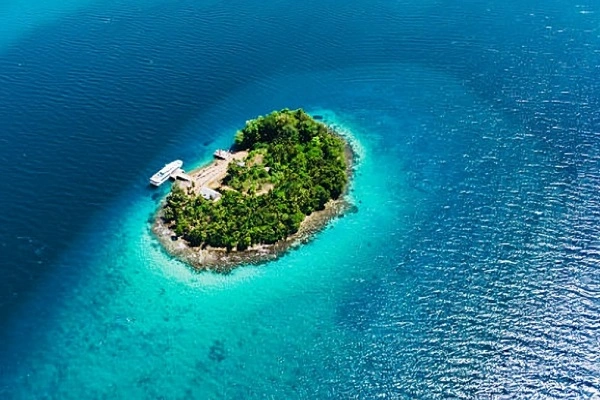
Nobody talks about the Solomon Islands. No influencer content, no airport billboards, no friends who have been. Just 992 islands sitting quietly in the South Pacific, doing exactly what they have always done.
That silence is the point. This is a Solomon Islands travel guide adventure built for people who are done with destinations that have already been photographed to death.
Here, WWII shipwrecks are beach dives. Coral reefs have no names because no one has written about them yet. And the entire country sees fewer visitors in a year than a single weekend at Bondi Beach.
What follows is everything you need to actually go.
Where Are the Solomon Islands?
The Solomon Islands is an independent nation in Melanesia, located in the southwestern Pacific Ocean. The country spans a double chain of islands stretching roughly 1,500 kilometers. The capital, Honiara, sits on Guadalcanal, the largest island and the main entry point for international visitors.
The country is part of the British Commonwealth and has a population of approximately 800,000 people (UN 2024 estimates). More than 70 indigenous languages are spoken across the islands, alongside English and the widely used Solomon Islands Pijin, an English-based creole that serves as a lingua franca throughout the archipelago.
Best Time to Visit Solomon Islands
Timing matters when planning any tropical island adventure. There are two clear seasons in the Solomon Islands:
The dry season (May to October) is the best time to visit. Temperatures sit comfortably between 25°C and 28°C, seas are calm, and visibility underwater is at its clearest. June and July are particularly favorable for scuba diving, snorkeling, and outdoor exploration.
Wet season (November to April) brings higher humidity, frequent afternoon rain, and the risk of tropical cyclones. However, this period offers lush green landscapes and far fewer visitors, which appeals to travelers seeking solitude.
The wet season is not ideal for water-based activities, but cultural experiences and village visits remain worthwhile.
How to Get to the Solomon Islands
Honiara foreign Airport (HIR), which is on Guadalcanal, is the main airport for foreign flights. Direct flights connect Honiara with Brisbane (Australia), Nadi (Fiji), and Port Moresby (Papua New Guinea). Most travelers from Europe, North America, or Asia will route through one of these hubs.
Once in the country, inter-island travel is available through:
- Domestic flights operated by local carriers connecting major islands such as Gizo, Auki, Munda, and Rennell
- Ferry services and local boat transfers for reaching more remote areas
- Yacht arrivals at ports including Gizo, which require customs clearance within 24 hours
Inter-island travel requires carrying your passport at all times, especially on outer islands where identification checks are common.
Visa Requirements
Citizens of over 130 countries including the United States, United Kingdom, European Union, Canada, Australia, and New Zealand can obtain a 30-day visitor visa on arrival at Honiara International Airport. The fee is SBD 200 (approximately USD 25). Entry requires a valid passport photo and proof of onward travel.
Your passport must be valid for at least six months beyond your planned departure date and should have at least two blank pages for entry and exit stamps. Children under 18 who are going without both parents should bring a letter of permission that has been notarized to avoid problems at immigration.
For stays longer than 30 days, an extension visa can be arranged through the Solomon Islands Immigration Division. It usually takes 10 to 20 business days to process.
Top Attractions in the Solomon Islands
1. Marovo Lagoon
Marovo Lagoon is the world’s largest double-barrier saltwater lagoon, located in the Western Province. It is a UNESCO-nominated site renowned for its extraordinary coral biodiversity, crystal-clear turquoise water, and abundant marine life.
Divers and snorkelers encounter manta rays, reef sharks, sea turtles, and hundreds of coral species. The lagoon also supports traditional communities known for intricate wood carving and shell jewelry.
2. Iron Bottom Sound and WWII Shipwrecks
Iron Bottom Sound, the stretch of water between Guadalcanal and Florida Island, earned its name from the dozens of warships and aircraft that sank there during the Battle of Guadalcanal in 1942 and 1943. Today it is one of the world’s premier wreck diving destinations.
The Bonegi I and Bonegi II wrecks near Bonegi Beach are accessible even to recreational divers and offer an extraordinary window into Pacific War history.
3. Tetepare Island
Tetepare is the biggest island in the South Pacific that no one lives on. It is a great place for ecotourism. Dense lowland rainforest covers the island, home to rare endemic species including dugongs, leatherback sea turtles, hornbills, and the Tetepare monarch bird.
The Tetepare Descendants’ Association manages community-based conservation on the island, making any visit a direct contribution to local environmental protection.
4. Rennell Island (East Rennell)
East Rennell is a UNESCO World Heritage Site and the world’s largest raised coral atoll. It features Lake Tegano, the largest lake in the insular Pacific, which is brackish and home to sea snakes, endemic bird species, and rare flora.
Because it is so remote and important to the environment, the island is one of the strangest places in Oceania to be in nature.
5. Skull Island (Western Province)
Skull Island holds ancient skull shrines dating back centuries, preserved as sacred markers of tribal ancestry. Visiting requires the permission of the local chief and the company of an approved guide entry without these is strongly discouraged by local custom and is said to carry serious consequences according to traditional belief.
This site offers genuine insight into the Melanesian kastom (custom) system that still governs social life across the islands.
6. Guadalcanal American Memorial
Located near Honiara, the Guadalcanal American Memorial commemorates the soldiers who fought and died during the Guadalcanal Campaign, a turning point in the Pacific War. The memorial includes monuments, interpretive panels, and panoramic views over the island.
A number of WWII museums, war relics, and the nearby Vilu War Museum with its displays of Japanese and American planes all add to the historical value of any visit.
7. Mataniko Falls
A short hike from Honiara leads to Mataniko Falls, a scenic waterfall that drops into a narrow canyon. The trail passes through jungle terrain and includes a WWII cave used by Japanese soldiers during the 1942 campaign. The hike takes roughly two to three hours round trip and is suitable for most fitness levels.
Adventure Activities in the Solomon Islands
Scuba Diving
The Solomon Islands consistently ranks among the top dive destinations in the world. Beyond the WWII wrecks of Iron Bottom Sound, the islands offer pristine coral walls, drift dives, cavern systems, and pelagic encounters across the Coral Triangle, the most biodiverse marine region on the planet.
Visibility regularly exceeds 30 meters. Dive operators are based in Honiara, Gizo, and the Western Province, with most resorts offering full equipment rental and PADI certification courses.
Snorkeling
Many of the best snorkeling spots in the Solomons are reachable by simple boat transfer. Lola Island in Vona Vona Lagoon, Uepi Island, and Mbabanga Island in Marovo Lagoon offer shallow reef systems teeming with clownfish, parrotfish, butterflyfish, and giant clams. No certification is needed, making snorkeling accessible to all age groups.
Surfing
The Solomon Islands offers uncrowded, high-quality surf along reef breaks and point breaks on islands including Santa Isabel and New Georgia.
The Papatura retreat on Santa Isabel provides guided surf excursions to more than 10 established breaks while also supporting community conservation programs including turtle release initiatives. The surf season generally aligns with the dry season, when consistent swells roll in from the southeast.
Hiking and Trekking
Hiking trails on Guadalcanal and Malaita lead through primary rainforest, past hidden waterfalls, and across scenic ridgelines with views of the surrounding ocean. Local guides are essential for backcountry routes and can be arranged through guesthouses or community tourism offices.
The terrain is rugged and the heat intense, so early morning starts and proper hydration are necessary.
Birdwatching
The Solomon Islands is home to more than 200 bird species, including many endemics found nowhere else on earth. Notable species include the Sanford’s sea eagle, the Solomons cockatoo, the Buff-headed coucal, and numerous kingfishers and sunbirds unique to the archipelago.
Serious birders should plan visits to Kolombangara Island (home to two endemic species) and Makira Island, which has the highest concentration of endemic birds in the entire Solomon group.
Kayaking and Fishing
Calm lagoons and protected waterways make the Solomon Islands well-suited to sea kayaking. Multi-day kayaking journeys through the islands of Western Province are possible with proper planning. Deep-sea fishing and reef fishing tours are available from most island bases, with target species including yellowfin tuna, wahoo, mahi-mahi, and giant trevally.
Where to Stay in the Solomon Islands
Guesthouses, eco-lodges, and cozy middle-range resorts are all types of places to stay. Options include:
- Beachfront bungalows in Marovo Lagoon offering direct water access and boat dive packages
- Conservation lodges on Tetepare and other protected areas where proceeds support local communities
- Village homestays on Malaita and Guadalcanal for full cultural immersion
- Mid-range hotels in Honiara with air conditioning, restaurant facilities, and reliable Wi-Fi
Budget travelers can find guesthouses in Honiara for USD 30 to 60 per night. Remote island lodges typically range from USD 80 to 200 per night including meals. High-end diving sites can cost over $400 per night.
Local Culture and Customs
The Melanesian kastom system shapes every aspect of daily life in the Solomon Islands. Respect for elders, communal decision-making, and strong wantok (community solidarity) ties define social structures across all islands.
Key cultural guidelines for visitors:
- Before taking pictures of people, towns, or ceremonies, you should always ask permission
- Dress modestly when visiting villages cover shoulders and knees
- Respect tabu (sacred or restricted) areas indicated by local signs or guides
- Remove shoes before entering homes or community meeting halls
- Participate in traditional exchanges with small gifts where culturally appropriate
Tipping is not customary in the Solomon Islands but is appreciated for exceptional service at hotels and restaurants.
Practical Travel Information
| Detail | Information |
| Currency | Solomon Islands Dollar (SBD) |
| Exchange rate | Approx. SBD 8 = USD 1 |
| Emergency number | 999 |
| Country code | +677 |
| Driving side | Left |
| Electricity | Type I plug / 230V |
| Time zone | GMT +11 |
Credit cards are accepted at hotels and larger businesses in Honiara, but cash is essential on outer islands. Honiara and a few other bigger towns have ATMs. Mobile internet through a local SIM card works in urban areas; connectivity is unreliable in remote locations.
Travel insurance is strongly recommended. Medical facilities outside Honiara are limited, and emergency medical evacuation to Australia can cost upwards of USD 50,000.
Essential Pijin Phrases
Learning a few words in Solomon Islands Pijin is genuinely appreciated by local communities:
- Halo — Hello
- Tanggio tumas — Thank you very much
- Raba — Friend
- Kai kai — Food / to eat
- Solwota — Sea / ocean
- Kastom — Traditional custom
- Wokabout — To walk or travel
- Tabu — Sacred or forbidden
Environmental Responsibility
The coral reefs and rainforests of the Solomon Islands are among the most ecologically significant in the world. Travelers are encouraged to:
- Use sunscreen that is safe for reefs and doesn’t contain oxybenzone or octinoxate
- Never touch or stand on coral formations
- Support community-based tourism operators who reinvest in local conservation
- Avoid single-use plastics, which are a significant waste challenge across the Pacific Islands
- Follow leave no trace principles on hikes and in marine environments
Last Words
The Solomon Islands travel guide adventure experience is defined by extraordinary marine biodiversity, layered WWII heritage, intact Melanesian culture, and a natural landscape that remains genuinely unspoiled.
With straightforward visa-on-arrival access, a growing network of conservation lodges and local guides, and activities ranging from world-class wreck diving to rainforest trekking and surf, the islands offer a depth of experience rarely found in the modern Pacific.
Calm seas and clear skies make the middle months of the year the most comfortable for most activities, though any season rewards the traveler willing to move slowly, respect local traditions, and interact with the groups that make these islands genuinely extraordinary.

Asad Rasheed is a travel researcher and writer,
and the founder of Travel Magnify. He creates
in-depth destination guides based on thorough
research, verified sources, and real traveler
insights helping everyday people plan smarter,
more confident trips across Europe, Asia, the
Americas, Africa, and beyond.