
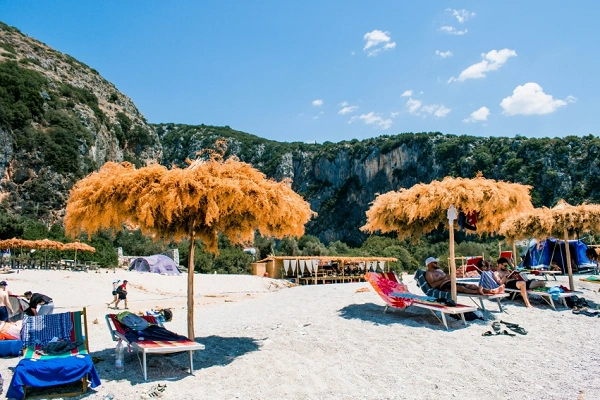
Albania’s coastline stretches 476 kilometers between two seas, the Adriatic in the north, the Ionian in the south. Most travelers who finally make it here ask the same question: why did it take so long?
Tourism crossed 12 million visitors in 2025, per official figures from Albania’s Ministry of Tourism. Prices are climbing. But the math still beats anything else in the Mediterranean and the genuinely hard-to-reach beaches still exist, if you’re willing to put in a little effort.
What follows covers the beaches most itineraries skip, how to actually get to them, what 2026 costs look like, where to sleep, and what to watch for before you go.
What “Hidden” Actually Means Here
Let’s clear something up before the beaches.
Several places marketed as “hidden” are now quite crowded. Ksamil packs out in July and August, charges €10–30 for two sunbeds and an umbrella, and appears on every Albania list in existence. Hidden it is not.
Every beach in this guide is genuinely harder to reach, some need a hike, some are boat-only, one sits inside a national marine park where no road has ever been built. That inaccessibility is usually the only reason they stay quiet.
Where to Base Yourself
Your base town shapes everything which beaches you can reach, how much you spend on transport, and how much the trip actually costs. Most guides skip this question. They shouldn’t.
Himare works best for travelers focused on hidden beach access. It sits in the middle of the Riviera with roughly equal reach in both directions. Town beaches here are public and free. Boat tours to Grama Bay and Filikuri depart from the promenade.
Gjipe Beach is 25 minutes away by car. Accommodation runs cheaper than Dhermi, the vibe is more local than Saranda, and because Himare has a significant Greek-speaking community the food is genuinely good.
Saranda makes sense as a first or last stop, not a beach base. Ferries from Corfu arrive here. Buses to Tirana and Berat leave from here. The beaches are mediocre and parts of the town are heavily built up. Stay one or two nights, use it for logistics, then move on.
Dhermi suits travelers with a slightly higher budget who want more comfortable hotels and a livelier beach scene. Close to Gjipe. Good food. Accommodation costs noticeably more than Himare.
Vuno is a small mountain village between Himare and Dhermi that almost nobody stays in which means guesthouse prices are very low.
With a rental car, Vuno puts you within easy reach of beaches on both sides of the Riviera. Worth considering if keeping accommodation costs low matters.
The Beaches
1. Gjipe Beach
Coordinates: 40.1418° N, 19.6792° E | Road turnoff: 40.140391, 19.676343 Nearest towns: Dhermi (5 km) · Himare (10 km) Open: Mid-May through end of October
Gjipe sits at the mouth of a towering limestone canyon. Pebble beach, Ionian water clear enough to see the bottom well below the surface, and no road access for standard cars. That last point is what keeps it from looking like the beaches of its neighbors.
By car
Turn off the SH8 coastal highway at the signposted junction (GPS above). A narrow paved lane runs 2.7 km to a dirt parking area 400 Lek (~€4) per day, cash only.
From parking, walk 1 km to the beach. Downhill takes 20-30 minutes. Coming back up takes 25-30. The path is rocky and unshaded, so go early or bring sun cover.
By furgon
Board any furgon heading along the coast and tell the driver “Gjipe.” They’ll drop you at the SH8 junction. From there, walk the paved lane to the parking area and then continue down total walking time from the highway is 60-75 minutes.
By boat
Water taxis and group tours run from Himare and Dhermi directly to the cove. Round-trip costs around 2,000 Lek (~€20) per person and cuts out the hike entirely.
By kayak
Rentals are available in Himare, Dhermi, and Jala. Paddle the coastline to reach Gjipe but only when the sea is completely flat. Don’t attempt this in any kind of swell.
On the ground
One restaurant and a bar operate seasonally. Prices run about double what you’d pay in town, so packing your own food saves money. Gjipe Eco Campground sits 50-100 meters from the beach and can be booked online.
Pit toilets and cold showers are available there. Sleeping on the beach itself is free and allowed.
One important warning
A separate canyon hike from the main road, not the parking lot trail, involves serious rock scrambling. Tourists have been injured and rescued on this route. Stick to the parking lot trail unless you have rock climbing experience and proper gear.
2. Grama Bay (Gjiri i Gramës)
Location: Western Karaburun Peninsula, north of Himare How to reach: Boat from Himare or Vlore · 13 km mountain hike from Palase Season: Boat tours run May through September
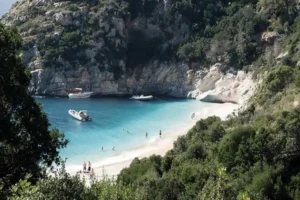
No road reaches Grama Bay. That’s not an oversight; the bay sits inside Karaburun-Sazan National Marine Park, Albania’s first designated marine park, and no road has ever been built into it.
Why this bay matters historically
Grama comes from the Greek word for letter or writing. Albanian archaeologist Faïk Drini has documented approximately 1,500 inscriptions carved into the cliff face over 2,300 years. Ancient Greek texts from the 3rd century BC address the Dioscuri Castor and Pollux, patron gods of sailors.
Roman-era Latin inscriptions follow. Medieval Greek prayers come after that. Historical records from 1369 place Byzantine Emperor John V Palaeologus at the bay during a voyage to Venice.
A quarry operated here from the period of Greek colonization through the 4th century BC, shipping limestone blocks to what are now Durres and Apollonia possibly as far as Brindisi across the Adriatic.
Don’t touch the inscriptions. Defacing them is prohibited and enforced inside the park.
Water quality
Visibility exceeds 20 meters regularly. Protected marine park rules limit fishing and motorized activity throughout the area. Snorkeling here is as good as it gets on the Albanian coast.
From Himare by boat
Operators set up stalls along the promenade in the mornings and evenings. Full-day tours run 8-10 hours and stop at multiple coves, caves, and bays along the Karaburun coast. Book online in advance during July and August spots sell out.
From Vlore by speedboat
Tours start at 10:30 AM and last for about 8 hours and include Grama Bay, the Blue Cave, Haxhi Ali Cave, and Dafina Bay.
Hiking from Palase
13 km one way, around 6 hours. Steep and rocky through Llogara National Park. Summer makes it harder: heat, dense thorny vegetation, and ticks. Wear long trousers. Bring at least 3 liters of water to each person. Make sure you retrace your steps.
At the bay itself
One small seasonal cafe with limited supplies. Pack your own food and water regardless the cafe isn’t always stocked.
3. Kroreza Beach
Location: ~35 km south of Saranda, near Lukove village How to reach: Boat tour from Saranda or Ksamil · ~5 km coastal hike from Lukova Beach
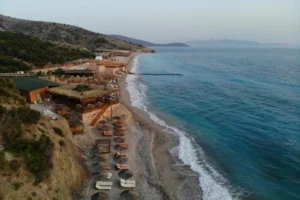
No car reaches Kroreza either. Mixed sand and smooth pebbles, natural rock outcroppings dividing sections of the shore, surrounded by cliffs and Mediterranean scrub. Even at peak summer it stays notably quieter than anything near Saranda: no beach clubs, no permanent infrastructure, no resort noise.
By boat
Daily group tours leave Saranda and Ksamil throughout summer and typically include Kroreza as part of a broader southern coast route. Easiest option by far.
On foot
Follow the coastal path from Lukova Beach for approximately 5 km. Some sections are unmarked and exposed. Download an offline Google Maps section before setting out and carry water; don’t rely on finding any along the path.
One tip worth knowing
At the northern end of the main beach, walk past a cluster of rocks. Behind them sits a smaller secondary cove that sees almost no one, even when the main beach has a moderate crowd.
4. Filikuri Beach (Gjiri i Filikurit)
Location: South of Himare town center How to reach: 45-60 minute walk from town · boat drop-off · kayak
Filikuri regularly draws comparisons to the best coves on the Riviera cliffs, caves, dramatically clear water, and almost no development. Reaching it on foot is the most rewarding approach, and it starts right from Himare town.
Walk south from the center along the coastal path. The beach is a couple of coves south of Himare’s main beach and stays hidden until you’re standing at the descent point. The final section involves a steep scramble with a fixed rope assisting the last 15-20 meters.
Normal fitness handles it fine. Anyone uncomfortable with heights should check the descent before committing.
By boat
Himare operators include Filikuri in coastal tours. A private drop-off and pickup runs around €50 and removes the hike entirely.
By kayak
Rentals are available from Himare’s main beach. Follow the coastline but only in calm conditions.
No facilities are available at the beach. Pack everything you’ll need. A round trip on foot from the Himare takes most people 2-3 hours including beach time.
5. Borsh Beach
Location: Between Himare and Saranda on the SH8 · stop in Borsh village How to reach: Car or furgon direct access, no hike required
Seven kilometers long and consistently overlooked. Borsh holds the title of longest beach on the Albanian Riviera, yet most international itineraries skip it entirely in favor of Ksamil and Saranda. An olive grove backs the beach rather than hotels.
The water stays calm. Village restaurants and guesthouses sit nearby at prices well below the southern coast average.
Anyone wanting a flat, long, genuinely uncrowded stretch of beach with basic local food and accommodation and none of the beach club energy will find Borsh exactly what they’re after.
6. Velipoja Beach
Location: Northwestern Albania, near the Montenegro border How to reach: Buses from Shkoder, the nearest city (~30 km away)
Velipoja gets almost no mention in international travel coverage, which is somewhat baffling given its scale 14 kilometers of sandy Adriatic coastline running to the Montenegrin border.
Shallow water and sandy bottom make it better for families with young children than for snorkeling. Prices are among of the best in the country.
Travelers crossing between Albania and Montenegro will find Velipoja a natural stopping point. The border crossing sits roughly 50 minutes away by road.
Budget: What Things Actually Cost in 2026
Albania has gotten noticeably more expensive since 2022. That description of ‘cheapest country in Europe’ is no longer true. Prices along the Riviera have risen 12–20% in 2025 alone.
But compared to Greece, Croatia, or Western Europe, the gap still matters. A mid-range restaurant meal costs €5–15 here versus €20–40 across the water in Greece.
Accommodation Hostel dorm beds run €10–20 per night. Budget guesthouse private rooms land between €25–45. Mid-range hotels sit at €40–80. Peak summer July and August adds 30–50% to coastal prices. Book 2–3 months ahead for Ksamil and Saranda during those months.
Food and drink Street food like byrek (a savory flaky pastry) costs €1–2. A full sit-down meal at a local-style restaurant runs €5–8. Mid-range restaurants charge €10–15 per person. Fresh seafood mains in Himare or Saranda land at €8–15. Coffee is €0.50–1. Beer at a bar runs €1–3.
Transport Furgons between coastal towns cost €2–5. The Tirana-to-Saranda bus runs €10–12. A shuttle bus from Tirana airport to the city center costs 400 Lek (~€4). A taxi from the airport to the city runs €25–30.
Daily totals Budget travelers using hostels, furgons, street food, and free beaches spend roughly €25–45 per day. Mid-range travelers using guesthouses and sit-down restaurants spend €50–80. Add a rental car and comfortable hotels and the figure moves to €80–120.
Cash reality: Most guesthouses, rural restaurants, and small shops don’t take cards — including many places that technically allow online booking.
Albanian ATMs charge €5–8 per withdrawal. Better to bring euros or US dollars from home and exchange at city center offices in Tirana, where rates are significantly better than any ATM in the country.
How Furgons Work
No app books them. No timetable governs them. Furgons shared minibuses leave from fixed points near the main square or market in each town when they fill up. Flag one down on the roadside if it’s headed your direction, and the driver will stop if there’s space.
Tell the driver your destination as you board. Mention specific beaches by name “Gjipe,” for example and the driver will drop you at the right junction rather than the nearest town. Pay cash directly; fares are set and non-negotiable, typically €2–5 for coastal hops.
For rough route planning, the app and website Gjirafa Travel carries reasonably current furgon information.
When to Go
Late May to mid-June delivers the best value: warm enough to swim, 30-40% cheaper than peak season, and far fewer crowds. Some seasonal businesses are still getting set up, which is a minor trade-off.
July and August mean peak heat, crowds, prices, sold-out boat tours. Book accommodation in Ksamil and Saranda 2-3 months ahead. Consider basing yourself in the Himare instead; same water, lower prices, fewer crowds.
September and October reward the patient. Water holds at 24–26°C. Albanian schools resume in early September and crowds drop sharply. Prices fall 20–40% from peak levels. Most boat tours still run through September.
Safety
Albania is generally safe. Violent crime against tourists is rare. What catches people off guard is different.
Roads: Albanian drivers overtake on blind corners on the SH8 coastal highway consistently, not occasionally. Drive defensively. Avoid mountain road sections after dark.
Trail hazards: Several paths to hidden beaches are unmarked and involve loose rock or exposed scrambles. The canyon route at Gjipe not the parking lot trail has led to multiple tourist rescues. Assess your fitness honestly before committing to any hike.
Ticks: The summer hike to Grama Bay from Palase carries significant tick exposure. Long trousers are not optional on that route. Check thoroughly after returning.
Pricing traps: Inflated taxi fares, surprise charges, and sunbed overcharging exist in Saranda and Ksamil. Agree on prices before accepting any service, especially for taxis.
Solo female travelers: Multiple independent accounts flag Saranda and Ksamil as having more persistent harassment than elsewhere on the Riviera. Himare, Dhermi, and Borsh consistently receive better reports.
Entry and Connectivity
Citizens of EU countries, the USA, UK, Canada, and Australia enter Albania visa-free for up to 90 days within any 180-day period.
Albania sits outside the EU, meaning standard EU roaming packages don’t apply here. Check roaming costs before landing, or pick up a local SIM at Tirana Airport arrivals Vodafone Albania, One Albania, and ALBtelecom all have kiosks there selling data packages.
Buying at the airport is easier and cheaper than dealing with roaming charges throughout the trip.
Tirana International Airport Něë Tereza (TIA) is the airport where flights arrive in Albania. The southern coast is a 4–5 hour drive or bus ride from there. An alternative route: fly into Corfu, Greece well connected from European cities then take the ferry to Saranda (25–65 minutes depending on the boat).
A 7-Day Framework (Budget Focus)
Actual furgon availability and weather will shape the days. This is a starting point.
Day 1 Tirana arrival: Stay in the city if the flight lands late. Budget guesthouses near Blloku district run €25–35 per night.
Day 2 Tirana to Himare: By furgon, usually with a change in Vlore or Saranda. Total journey: 4–6 hours. Arrive, walk the promenade, eat somewhere local.
Day 3 Gjipe Beach: Rent a car for the day or take the furgon and walk. Full day at the beach. Back to the Himare for dinner.
Day 4 Grama Bay boat tour: Book this in advance. Full day on the water Grama Bay, Filikuri, coastal caves. One of the best single days available on the Riviera.
Day 5 South through Borsh to Saranda: Slow morning at Borsh Beach. Furgon or drive south to Saranda by evening.
Day 6 Kroreza by boat: Group boat tour from Saranda. Alternatively, catch the ferry to Butrint UNESCO archaeological site 30 minutes from Saranda, entry around €5.
Day 7 Return: Bus back to Tirana (4–5 hours), or ferry from Saranda to Corfu and fly out from there.
One Honest Observation
Development on the Albanian Riviera is moving faster than almost anywhere in the Mediterranean. New hotels go up every season. Beaches that were genuinely empty five years ago are now moderately busy.
The places in this guide stay quieter specifically because reaching them requires something like a hike, a boat, a canyon walk. Grama Bay is unlikely to get a road given its protected marine park status. Gjipe and Filikuri depend on the same natural barrier; the terrain keeps the infrastructure out.
That window is still open. Whether it stays open another five years is a different question.

Asad Rasheed is a travel researcher and writer,
and the founder of Travel Magnify. He creates
in-depth destination guides based on thorough
research, verified sources, and real traveler
insights helping everyday people plan smarter,
more confident trips across Europe, Asia, the
Americas, Africa, and beyond.