
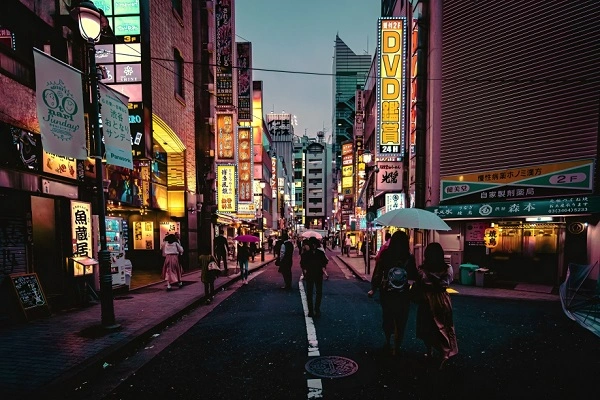
Japan is actually quite an easy country to visit. But it is a different one and that difference catches a lot of first-timers off guard in ways that go well beyond language. The trains run on time to the minute. Nobody tips. Tattoos can bar you from a hot spring bath. Paying with a card at a small restaurant might leave you standing at the counter with nothing to eat.
This doesn’t give you a reason to wait. It is simply a reason to know a few things before you land. This guide covers the practical, verified, and sometimes counterintuitive facts that will make your first trip to Japan genuinely smooth, not just the surface-level advice you have already read everywhere else.
When to Go: Planning Your Trip for Crowds and Price
The two peak seasons for visiting Japan are spring (late March to early May) for cherry blossoms and autumn (mid-November to early December) for fall foliage in major cities such as Tokyo and Kyoto, while northern areas like Hokkaido start to show colour from late September. Both are both gorgeous and really packed.
Spring and cherry blossoms
Cherry blossoms in most major cities reach full bloom from late March to early April, though the exact dates shift slightly each year based on temperature patterns.
A typical tree stays in bloom for about 10 to 14 days, and peak viewing usually lasts only 5 to 7 days once full bloom is reached. If there is wind or heavy rain, the petals can fall even sooner.
The overlap of cherry blossom season with spring school holidays means accommodation books up months in advance.
If you want the blossoms without fighting the worst of the crowds, consider visiting about a week after the peak in major cities and heading slightly north Fujiyoshida, the Fuji Five Lakes area, Takayama, or Kanazawa still have beautiful blossoms around April 10 with a calmer atmosphere than Tokyo or Kyoto.
Crowds and overtouris
Japan received record-breaking visitor numbers in 2024 and 2025, and the pressure on popular sites has become significant. Measures such as entrance fees for heavily trafficked mountain trails, barriers around oversubscribed photo viewpoints, and stricter rules on short-term rentals are now in place across multiple destinations.
Fujiyoshida cancelled its famous cherry blossom festival in 2026 due to severe traffic congestion a sign of how seriously affected some areas have become.
Tourist tax changes
Beginning July 1, 2026, Japan will triple its international tourist departure tax from 1,000 yen per person to 3,000 yen. This is collected when you leave the country and is usually bundled into your airline ticket.
Accommodation taxes have also increased in major cities, particularly in Kyoto, where luxury hotel guests now pay substantially more per night. Factor this into your budget.
Lesser-known seasons worth considering
January and February are cold but very uncrowded, hotel prices drop significantly, and places like Hokkaido have world-class snow and skiing. October before the main foliage peak offers pleasant weather and lighter crowds than the cherry blossom period.
Summer (June to August) June through mid-July is the wet season and then high heat and humidity sets in through August. But also fantastic fireworks events across the country.
Getting Around: Trains, Passes, and What Nobody Tells You
Japan’s public transport system is extraordinary. Trains go almost everywhere, they are clean, they are fast, and they leave on time. Learning to use it is one of the most rewarding parts of any visit.
The Japan Rail Pass Read This Before You Buy
The Japan Rail Pass (JR Pass) is a prepurchased rail pass for tourists that allows unlimited travel on most JR-operated trains for a set period. It sounds like an obvious purchase. The reality is more complicated.
A 14-day JR Pass costs 80,000 yen (roughly $530–540 at current exchange rates) as of 2025 a significant increase following a major price hike in October 2023. The pass only covers JR lines, so you will still need a separate ticket for most of the Tokyo Metro system, even though JR does operate a few trains within the city.
It also does not cover the Nozomi or Mizuho bullet trains, which are the fastest Shinkansen services on the Tokaido and Sanyo lines meaning you cannot use the fastest option on the Tokyo-Osaka route without paying an additional fee.
Whether the pass saves you money depends entirely on your itinerary. If you are spending a week moving between Tokyo, Osaka, Kyoto, and Hiroshima, it may break roughly even. If you are mostly sticking to one city, it will almost definitely be more expensive than individual tickets. Use a route calculator online before buying.
IC Cards: Get One on Day One
Sales of non-personalised Suica and Pasmo cards the rechargeable IC transit cards used across Japan, returned to normal in March 2025 after a chip shortage made them unavailable to international visitors throughout 2023 and 2024. You can now pick one up at any major station or airport arrival hall.
These cards work on trains, buses, and subways in Tokyo, Osaka, Kyoto, and most other major cities. You can also use them to pay for luggage storage lockers at stations and to make purchases at convenience stores like 7-Eleven.
Tap in at the gate, tap out at the destination no ticket purchasing required. If you have a newer iPhone, you can also add a Suica card directly through Apple Pay before you even leave home.
Tourist-specific IC cards called “Welcome Suica” and “Pasmo Passport” are available at Travel Service Centres in major Tokyo stations and at both Narita and Haneda airports. Unlike regular cards, they are valid for only 28 days and cannot be refunded, so use up the balance before you leave.
Luggage Forwarding: A Practical Game-Changer
Japan has an excellent luggage forwarding service called takuhaibin. From most hotels and convenience stores, you can send your suitcase ahead to your next hotel typically 2,000 to 3,000 yen per bag for intercity delivery like Tokyo to Kyoto, depending on size and weight. It usually arrives the next day.
This means you can check out in the morning, send your bags ahead to Kyoto, and spend the day exploring Tokyo unencumbered before catching the Shinkansen in the evening. It works seamlessly and removes the single most awkward part of moving between cities with heavy luggage.
Escalators and Train Etiquette
When standing on an escalator in a train station, people stand on one side so that those in a hurry can pass on the other. The side you stand on changes by city: in Tokyo, people stand on the left; in Osaka, they stand on the right. Watch what those around you are doing and follow their lead.
On trains, priority seats near the doors are intended for older passengers, pregnant women, and people with disabilities, and it is expected that you will give up your seat if needed. Eating on local trains and subways is generally avoided, though it is acceptable on long-distance Shinkansen.
Money: Japan Is Still Largely a Cash Country
Cash and ATMs
Card usage is far more widespread than even a couple of years ago, but cash remains essential particularly outside Tokyo. Small restaurants, local izakayas, temple entrance fees, vending machines, and many onsen facilities operate on cash only.
Before you leave your home country, notify your bank that you are travelling to Japan. ATMs in 7-Eleven and Japan Post offices reliably accept international cards and offer instructions in multiple languages. Airport ATMs work the same way. Withdraw enough cash for a few days at a time rather than searching for ATMs constantly.
Keep your notes clean and unfolded. Handing over crumpled currency is considered slightly disrespectful.
Tipping
Do not tip. Tipping is practically nonexistent in Japan, and in some contexts particularly in the countryside and at traditional inns it can cause offence. Good service is standard and expected; adding money on top of the bill is not part of the culture.
Tax-Free Shopping for Tourists
Temporary visitors to Japan can qualify for tax-free purchases, saving you from paying the local consumption tax 8 percent on food items and 10 percent on everything else.
Until October 31, 2026, the system works as follows: show your passport at the register, and the tax is removed directly at the till. Some stores direct you to a separate tax refund counter instead.
Important: From November 1, 2026, Japan is switching to a new system where you pay the full tax-inclusive price at the store, then claim your refund at the airport before departure. If you are visiting after that date, allow extra time at the airport for the refund process and keep all your receipts.
Accommodation: Hotels, Ryokans, and What to Expect
Hotels: Japan’s business hotel chains brands like Dormy Inn, Toyoko Inn, and APA are clean, well-located, and reasonably priced. Many include public baths or small onsens, decent breakfast options, and excellent facilities for the cost. If budget is a concern, these are far better value than most Western equivalents at the same price point.
Ryokans: A ryokan is a traditional Japanese inn, typically featuring tatami mat rooms, futon bedding laid out by staff in the evening, Japanese multi-course meals (kaiseki), and access to onsen baths.
Staying at a ryokan at least once is a genuine cultural experience worth planning around. Prices range from small country inns to highly pricey luxury hotels but the pattern is the same.
At a ryokan, you will usually be given a yukata (a light cotton robe) to wear around the property, including to meals and to the bath.
Outdoor slippers are given so that you can move from one place to another. Indoor bathroom slippers are separate and used only in toilet rooms switch back to the regular slippers when you leave.
Onsen: Everything You Need to Know Before You Go
Japan has more than 27,000 sources of geothermal water across the country, and onsen natural hot spring baths have been central to Japanese wellness culture for over a thousand years.
Visiting one is one of the most authentically Japanese experiences available to any visitor. It is also the experience that confuses first-timers more than almost anything else.
The Basic Process
The onsen bathing process comes down to four steps: undress, wash, soak, get out. The key rule, the one that matters above everything else is that you must wash your body thoroughly before entering the communal bath. The bath itself is for soaking, not cleaning.
Entry and Changing Room
When you get there, pay at the front desk, take off your shoes at the door, and put on the slippers that are there. Then, go to the changing room that is separated by gender. Women’s changing rooms are typically indicated by a red curtain; men’s by a blue curtain.
Store your clothes and belongings in a locker or basket, bring only a small towel into the bathing area, and go to the individual shower stations.
Washing and Soaking
Sit on one of the small stools at the washing station and scrub yourself clean, making sure to rinse off all soap before approaching the bath. Go into the water carefully, feet first, up to your shoulders. Going in all at once can make you dizzy from the heat.
Your small towel must not touch the bath water. Fold it on top of your head or rest it to the side while you soak. Phones, cameras, and any filming equipment are banned in most onsen facilities to protect guests’ privacy and preserve the peaceful atmosphere. Even if the setting is spectacular, do not attempt to take a photograph inside.
Pricing
Most basic public bathhouses (sento) charge around 400 to 600 yen per visit, a government-regulated fee kept affordable for locals. Day-use facilities at hotels or dedicated onsen complexes generally cost between 500 and 2,000 yen.
Tattoos
Current Policies
Some onsen, gyms, swimming pools, and beaches restrict guests with visible tattoos. Policies vary widely depending on the location. Some places won’t let people in with tattoos on, while others will make them cover them up with special tape or patches.
Attitudes are changing, particularly in larger cities and tourist-oriented areas, but it is not safe to assume.
What to Do
Check the facility’s website or call ahead. Searching specifically for “tattoo-friendly onsen” will return recommendations in most popular areas. Private onsen rooms are always an option if you have extensive ink.
Food: Practical Facts for First-Timers
Japan has one of the most celebrated food cultures in the world, and eating well here requires almost no effort. The difficulty is choosing from the options rather than finding something good.
Convenience stores are genuinely good
FamilyMart, Lawson, and 7-Eleven sell freshly made onigiri (rice balls), sandwiches, noodle dishes, hot snacks, and surprisingly decent pastries. These are not backup options many locals eat from them daily. The food quality is far higher than equivalent convenience stores in most other countries.
Vending machines are everywhere and sell hot and cold drinks in every possible combination. Coffee, tea, sports drinks, and water are all available at hundreds of yen per can or bottle.
Dietary restrictions require some advance planning
Vegetarian and vegan options exist but are not always clearly labelled, as many dishes that appear plant-based use fish stock (dashi) in their base.
Searching specifically for vegetarian or vegan restaurants in each city, or using dedicated apps, is more reliable than assuming from a menu. Gluten-free eating is more challenging and requires specific research.
Restaurants without English menus: Many smaller local restaurants have plastic food models in the window or a picture menu. Pointing works, and Google Translate’s camera function covered in the Language section below handles the rest.
Queuing at popular restaurants: Some ramen shops, sushi counters, and bakeries attract long queues. The queue is not optional or for show it moves in order, and there is no other way in. Joining and waiting is the only approach.
Culture and Etiquette
Japan has a reputation for complex social rules that can intimidate visitors. In reality, most of the important ones reduce to a handful of clear principles.
Remove your shoes indoors
You will be expected to remove your shoes not just in private homes, but in some traditional restaurants, ryokans, and certain sections of temples. A raised floor, shoe lockers at the entrance, or slippers laid out are the usual signals. When in doubt, look at what others are doing.
Bow as a greeting
A small nod of the head is sufficient as a visitor. You don’t have to bow very deeply. If someone offers you a handshake, keep it light and brief.
Handle business cards and objects with two hands
If someone presents you with a card, accept it with both hands, look at it briefly, and place it respectfully in your wallet or bag. Putting it in your back pocket or immediately writing on it is considered rude.
Do not eat or drink while walking
Eating at a street stall and finishing there before moving on is fine. Strolling through a neighbourhood eating is not customary and is noticed. At festivals and food markets, eating near the stall is accepted.
Be quiet in enclosed public spaces
Trains, buses, and waiting areas are kept quiet. Phone calls should be kept for open areas or handled briefly at low volume.
Rubbish bins are rare in public spaces
Japan keeps its streets exceptionally clean, partly because visitors and residents alike carry their rubbish with them until they find a bin, typically at convenience stores. Bring a small bag for your wrappers and bottles.
Language
Not as much as you think, but still more than it.
English Signage
English signage in train stations is excellent in Tokyo and generally adequate in Osaka, Kyoto, and other major tourist cities. Most station names are romanised. Maps in tourist areas are usually in multiple languages. Menus in tourist-frequented restaurants often have photographs.
Google Translate
Where English becomes genuinely limited is in smaller towns, local restaurants that do not cater to tourists, and some rural areas. Having Google Translate with the Japanese language pack downloaded offline handles most situations. The camera translation feature for menus is particularly useful.
Practical Logistics Before You Leave Home
Visa: Citizens of many countries including the United States, United Kingdom, Canada, Australia, most EU nations, and others can visit Japan visa-free for stays of up to 90 days.
Check the Japanese Ministry of Foreign Affairs website for the current list, as this changes. Some nationalities do require a visa arranged in advance.
Internet access: A pocket Wi-Fi device or a Japanese SIM card keeps you connected throughout. Both can be ordered online and picked up at airport arrival halls.
Pocket Wi-Fi is better for groups sharing a connection; SIM cards are simpler for solo travellers or those using a single device. Google Maps with Japan’s transit data downloaded works extremely well for navigation.
Power: Japan uses 100V electricity and Type A plugs two flat parallel pins, similar in shape to North American plugs but at a lower voltage (North America runs on 120V, Europe on 220–240V).
Most modern phone chargers and laptops are dual-voltage (labelled 100–240V) and handle Japan’s 100V without any converter. High-wattage heating appliances like hair dryers may not perform properly.
European, UK, and Australian plugs are a different shape entirely and need a Type A adapter, available at electronics stores on arrival.
Emergency numbers: Police is 110; fire and ambulance is 119. Most dispatchers can arrange for a translation service if needed.
Almost every first-timer is in for a few surprises
Some observations that do not fit neatly into categories but genuinely change how the trip feels:
Streets are safe at night to a degree that feels unusual. Walking back to your hotel alone at midnight in a major Japanese city involves very little of the awareness that the same walk would require in most large cities elsewhere in the world.
Lost items are almost always returned. If you leave something on a train or in a restaurant, the chance of it being handed to station staff or kept at a lost and found is genuinely high. The lost and found system at JR stations is well organised and English-accessible.
Silence is not unfriendly. The quiet in trains, restaurants, and public spaces can feel cold to visitors from more openly sociable cultures. It is not standoffishness it is a different baseline expectation about shared space.
Hospital vending machines exist in station concourses. Hot coffee, cold tea, and everything in between are available around the clock from machines that are cleaned and restocked more regularly than comparable machines in most other countries.
Japan is not one city. Tokyo, Osaka, Kyoto, Hiroshima, Kanazawa, Hakone, Hokkaido, Okinawa these are not interchangeable or predictable from each other. The food changes, the pace changes, the architecture changes, the weather changes.
If possible, move between at least two or three cities rather than staying in one place for the whole trip. The contrast is part of what makes the country worth returning to.
Travel policies, rates, and taxes in Japan may change over time. Verify current details before booking.

Asad Rasheed is a travel researcher and writer,
and the founder of Travel Magnify. He creates
in-depth destination guides based on thorough
research, verified sources, and real traveler
insights helping everyday people plan smarter,
more confident trips across Europe, Asia, the
Americas, Africa, and beyond.