It’s easy to overthink a vacation to Azerbaijan. The country does not come up in the usual conversations about where to go next, which means most first-time visitors arrive with a loose idea and a lot of open questions.
Just how many days do you need? Is Baku worth more than one day? Is Sheki worth the journey? What even are mud volcanoes, and should you go?
This 5 day Azerbaijan itinerary for first timers answers all of that. Five days is enough time to tour Baku, go to Gobustan, and arrive at Sheki without rushing or going back. The plan below is laid out day by day so you can follow it directly or adjust it around your own travel dates.
Before You Leave: Quick Planning
Azerbaijan uses the Azerbaijani Manat (AZN). The country is generally affordable for most international travelers. Most travelers apply for an e-Visa online before arrival, which is the easiest and most reliable option.
Baku’s Heydar Aliyev International Airport connects well to most major cities in Europe, the Middle East, and Central Asia.
Bring a mix of cash and card. Outside of Baku, cards are not always accepted. Also, downloading offline Google Maps before you land saves a lot of stress when you are navigating unfamiliar neighborhoods.
Day 1: Arrive in Baku, Walk the Old City
Most flights land in the morning or afternoon. After settling into your hotel, resist the urge to rest too long. Head straight to Icherisheher, the walled Old City of Baku, which is a UNESCO World Heritage Site and honestly one of the most walkable historic districts in the entire region.
Start at the Maiden Tower (Qız Qalası). Nobody knows for certain what it was originally built for; some say it was a Zoroastrian fire temple, others say it was a watchtower.
That mystery alone makes it worth climbing. The view from the top gives you a good overview of the Caspian Sea and the city skyline.
From there, wander the narrow alleys of the Old City without a fixed plan. You will stumble upon carpet shops, old mosques, and locals playing backgammon outside their doors. Grab dinner at one of the restaurants inside the Old City walls. Piti is a lamb stew that is cooked slowly and served in a clay pot.
Most locals eat it in two stages: first, pour the broth into a separate bowl, tear some bread into it, and eat it like a soup. Then go back to the pot and mash the meat and chickpeas together before eating. Ask someone to show you if you are not sure getting that little ritual right is a good introduction to Azerbaijani food culture.
Day 2: Baku City Deep Dive
Day 2 is your full Baku day. The city blends Soviet-era architecture, ultra-modern towers, and old Persian influences in a way that feels both chaotic and beautiful.
Morning: Head to the Flame Towers area and walk along the Boulevard (Primorsky Boulevard) that stretches along the Caspian Sea. It is a pleasant morning walk, especially before the heat picks up in summer months.
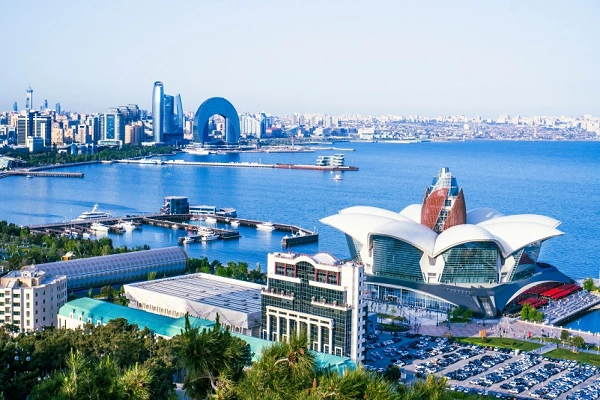
Midday: Visit the Heydar Aliyev Center, designed by Zaha Hadid. Even if you are not into architecture, this building will make you stop and stare. The flowing white curves look completely out of place and somehow perfect. The exhibitions inside change but are usually worth checking out.
Afternoon: Explore the Nizami Street area for shopping and people-watching. If you have any interest in local crafts, look for Azerbaijani rugs, silk scarves, and copper work. These make far better souvenirs than anything sold at airport shops.
Evening: Watch the Flame Towers from the Old City walls at night when they light up in fire animations. Most city light shows are underwhelming in person. This one is not.
Day 3: Mud Volcanoes and Gobustan Rock Art
This is the day most first-time visitors remember most clearly, and it requires an early start.
Morning: Take a taxi or join a day tour to Gobustan National Park, about 65 km south of Baku. The park holds over 6,000 prehistoric rock carvings, some dating back 20,000 years or more, according to UNESCO.
You walk through a dry, almost lunar landscape and suddenly realize that people stood in this exact spot painting boats and animals onto stone millennia ago. Take your time here. It is not crowded, and the silence adds to the atmosphere.
Afternoon: Drive a short distance from Gobustan to the mud volcanoes nearby, often reached via off-road vehicles across a rough, desert-like landscape. It has more mud volcanoes than any other country in the world. They are small, grey, constantly gurgling mounds that look like something from another planet.
You can walk right up to them and watch the cold mud slowly bubble up from deep underground. Put on shoes that you don’t mind getting dirty.
Head back to Baku by late afternoon. You will be tired but in a good way the kind of tired that comes from actually seeing something unusual. Spent tonight in Baku. You leave for Sheki first thing tomorrow morning.
Day 4: Sheki: A Mountain Town Worth Travelling to
Sheki is the highlight of many Azerbaijan trips, and it sits about 300 km northwest of Baku. You have two options: take the train (around 6,8 hours including a short transfer to Sheki) or hire a private driver for a more flexible journey of about 4,5 hours. The train is more affordable; the driver lets you stop along the way.
Sheki sits in the foothills of the Greater Caucasus mountains. It is noticeably cooler than Baku, quieter, and the buildings look nothing like the capital. Check into a guesthouse or one of the small hotels in town. Spending at least one night here is worth it; the town feels entirely different after the day-trippers leave.
In the afternoon, visit the Khan’s Palace (Şəki Xanlarının Sarayı). This 18th-century palace is famous for its stained glass windows made without a single drop of glue, a technique called şəbəkə. The geometric patterns are extraordinary. Photography inside may be restricted depending on the season, so check when you arrive.
Walk through the Sheki Bazaar and try the local specialty: Sheki halva, a layered pastry made with rice flour, butter, and nuts. Every shop sells it slightly differently. Before making a purchase, feel free to test some.
Day 5: Sheki to Baku, Final Hours
If you spent the night in Sheki, your morning is free for a slow walk through the old caravanserai before heading back. The Upper Caravanserai in Sheki was once a major stop on the Silk Road and has been carefully restored. It is a peaceful spot in the morning hours.
Start your return to Baku by early afternoon to avoid arriving too late, especially if you have a morning flight the next day. The drive back gives you another look at the Caucasus landscape rolling green hills, small villages, roadside fruit stands selling pomegranates and walnuts in season.
Once back in Baku, use your last evening to revisit any spot you wanted more time at. The Old City at night has a different, quieter energy compared to the daytime tourist rush. Grab a final meal at a restaurant serving dolma grape leaves stuffed with rice and meat and toast to a trip well spent.
Practical Tips for First-Time Visitors
Getting Around: Taxis are cheap in Baku. Use the app Bolt. It is reliable and shows fixed prices before you confirm the ride. Avoid unmarked taxis at the airport.
Language: Azerbaijani is the official language, but Russian is widely spoken by older generations. English is increasingly common in Baku, especially in hotels and tourist areas. Outside the capital, have your destination written in Azerbaijani to show drivers or locals.
Respect Local Culture: Azerbaijan is a secular country, but it is predominantly Muslim. Dress modestly when visiting mosques and historical religious sites. In these places, women like to wear scarves.
Budget: A mid-range daily budget in Azerbaijan runs roughly $50,80 USD per person, covering accommodation, meals, and local transport. Sheki is slightly cheaper than Baku on most things.
Final Thoughts
Five days is not a lot of time, but Azerbaijan has a way of making it feel like more. Baku’s skyline stays with you longer than you expect. The silence at Gobustan is the kind that makes you think. And Sheki most people say they want to go back before they even leave.
Honestly, just go. Figure out the details once you are there. That is usually how the best trips work anyway.

Asad Rasheed is a travel researcher and writer,
and the founder of Travel Magnify. He creates
in-depth destination guides based on thorough
research, verified sources, and real traveler
insights helping everyday people plan smarter,
more confident trips across Europe, Asia, the
Americas, Africa, and beyond.