An honest travel guide with no exaggerated claims
Everyone told me to go to Santorini. My Instagram feed agreed. But when I sat down to actually book my first solo trip through Europe, something made me pause. Why does the whole world line up for the same fifteen places on a continent with forty-four countries?
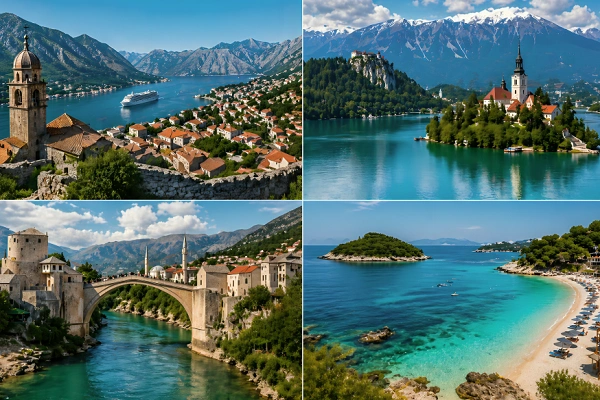
That question led me somewhere better. To a medieval walled city in Montenegro I had never heard of. To a Georgian mountain village where the church looked like it was balanced on the edge of the world. To an Albanian beach with clear water and far fewer crowds than the famous Greek islands.
If you are looking for underrated countries to visit in Europe in 2026, you are already thinking differently from most travelers. This guide covers ten countries that most tourists walk right past.
Important note before reading: Budget figures, visa rules, and entry requirements change frequently. Always verify current information through official government websites or your country’s embassy before booking any trip.
Why Skip the Famous Destinations?
Rome is famous because it is extraordinary. Paris earned its reputation. Nobody is arguing otherwise.
But there is a cost most travel guides never mention. When tens of thousands of people visit the same piazza on the same Tuesday in July, everyone’s experience suffers.
You cannot feel the history of the Colosseum when you are pressed against a stranger’s elbow in a ticket queue. You cannot enjoy a meal in Florence when the menu is designed for people who will never return.
The ten countries below have not reached that tipping point yet. You can still sit at a cafe in Sarajevo and have the owner ask where you are from out of genuine curiosity. You can still hike in Triglav National Park and hear nothing but wind. That may not last forever which is why 2026 is a good time to go.
1. Slovenia A Small Country That Somehow Has Everything
Slovenia is smaller than New Jersey, shares borders with Italy, Austria, Croatia, and Hungary, and has quietly absorbed qualities from all of them while remaining its own place.
The capital, Ljubljana, is what a European city feels like when it is designed around people rather than cars. The old town sits along a slow river, there is a castle on the hill you can hike to in twenty minutes, and the cafe culture operates as though nobody is in any particular hurry.
What to See:
- Ljubljana — Walkable, calm, and genuinely charming
- Lake Bled — The island church in the middle of an alpine lake is exactly as beautiful as the photos suggest. Arrive early morning or evening to avoid day-trippers
- Piran — A coastal town on the Adriatic that looks like it was lifted from Venetian Italy
- Triglav National Park — Serious alpine hiking with glacial valleys and dramatic scenery
Rough Budget: Noticeably cheaper than neighboring Austria or Italy for a comparable experience. Slovenia is an EU member and uses the Euro.
Best Time to Visit: May, June, and September. July and August bring peak season crowds. Lake Bled in particular gets very busy.
Verify before you go: Visa requirements and entry rules check your government’s official travel advisory for Slovenia.
2. Montenegro The Country That Forgot to Get Famous
Montenegro only became an independent country in 2006. It has an Adriatic coastline, a national park with glacial lakes, medieval walled towns, and mountains that drop dramatically into the sea. It is the kind of place that should be overrun with tourists. It is not at least not yet.
Kotor is the highlight. The old town is surrounded by walls that climb the mountain behind it. The hike to the fortress above takes about forty minutes and delivers a view of the bay that you will probably keep as your phone background for years. The town is UNESCO-listed and still feels like a real place.
What to See:
- Kotor — Medieval walls, Venetian architecture, one of the most dramatic natural settings in Europe
- Budva — More beach-focused, with a small old town and active nightlife
- Durmitor National Park — Remote and home to good white-water rafting
Rough Budget: Generally affordable. Montenegro uses the Euro informally despite not being an EU member.
Best Time to Visit: June and September avoid the peak summer heat and crowds.
Verify before you go: Visa-free access and duration of stay for your specific passport.
3. Albania Europe’s Most Misjudged Destination
Albania has a reputation that does not reflect the country that actually exists today. It was isolated until 1991, and images from that era still color how people think about it. The Albania of 2026 is a completely different story.
The Albanian Riviera is the most dramatic example of the gap between reputation and reality: clear water, dramatic coastline, and far fewer visitors than equivalent beaches in Greece or Croatia.
One honest warning: Albania is no longer the bargain destination it was five years ago. Prices in coastal tourist areas, especially around Ksamil, have risen sharply.
Beach chair hire in popular spots can be surprisingly expensive in high season. The interior and northern regions remain more affordable. Do not visit the coast in summer expecting rock-bottom prices.
Where to Go:
- Tirana — A colorful, transformed capital. The Blloku district was closed to ordinary citizens under communism and is now the city’s liveliest neighborhood
- Berat — Called the city of a thousand windows for its Ottoman-era houses. UNESCO-listed and still feels lived-in
- Albanian Riviera — Wild and beautiful coastline developing fast
- Ksamil — Striking turquoise water near Saranda, though beach fees have risen considerably
Rough Budget: Highly variable. Interior and cities remain affordable. Coastal areas in summer can approach Western European prices. Research current prices for specific areas before budgeting.
Best Time to Visit: May through October. Shoulder season (May, September, October) offers better value than July and August on the coast.
Verify before you go: Visa requirements for your specific passport not all nationalities have the same access. Check your government’s official Albania travel page.
4. Latvia Art Nouveau, Pine Forests, and Almost No Queues
Most people who visit the Baltic states end up in Tallinn, Estonia, which appears on every “hidden gem” list and is therefore no longer particularly hidden. Latvia sits just south and gets a fraction of the attention.
Riga has one of the strongest architectural arguments of any capital city on this list. It contains more Art Nouveau buildings than anywhere else in the world whole streets of ornate early-twentieth-century facades.
The old town is UNESCO-listed, the central market is genuinely large and still functions as a real market, and the food scene has gotten good.
What to See:
- Riga — Architecture, a local food scene, and a working medieval old town
- Jūrmala — A beach resort thirty minutes from Riga, beloved by locals
- Gauja National Park — Sandstone cliffs, medieval castles, river kayaking, and pine forest hiking
Rough Budget: Mid-range by European standards. Latvia is an EU member using the Euro.
Best Time to Visit: May through September.
Verify before you go: Entry requirements for your passport.
5. Bosnia and Herzegovina More Layers Than Any Country Its Size
Bosnia sits at the intersection of Ottoman, Austro-Hungarian, and Slavic influences in a way that no museum exhibit could replicate. You feel it walking through Sarajevo, where you can step from a Turkish bazaar into a Viennese-style boulevard in thirty seconds.
The Sarajevo War Tunnel Museum is one of the most affecting experiences available in any country not depressing in a hollow way, but humbling in a way that changes how you see ordinary things.
Do Not Miss:
- Sarajevo — Complex, layered, unlike anywhere else in Europe. Allow at least three days
- Mostar — The rebuilt Stari Most bridge is the postcard image, but the surrounding old town is worth equal attention. Go early morning or evening to avoid day-trip crowds
- Blagaj — A Dervish monastery built into a cliff above a river spring, thirty minutes from Mostar
- Una National Park — Waterfalls, emerald rivers, and canyon hiking
Rough Budget: One of the most affordable countries in Europe for travelers. Bosnia uses the Convertible Mark (BAM).
Practical note: Bosnia is more cash-dependent than Western Europe. Carry local currency, especially outside main cities. Card acceptance is improving but not yet universal everywhere.
Best Time to Visit: April through October.
Local food to try: Cevapi (small grilled sausages in flatbread), burek (layered pastry), and Bosnian coffee served in its own small pot.
Verify before you go: Visa and entry requirements for your specific passport.
6. North Macedonia Ancient History on a Forgiving Budget
North Macedonia is one of the few places in Europe where a limited budget genuinely does not mean compromising on experience. It sits on one of Europe’s oldest and deepest lakes and has a capital city with a genuinely unusual approach to architecture.
Skopje underwent a controversial urban redesign resulting in a city center filled with large neoclassical statues and monuments. It looks unlike anywhere else in Europe, partly absurd, partly fascinating. The Ottoman-era Bazaar district next to it has been doing its thing for centuries.
Where to Go:
- Skopje — Spend half a day on the statues, then cross the Stone Bridge into the old bazaar
- Ohrid — A lakeside town of genuine beauty. Lake Ohrid is millions of years old and one of Europe’s most biodiverse lakes
- Matka Canyon — Carved by the Treska River just outside Skopje. Kayaking and cave exploration in near-total solitude
Rough Budget: Among the most affordable in Europe.
Practical note: Some bus kiosks and shops may be closed on Sundays worth knowing when planning local travel.
Best Time to Visit: April through October.
Verify before you go: Current visa rules for your passport, and check transport schedules locally as these can change.
7. Romania Stop Thinking About Dracula and Start Planning a Proper Trip
Romania has the Carpathian Mountains running through its center, some of the best-preserved medieval Saxon villages in Europe, an impressive capital, and wildlife experiences bear watching, wolf tracking simply not available elsewhere on the continent.
Bran Castle is fine but has little to do with Bram Stoker and a great deal to do with tourism. What Romania is actually extraordinary for is everything else: the drive between things, the medieval towns, the fortified churches, and mountain passes where you still share the road with horse-drawn carts.
Do Not Skip:
- Brașov — A medieval city surrounded by mountains, with a walkable old town
- Sibiu — Often called Romania’s most beautiful city. Slightly smaller than Brașov, fewer tourists
- Bucharest — More complex than its reputation. The communist-era Palace of the Parliament is one of the largest buildings in the world
- Transfăgărășan Highway — Drive it. Open seasonally (typically June through October, depending on snow). The mountain scenery is extraordinary
Rough Budget: Affordable by European standards. Romania uses the Romanian leu and is an EU member.
Best Time to Visit: May through September, or late November and December for Christmas markets.
Verify before you go: The Transfăgărășan’s exact opening dates vary by year depending on weather check locally before planning a drive.
8. Georgia Where the Food Alone Justifies the Airfare
Georgia sits at the crossroads of Europe and the Caucasus and offers something no purely European destination can match: a culture that feels genuinely different while remaining completely accessible. It has its own alphabet, a wine tradition dating back thousands of years, and a hospitality culture that treats guests with unusual warmth.
Tbilisi rewards slow walking. The old town mixes wooden balconied houses, Persian-influenced baths, Orthodox churches, and a Zoroastrian fire temple within a few streets of each other.
Georgia’s Highlights:
- Tbilisi — The old town, the Abanotubani sulfur bath district, the Dry Bridge antiques market, the Narikala fortress above the city
- Kazbegi — A mountain village beneath the Gergeti Trinity Church, perched dramatically above the valley. The drive through the Georgian Military Highway is outstanding
- Kakheti — Georgia’s wine region, where families make wine using ancient clay vessel methods
- Batumi — A Black Sea city with interesting architecture. Better in spring and autumn than peak summer
Rough Budget: Affordable, particularly compared to Western Europe. Georgia uses the Georgian lari.
Important entry requirement verify before booking: Georgia has introduced a mandatory health and travel insurance requirement for visitors.
The specific rules, minimum coverage amounts, and enforcement details should be confirmed through the official Georgian government website or your country’s embassy in Georgia before travel, as requirements may evolve. Do not rely solely on third-party sources for entry requirements.
Visa access: Georgia offers visa-free entry to citizens of many countries for extended periods, one of the more generous arrangements available anywhere. Confirm current rules for your specific passport through official sources.
Verify before you go: Current insurance requirements, visa rules, and any travel advisories for your nationality.
9. Estonia A Medieval City Running on Modern Infrastructure
Estonia is a paradox worth experiencing. The old town of Tallinn is among the best-preserved medieval cities in Europe: cobblestone streets, Gothic town hall, towers, walls. It looks like the Middle Ages. Then you connect to the city’s public Wi-Fi and remember that Estonia runs its entire government online.
The old town is genuinely less crowded than Krakow, Prague, or Bruges. You can walk Tallinn’s walls on a weekday morning and have long stretches to yourself.
Estonia’s Draws:
- Tallinn Old Town — UNESCO-listed. The view from Toompea Hill over the red rooftops is one of the better city panoramas in Northern Europe
- Lahemaa National Park — An hour from Tallinn. Pine forests, peat bogs, coastal cliffs, and restored manor houses
- Saaremaa Island — Juniper fields, traditional windmills, a meteor crater lake, and a slower pace of life
Rough Budget: Mid-to-upper range for this list. Estonia is an EU member using the Euro.
Digital Nomad Visa: Estonia has an active digital nomad visa program allowing non-EU remote workers to live legally in the country for an extended period. Requirements include proof of remote income and health insurance.
Specific income thresholds, fees, and processing times change periodically check the official Estonian government or e-Residency portal for current requirements before applying.
Best Time to Visit: May through September.
Verify before you go: Current DNV requirements through official Estonian government sources, and standard entry requirements for your passport.
10. Slovakia Surrounded by Famous Neighbors, Overlooked by Everyone
Austria, Hungary, Poland, the Czech Republic, and Ukraine all share a border with Slovakia. Every year, millions of tourists cross its borders to reach one of those countries and somehow never stop. It is one of the more baffling oversights in European travel.
Bratislava sits on the Danube, has a hilltop castle walkable from the old town, and costs roughly half what Vienna charges while being a short journey away.
Slovakia’s Best:
- Bratislava — Small, manageable, excellent value. Works well as a base for day trips and worth a night or two on its own
- High Tatras — Slovakia’s alpine region. Serious mountain hiking in summer, skiing in winter
- Spiš Castle — One of the largest castle complexes in Central Europe, on a volcanic ridge. Often nearly empty
Rough Budget: Affordable by Central European standards. Slovakia is an EU member using the Euro.
Note: Slovak Paradise National Park has gorge trails with fixed ladders and chains, genuinely adventurous hiking that requires some physical confidence.
Best Time to Visit: May through October.
Verify before you go: Entry requirements for your passport.
How to Choose
For tight budgets: Bosnia, North Macedonia, and Albania’s interior offer the most for your money.
For nature: Slovenia and Romania are the strongest options. Georgia’s mountain regions are extraordinary if you are including the broader European area.
For food: Georgia stands apart it is one of the most underrated food cultures anywhere. Bosnia is a strong second.
For couples: Montenegro and Slovenia. Kotor Bay, Lake Bled are memorable because you are not sharing them with enormous crowds.
For solo travelers: Georgia, Bosnia, and Albania. Hospitality cultures in all three mean you rarely eat alone unless you want to.
For digital nomads: Estonia has the most developed formal program. Georgia is a popular alternative at lower cost but confirm current entry and insurance requirements before going.
Practical Tips
Visas: EU member countries on this list (Slovenia, Latvia, Estonia, Slovakia, Romania) are freely open to EU citizens. Most Western passport holders also enter visa-free. Balkan countries are generally accessible to US, UK, EU, Canadian, and Australian passport holders.
Always verify your specific passport at the official embassy or government travel advisory page before booking.
Currency: EU members use the Euro. Montenegro uses it informally. Albania, Bosnia, North Macedonia, Romania, and Georgia each have their own currency. Carry local cash especially in Bosnia and rural North Macedonia where card acceptance is still inconsistent outside city centers.
Georgia entry requirements: Georgia has introduced new mandatory insurance requirements for visitors. The details should be confirmed through official Georgian government sources or your country’s embassy before travel. Do not rely on third-party travel articles (including this one) for entry requirement details.
Getting around: Budget airlines connect most of these countries affordably. For overland Balkan travel, buses are the main option check GetByBus or Flixbus networks. Book accommodation two to three months ahead for summer travel to popular spots like Lake Bled, Kotor, and the Albanian Riviera.
A Final Words
The best travel experiences I have had in Europe did not happen where everyone told me to go. They happened on a bus in northern Albania where a man insisted I share his lunch. In a cave bar in Sarajevo with no apparent closing time. On a trail in Triglav at 6am with nothing visible on the ridge above me but mountain animals.
None of that required special planning. It required only the decision to go somewhere slightly off the obvious path.
The underrated countries on this list are not underrated because they lack anything. They are underrated because the travel industry runs on familiarity, and because most people book where they have already heard of. That creates an opportunity for travelers willing to look a little further.
Pick one. Book a flight. The window for experiencing these places as they are right now will not stay open forever.

Asad Rasheed is a travel researcher and writer,
and the founder of Travel Magnify. He creates
in-depth destination guides based on thorough
research, verified sources, and real traveler
insights helping everyday people plan smarter,
more confident trips across Europe, Asia, the
Americas, Africa, and beyond.