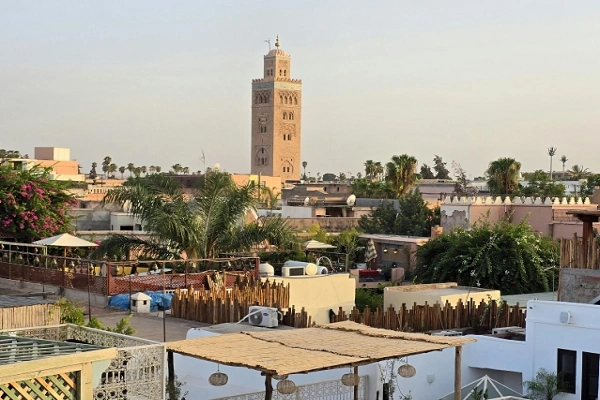
You’ve seen the blue alleyways, the desert dunes, the chaotic beautiful souks and you’ve been curious ever since. Here’s the thing: Morocco is even better in person, and it costs a lot less than you’d think.
This guide cuts straight to what you actually need a real 10-day itinerary, honest costs, and tips that save you money without missing out on anything. Let’s get into it.
Daily Budget & Travel Costs in Morocco
Morocco is one of the most cost-effective destinations in North Africa. Travel costs vary by comfort level, but even a mid-range traveler spends significantly less than in Europe or the Gulf.
| Travel Style | Daily Budget (USD) | What It Covers |
| Backpacker | $25–$35 | Hostel dorm, street food, shared buses, free sights |
| Budget Traveler Sweet Spot | $40–$60 | Budget riad, local restaurants, trains, a few paid sights |
| Mid-Range | $80–$120 | Comfortable riad, guided tours, restaurants, reliable transport |
| Luxury | $180+ | Boutique riads, private drivers, premium desert camps, fine dining |
The $40–60 per day range is the sweet spot for most visitors. It covers a clean private room in a traditional riad, meals at local sit-down restaurants plus some street food, intercity travel by train or CTM bus, and entry to major sights. A complete 10-day trip at this level excluding international flights typically totals $450–$600.
Practical note: Morocco has two parallel pricing realities. “Tourist price” in Jemaa el-Fnaa square can be 3–5 times the “local price” found a few streets deeper into the medina. Walking five minutes off the main tourist path almost always cuts costs dramatically.
Where to sleep: Riads, hostels & desert camps
Accommodation is typically the largest single expense on a Morocco budget trip, but also where the country delivers its strongest cultural value. Staying in a traditional riad a courtyard house with tiled floors, carved cedar ceilings, and a rooftop terrace is genuinely part of the Moroccan experience, not just a place to sleep.
Hostels and Dorms
Dorm beds start at roughly 60–80 MAD ($6–8) per night in major cities like Marrakech, Fez, and Chefchaouen. Most include Wi-Fi and a common kitchen, which lets you save further on food costs. Hostels are plentiful in the medina districts of every major city.
Budget Riads
Private rooms in small family-run riads on the edges of medinas average $18–35 per night. These are typically 30–40% cheaper than riads in the tourist center. Booking directly rather than through a third-party platform often gets a better rate, especially in low season from November to February.
Mid-Range Riads and Guesthouses
A well-reviewed guesthouse or boutique riad with breakfast included typically runs $50–80 per night. Many include a rooftop terrace with views over the medina, which adds real value for the price.
Sahara Desert Camps
Sleeping under the stars near the Erg Chebbi dunes outside Merzouga costs between $40–100 per night, usually including dinner, breakfast, and a sunrise camel walk. Budget camps are clean and atmospheric; premium camps offer more privacy.
Local tip: In Fez, staying near Bab Guissa rather than directly at the Blue Gate (Bab Bou Jeloud) can halve your accommodation cost while keeping you within easy walking distance of all major sights.
10-Day Morocco Budget Itinerary
Ten days covers Morocco’s main highlights imperial cities, a mountain town, and the Sahara without feeling rushed. This route starts in Casablanca and finishes in Marrakech. Estimated total ground cost: $450–$580 USD.
Day 1: Casablanca : Arrivée et Mosquée Hassan II
Arrive at Mohammed V International Airport. The main sight in Casablanca is the Hassan II Mosque its minaret stands at 210 meters, making it the world’s second tallest minaret as of 2024, when Algeria’s Djamaa El-Djazair surpassed it at 265 meters.
The mosque accommodates 105,000 worshippers 25,000 inside and 80,000 on the exterior esplanade. Combined mosque and museum entry costs 140 MAD (~$14).
In the evening, walk the Corniche promenade along the Atlantic and visit the Marché Central. Estimated spend: ~$40–45.
Day 2: Casablanca to Rabat
Take the ONCF train to Rabat, Morocco’s capital, for just 30–40 MAD ($3–4). Key sights include the Kasbah of the Udayas a 12th-century Almoravid fortress with blue and white lanes overlooking the Bou Regreg river the Hassan Tower (an incomplete 12th-century Almohad minaret standing 44 meters, construction halted when Sultan Yaqub al-Mansur died in 1199), and the Mausoleum of Mohammed V.
Rabat’s medina is notably quieter and lower-pressure than Marrakech or Fez. Estimated spend: ~$35–40.
Day 3: Rabat to Chefchaouen
Take a CTM bus north through the Rif Mountains to Chefchaouen, the famous Blue City, situated at around 600 meters elevation. Arrive in the afternoon and walk the medina as the light turns golden on the painted blue walls.
The town is genuinely relaxed compared to larger Moroccan cities; vendors are far less persistent. Estimated spend: ~$45–50.
Day 4: Chefchaouen: Full Day Exploration
Hike before sunrise up to the Spanish Mosque above town for panoramic views across the Rif Mountains, one of Morocco’s finest free viewpoints. Visit Ras El Maa waterfall at the medina’s edge and the Kasbah Museum (entry around 20 MAD).
Spend the afternoon at a rooftop cafe drinking mint tea and watching the blue streets below. Estimated spend: ~$30–35.
Day 5: Chefchaouen to Fez
Take a CTM or Supratours bus (3–4 hours) to Fez.
According to UNESCO’s official World Heritage listing, Fes el-Bali is “one of the most extensive and best conserved historic towns of the Arab-Muslim world” and one of the world’s largest and oldest urban pedestrian zones designated a UNESCO World Heritage Site in 1981.
Check in near Bab Bou Jeloud (the Blue Gate). Estimated spend: ~$50–55.
Day: 6 Fez Medina Deep Dive
Hiring a licensed guide (~$15–20) is worthwhile in Fez. Key sights include the Chouara Tannery established in the 11th century, one of the oldest tanneries in the world, with the tanning tradition indisputably documented since at least the 12th century under the Almohads.
Also visit Al-Qarawiyyin Mosque and University founded in 859 CE by Fatima al-Fihri, recognized by UNESCO and the Guinness World Records as the world’s oldest continually operating educational institution.
Also visit the Bou Inania Madrasa (14th century, extraordinary carved plasterwork and zellij tilework) and souk el-Attarine (the spice market). Estimated spend: ~$45–55.
Day 7: Fez to Merzouga (Sahara Desert)
You can take the overnight bus or large shared cab via Midelt and Errachidia to Merzouga at the edge of the Erg Chebbi dunes. The Ziz Valley and southern Atlas passes en route are scenic. Arrive and check into a budget desert camp. Estimated spend: ~$55–65.
Day 8: Sahara Desert Day
Wake before dawn to watch the sunrise over the Erg Chebbi dunes. With negligible light pollution, the night sky here is extraordinarily clear. Spend the day exploring dunes, trying sandboarding, visiting a nearby Gnawa music village, or simply resting at camp.
The evening campfire under the open desert sky is what most travelers remember longest from their entire Morocco trip. Estimated spend: ~$50–60 (camp usually includes meals).
Day 9: Merzouga to Marrakech via Ait Ben Haddou
Travel west through the Draa Valley and stop at Ait Ben Haddou a UNESCO World Heritage ksar (fortified mud-brick village, inscribed 1987), used as a filming location for productions including Game of Thrones and Gladiator.
Continue through Ouarzazate known as a major African film-production hub and over the High Atlas Mountains to Marrakech. Estimated spend: ~$55–65.
Day 10: Marrakech: The Red City
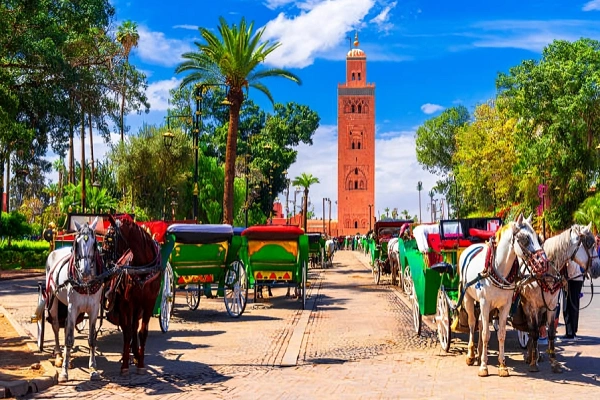
Start at Jemaa el-Fnaa, the central square of Marrakech‘s UNESCO-listed medina (World Heritage Site since 1985). It is filled with storytellers, musicians, food stalls, and performers by evening.
Visit Bahia Palace (a 19th-century residence with painted ceilings and tiled courtyards), Majorelle Garden (designed by French painter Jacques Majorelle in the 1920s–1930s, now housing the Berber Museum), and explore the souks separate sections for leather, spices, textiles, ceramics, and metalwork. Estimated spend: ~$50–60.
Top Cities to Visit in Morocco
Marrakech is Morocco’s most internationally visited city. A UNESCO World Heritage Site since 1985, the medina of Marrakech is a very old town. It contains Djemaa el-Fnaa, excellent hammam (steam bath) experiences, and a vast network of souks organized by craft type.
Fez — Morocco’s cultural and spiritual capital. Fes el-Bali, founded between 789–808 CE as the Idrisid dynasty’s capital, is one of the world’s largest and oldest urban pedestrian zones (UNESCO, 1981).
It contains Al-Qarawiyyin the world’s oldest continually operating educational institution (UNESCO and Guinness World Records) and the Chouara Tannery, established in the 11th century.
Chefchaouen — Nestled in the Rif Mountains at approximately 600 meters elevation. Its blue-painted medina is one of the most photographed places in Africa. Notably lower-pressure for tourists than the larger cities.
Casablanca — Morocco’s largest city and economic capital, home to the Hassan II Mosque with its 210-meter minaret (world’s second tallest as of 2024). Best treated as a one-night stop or arrival/departure point.
Essaouira — A laid-back Atlantic coastal city with a whitewashed UNESCO-listed medina (inscribed 2001), fresh seafood markets, and consistent Atlantic trade winds making it a popular destination for kitesurfing and windsurfing. An excellent two-day extension from Marrakech, roughly 3 hours by CTM bus.
What to Eat in Morocco and How Much It Costs
Moroccan cuisine draws from Amazigh (Berber), Arab, Andalusian, and French culinary traditions: slow-cooked stews, fragrant spices, and fresh-baked bread define the daily food culture.
| Dish | Approx. Cost | Where to Find It |
| Harira soup (lentil, chickpea, tomato) | 10–15 MAD ($1–1.50) | Any local cafe or street stall |
| Street tagine (meat + vegetables + bread) | 25–35 MAD ($2.50–3.50) | Plastic-chair restaurants away from main squares |
| Msemen (layered flatbread) + mint tea | 10–15 MAD ($1–1.50) | Breakfast cafes everywhere |
| Couscous (especially on Fridays) | 30–60 MAD ($3–6) | Local restaurants near mosques |
| Kefta sandwich (spiced minced meat) | 15–20 MAD ($1.50–2) | Street vendors, medina entrances |
| Sit-down meal at a local restaurant | 40–80 MAD ($4–8) | Side streets of medinas |
| Tourist restaurant (square-facing) | 120–250 MAD ($12–25) | Jemaa el-Fnaa and main tourist areas |
The most reliable sign of fair local pricing: plastic chairs rather than formal tables, no English on the menu, and a crowd of local workers at lunchtime.
Street food in Morocco is safe and plentiful fresh sardines at coastal cities, roasted corn, dried figs, dates, and olives from market stalls are excellent low-cost snacks.
Food note: Mint tea in Morocco is a social ritual, poured from height to create foam and served very sweet. Accepting it at a riad check-in or medina shop does not obligate any purchase; it is almost always offered completely free.
Getting Around Morocco
Intercity Trains (ONCF)
Morocco’s national rail network is the most comfortable and reliable intercity option. It connects Casablanca, Rabat, Meknes, Fez, Tangier, and Marrakech.
A second-class Casablanca to Marrakech ticket costs approximately 50–80 MAD ($5–8), with a journey time of around 3 hours. Verify current fares at the official ONCF website (oncf.ma) before travel, as prices are subject to change.
CTM and Supratours Buses
Morocco’s two main intercity bus companies, serving destinations the train does not reach including Chefchaouen, Essaouira, Merzouga, and Ouarzazate. A Marrakech to Fez bus costs roughly 120–150 MAD ($12–15). Book 2–3 days ahead for weekend travel or peak season. Verify current schedules at ctm.ma and supratours.ma.
Shared Grand Taxis
Shared long-distance taxis typically older Mercedes sedans that depart when all six seats fill. Faster than buses on many routes and prices are negotiable. Paying for two seats lets you depart immediately without waiting. Ask your riad host for a fair price benchmark before approaching a taxi stand to avoid overpaying.
Local Petits Taxis
Small city taxis, legally required by Moroccan law to use meters. The phrase to remember: “B compteur?” (With the meter?). If the driver says no, you should get a different cab. A metered 10-minute city ride should cost 15–25 MAD. Without the meter, tourists are routinely quoted 5–10 times the fair price.
Car Rental
Useful for the Atlas Mountains, Draa Valley, and coastal routes between cities. Always rent a diesel vehicle for significantly better fuel efficiency on mountain roads. Driving inside medians is impractical; lanes are too narrow for cars. Park at the medina gate and walk in.
Money-Saving Tips for Morocco
- Travel in shoulder season (March–May or September–November) accommodation costs drop noticeably outside July August peak and major public holidays.
- Book riads on the medina edge, not the tourist center of the same quality, 30–40% lower price.
- Eat where the plastic chairs are — formal seating facing a major tourist square almost always signals tourist-level pricing.
- Negotiate in souks — first prices offered are not final prices. Starting at 40–50% of the asking figure is a reasonable opening position. Walking away slowly often brings the seller back with a lower offer.
- Use ONCF trains and CTM buses rather than private taxis for intercity travel.
- Carry a reusable water bottle — buying bottled water daily adds up unnecessarily over a 10-day trip.
- Free sights are plentiful — medina walking, all beaches, mountain viewpoints, mosque exteriors, and Jemaa el-Fnaa square cost nothing.
- Use bank ATMs rather than standalone exchange booths. The Moroccan Dirham is not freely convertible outside Morocco to avoid exchanging large sums before arrival.
Best Time to Visit Morocco
- March–May (Spring): Mild temps everywhere, wildflowers in the Atlas Mountains, nice daytime temperatures in the Sahara around 25°C. Most people agree that this is the best time to visit Morocco.
- September–November (Autumn): Summer heat subsides, Sahara temperatures become manageable again, and crowds thin compared to peak summer.
- December–February (Winter): Low season with noticeably cheaper accommodation. Marrakech and coastal cities remain pleasant for travel; Sahara nights are cold; the Rif Mountains around Chefchaouen can receive snowfall.
- July–August (Peak Summer): Hottest and most crowded period. Marrakech regularly exceeds 40°C. Coastal cities like Essaouira and Agadir are more comfortable due to Atlantic breezes. Accommodation prices are at their highest.
Ramadan note: Travel during Ramadan offers a unique cultural experience. The evening Iftar (fast-breaking meal) brings streets alive with food, community, and music.
However, many local restaurants remain closed during daylight hours. Check the Ramadan calendar dates for your specific travel year before booking.
Safety for Travelers in Morocco
Morocco is generally safe for tourists. It welcomed an officially confirmed 17.4 million visitors in 2024 the highest figure ever recorded for any African country reflecting sustained international confidence in visiting. Standard urban travel awareness applies: watch your belongings in crowded medinas and bus stations, and avoid displaying expensive electronics openly.
The most common tourist issue in Morocco is unofficial “guides” who approach visitors near medina gates, offer unsolicited help navigating, and then demand significant payment. Politely declining help from strangers who approach you proactively avoids most of these situations.
Fez medina is complex enough to genuinely disorient experienced travelers. Hiring a licensed guide from your riad or the official tourist office costs around $15–20 for a half-day and is of practical value in Fez specifically.
Rabat is widely regarded as Morocco’s most relaxed major city for tourists. Chefchaouen and Essaouira are also frequently noted by solo and female travelers as lower-pressure destinations compared to Marrakech or Casablanca.
Dressing modestly covering shoulders and knees in traditional neighborhoods and near mosques is both culturally respectful and generally reduces unsolicited attention.
Prices are approximate for 2025/2026 and can change. Always double-check visa requirements with official embassy sources, and confirm current fares directly with ONCF and CTM before traveling. The tourism statistics are based on official data from the Moroccan Ministry of Tourism.

Asad Rasheed is a travel researcher and writer,
and the founder of Travel Magnify. He creates
in-depth destination guides based on thorough
research, verified sources, and real traveler
insights helping everyday people plan smarter,
more confident trips across Europe, Asia, the
Americas, Africa, and beyond.