
There’s a particular kind of freedom in traveling alone: no compromises on itineraries, no waiting on anyone, and no need to perform sociability when you’d rather sit quietly with a coffee and watch the city move. For introverts, solo travel isn’t just manageable. Done right, it can feel like the most natural thing in the world.
But that doesn’t mean it’s always easy. Arriving in a new place often means adjusting to local customs, different daily routines, and moments spent entirely on your own. Whether you’re planning your first solo trip or you’re a seasoned lone traveler looking to make things smoother, this guide covers everything you need to know from preparation to destination choices to staying safe.
How to Prepare for Solo Travel
Good preparation is the difference between a trip that energizes you and one that drains you before it even begins. For introverts especially, reducing uncertainty goes a long way.
Start with your accommodation
Choose places that suit your energy levels, not just your budget. A private room in a boutique guesthouse, a quiet Airbnb in a residential neighborhood, or even a solo-traveler-friendly hostel with private rooms can give you a home base to decompress at the end of the day. Avoid party hostels unless you actively enjoy that environment.
Research your destination deeply
Knowing where the quiet cafés are, which neighborhoods feel relaxed versus chaotic, and what the public transport situation looks like will prevent decision fatigue on the ground. Apps like Google Maps let you save locations in advance. Use that feature heavily.
Plan your first 48 hours in detail
After that, you can be flexible. But arriving somewhere new with a rough schedule for the first two days removes the pressure of having to make decisions while jet-lagged and overwhelmed.
Pack a comfort toolkit
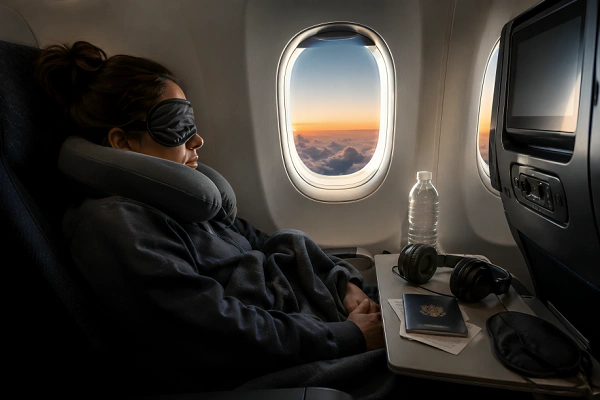
A good pair of noise-canceling headphones, a downloaded playlist or podcast, a book, and a few snacks you love can turn a chaotic travel day into something tolerable. These small items signal to your brain that you have a retreat available whenever you need it.
Practice solo decision-making before you go
Take yourself out to dinner alone. Go to a movie by yourself. Spend an afternoon wandering through a part of town you’ve never really explored before. These low-stakes dry runs build confidence for the real thing.
How to Get Better at Being Alone
Solo travel requires a certain comfort with your own company and if you don’t have that yet, you can build it deliberately.
Most people who struggle with being alone aren’t really struggling with solitude. They’re struggling with the discomfort of not being distracted. When you’re alone with your thoughts, particularly in unfamiliar surroundings, your brain can go to unhelpful places. The trick is to fill that space intentionally.
Develop a relationship with boredom
This sounds counterintuitive, but sitting with boredom not immediately reaching for your phone trains your brain to find internal resources. Start small. Find a park bench or a quiet corner somewhere and sit without a book or screen for 20 minutes. Notice what comes up.
Journal regularly
Writing is one of the most effective tools for processing experience. On a solo trip, you’ll have a lot of experiences with no one to debrief with. A journal serves that function. It’s also satisfying to read back months later.
Set small social goals
You don’t have to become an extrovert. But pushing yourself to exchange a few words with a local, ask a shopkeeper a question, or chat briefly with a fellow traveler keeps the trip from feeling entirely insular. These micro-interactions often end up being the most memorable moments.
Learn to separate loneliness from aloneness
Loneliness is an emotional state. Aloneness is a physical one. Time spent alone can feel calm, rewarding, and deeply satisfying. You can also feel desperately lonely in a crowd. Recognizing the difference helps you respond to each appropriately rather than assuming aloneness is always a problem to be solved.
Solo Hobbies for Introverts
Having a hobby or two that travels well makes solo trips significantly richer. Instead of wondering what to do with a free afternoon, you have a built-in purpose.
Photography is perhaps the most natural solo travel companion. It gives you a reason to slow down, look more carefully at your surroundings, and engage with places on your own terms. Many travelers capture amazing photos using nothing more than the camera they already carry in their pocket.
Sketching or watercolor painting has had a quiet resurgence among travelers. Urban sketching communities exist in most major cities, and joining a local sketch walk is a low-pressure way to meet people without the forced conversation of a bar.
Reading is obvious but worth naming. A good book is a reliable company. Choose books set in the place you’re visiting; it creates a satisfying layering of experience.
Food journaling documenting what you eat, where, and what you thought of it turns every meal into a small adventure. It also gives you something to focus on when eating alone, which some introverts find uncomfortable at first.
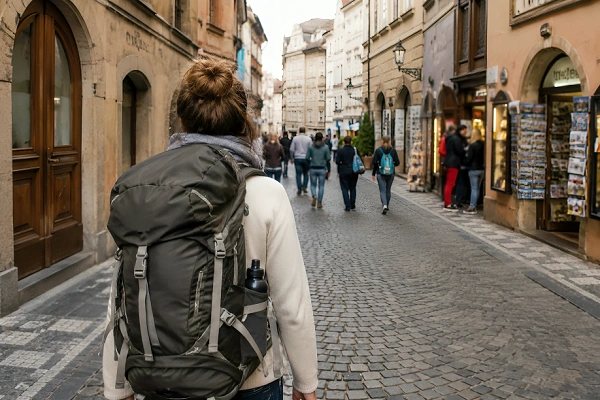
Hiking and walking deserve mention too. Exploring a city or landscape on foot, at your own pace, without anyone else’s timeline, is deeply satisfying for people who prefer reflection over stimulation. Many destinations are perfect for discovering on foot, letting you explore freely without a guide.
Solo Travel Tips for Beginners
If this is your first solo trip, the most important thing to know is this: the anxiety you feel before leaving is almost always worse than anything you’ll actually encounter.
Start with a shorter trip
A long weekend in a nearby city is a better first test than a two-week international adventure. It keeps the stakes manageable and gives you a taste of the experience without overwhelming commitment.
Choose a destination with good infrastructure
For first-timers, somewhere with reliable public transport, English-speaking locals (or a small language barrier), and clear tourist information makes everything easier. Portugal, Japan, New Zealand, and Canada are frequently cited as excellent starting points for solo travel beginners.
Sort your logistics before you land
Book your first night’s accommodation, know how you’ll get from the airport to your stay, and have offline maps downloaded. Arriving somewhere new with these basics handled removes the most stressful part of any first solo trip.
Keep copies of important documents
Photograph your passport, travel insurance, and any booking confirmations. Keep digital copies in a secure online location so you can retrieve them whenever needed.
Don’t over-schedule
Beginners often try to pack in too much, which leads to exhaustion and the feeling that solo travel is more stressful than it’s worth. Leave breathing room. Unexpected experiences often end up becoming the stories you remember long after the trip is over.
Stay flexible and self-aware
If anything feels off, whether it’s your accommodation, location, or a planned activity give yourself permission to change your plans. One of the biggest advantages of solo travel is that you answer to no one. Use that freedom freely.
Solo Travel Tips for Introverts Male and Guys
Whether you’re a seasoned traveler or a guy planning his first solo trip, introverted men face a specific set of challenges that don’t always get talked about. Many articles about solo travel tips for introverted guys focus on social pressure and the expectation to be outgoing, but that’s only part of the story.
But that’s not the only challenge. Many solo travel tips for introverted male travelers focus on independence and self-reliance, but the real challenge is learning how to enjoy solitude without feeling isolated. Male solo travelers are also navigating cultural dynamics, social invisibility, and the quiet weight of unstructured time alone.
Here’s what actually helps.
You don’t owe anyone a dramatic travel narrative
The trip where you spent three days reading in a quiet town and spoke to almost no one can be just as valid and just as meaningful as the one where you made ten friends at a hostel bar. Stop measuring trips by how much happened socially.
Use your low-key presence as an asset
Introverted male travelers often find they can wander a local market or settle into a train compartment completely unnoticed, simply absorbing a place at their own pace. Some of the richest travel experiences come from observation, not participation.
Be aware of cultural expectations around masculinity
In some parts of the world, men traveling alone are expected to seek out nightlife or be openly gregarious. You’re not obligated to perform any version of sociability that doesn’t feel authentic. Bookshops, museums, morning markets, and walking trails are all environments where a quiet temperament fits naturally.
Find your own version of adventure
For an introverted guy, adventure might mean navigating a foreign city entirely on public transport, learning enough of the local language to have real conversations, trying every regional variation of a dish, or doing a multi-day solo hike. None of these require being social, they just require curiosity.
Seek connection on your own terms
Apps like Meetup offer low-commitment group activities, language exchanges, hiking groups, food tours where you interact around a shared task rather than forced small talk. Go to one event. Leave when you’ve had enough. No explanation needed.
Give yourself transition time
The first few days of traveling alone often feel noticeably quiet, especially if you’re coming from a busy, fast-moving routine.That silence isn’t a sign something’s wrong. Give yourself 48 hours to decompress before expecting to feel settled.
Tips for Solo Travel as a Woman
Women traveling alone navigate a layer of complexity that male travelers largely don’t encounter. The risks are real and worth acknowledging honestly but so is the fact that millions of women travel solo every year, safely and joyfully.
Research your destination’s culture around women
Some countries are significantly easier for solo female travelers than others. Iceland, Portugal, Taiwan, and Ireland consistently rank among the safest and most welcoming for solo female travelers. Countries with high rates of street harassment or cultural restrictions on women’s movement require more preparation.
Trust your gut, aggressively
Women are often socialized to override their instincts in order to be polite. When traveling alone, that instinct is a safety tool. If a man on a train is making you uncomfortable, move carriages. If a guesthouse owner seems off, find a different place to stay. Politeness is not worth your safety.
Vet your accommodation carefully
Read reviews specifically written by solo female travelers they’ll flag things a general review won’t, like poorly lit entrances, unreliable locks, or overly familiar staff. A slightly pricier but well-reviewed guesthouse is almost always worth it for peace of mind.
Dress for context, not for approval
This isn’t about modesty policing, it’s about practical blending. In conservative regions, covering your shoulders and knees reduces unwanted attention significantly. In cities where tourists are common, it matters less. Adjust based on where you are.
Connect with other solo female travelers online
Communities like the Solo Female Travelers Facebook group, the r/solotravel subreddit, and various travel blogs written by women offer destination-specific advice that’s grounded in real experience. Drawing on the experiences of other travelers can be extremely helpful when preparing for a trip.
Share your location with someone at home
Apps like Google Maps location sharing or Apple’s Find My app (on iPhone) let a trusted person see where you are in real time. It’s a small thing that provides significant peace of mind for both you and the people who care about you.
Which Destinations Are Considered Riskier for Solo Travelers?
Risk is relative and contextual; it depends on your gender, your experience level, your budget, and your ability to navigate uncertainty. That said, some places do demand a higher level of caution than others.
Afghanistan, Yemen, and Libya are currently considered extremely high-risk for any foreign traveler due to active conflict, political instability, and limited consular access. Travel to these regions is often discouraged because of conflict, instability, or limited emergency support.
Certain parts of Central America particularly Honduras and Guatemala have elevated violent crime rates that can affect tourists. El Salvador, by contrast, has undergone a significant security transformation in recent years and is now widely considered one of the safer options in the region.
As with any destination, sticking to well-traveled routes and checking your government’s current travel advisory before booking is always the smartest move.
Some places simply need more planning and preparation than others. Security conditions in certain regions can change over time, meaning what felt manageable one year may feel different the next. Research thoroughly and look for region-specific information rather than relying on blanket country reputations.
For introverts specifically, risk isn’t only about physical safety. Destinations with heavy tourist infrastructure and party culture: Bali’s Kuta strip, Cancún’s hotel zone, some Greek islands during peak season can be surprisingly draining if you’re hoping for quiet and genuine cultural immersion. They’re not dangerous, but they might not be what you’re looking for.
Final Thoughts
Being an introvert and traveling alone are not opposites in fact, they often complement each other. If anything, it’s a particularly good fit. You already know how to spend time in your own company. You’re comfortable and quiet. A trip doesn’t need anyone else’s approval to feel meaningful or worth taking.
What solo travel gives you especially as someone who recharges in solitude is complete autonomy over your own experience. No one else’s energy to manage. No compromises on pace or preference. It’s simply you, an unfamiliar destination, and the freedom to engage with your surroundings at whatever level feels right.
Start where you’re comfortable. Prepare well. Give yourself permission to rest. And remember that every traveler, no matter how experienced, still feels nervous before a new trip. That nervousness isn’t a warning sign. It’s just the beginning.

Asad Rasheed is a travel researcher and writer,
and the founder of Travel Magnify. He creates
in-depth destination guides based on thorough
research, verified sources, and real traveler
insights helping everyday people plan smarter,
more confident trips across Europe, Asia, the
Americas, Africa, and beyond.